What should you look for first?
First decide whether you’ll share the fruit or serve individual portions. Then compare the drained weight and ingredients of the formats you’re considering.
| What to consider |
What to check |
Who it matters to |
| Amount to share |
Drained weight and the number of bowls you plan to serve, rather than the total weight of the tin alone. |
If everyone’s having the same fruit for breakfast, I want enough in one tin to go round. Around 31% of consumers put this shared quantity first. |
| Individual portions |
Number of small tins or pots, and the quantity stated for each one. |
When everyone serves themselves at different times, I’d rather open one portion at a time. Around 25% of consumers say ease of serving is their top priority. |
| Packing liquid |
Whether it says ‘in syrup’, ‘in light syrup’ or ‘in juice’, plus the ingredients list and nutritional information per 100 g. |
If the ingredients matter more than the packaging, I want to know what the fruit is packed in. Around 25% of consumers prioritise this choice of ingredients. |
| A suitable store-cupboard option |
How much fruit you can use and the storage instructions after opening. |
When stocking the cupboard, I look for a format I can use up without leaving a large tin open. Around 19% of consumers prioritise finding a format that suits their needs. |
Fruit in syrup available on Joybuy
This selection includes a multipack of small tins, sharing-size tins of fruit cocktail, and two single-fruit options in syrup. The mango and longans featured here contain sugar in their ingredients lists, so they’re not suitable if you’re looking for a no-added-sugar option.
 Image unavailable
ST MAMET Fruit Cocktail in Syrup, 3 × 125 g
This pack of three small tins is handy if you want to open the fruit separately throughout the weekend.
The cocktail includes peaches, pears, pineapple and grapes. To compare the amount of fruit with a large tin, check the drained weight on the packaging.
View on Joybuy
 Image unavailable
ST MAMET Fruit Cocktail in Syrup, 850 g
This large tin is for anyone who wants to share a fruit cocktail and has a plan for using the rest after opening.
It includes peaches, pears, pineapple and grapes, among other fruits. The 850 g is the pack size shown in the product name; check the drained weight to find out how much fruit it contains.
View on Joybuy
 Image unavailable
ST MAMET Fruit Cocktail in Syrup, 425 g
This tin lets you choose ST MAMET fruit cocktail in a smaller size than the 850 g option.
The recipe includes peaches, pears, pineapple and grapes, among other fruits. Check the drained weight and storage instructions after opening to decide whether one tin is enough for your table.
View on Joybuy
 Image unavailable
AROY-D Mango Slices in Syrup, 425 g
This tin is a good choice if you’d like mango rather than a fruit cocktail for breakfast.
The product description lists 54% mango, along with water and sugar in the ingredients. If you’re looking for a no-added-sugar option, choose another product after checking its label.
View on Joybuy
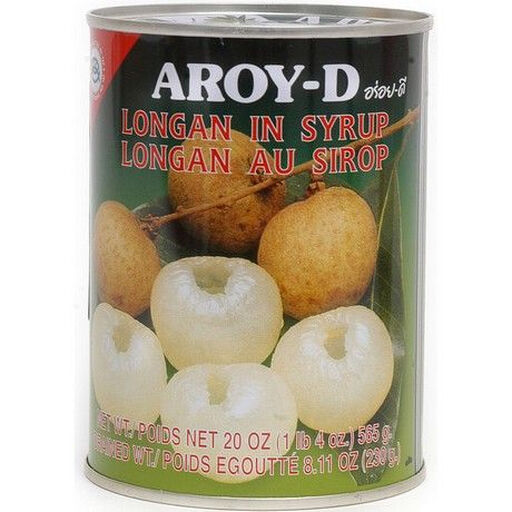 Image unavailable
AROY-D Longans in Syrup, 565 g
This product is a way to serve longans if you don’t want a mixed fruit selection.
The ingredients list includes longans, water and sugar. Check the drained weight to see how much fruit you’ll get, along with the storage instructions for after opening.
View on Joybuy
Frequently asked questions
Which weight should I compare between a large tin and pots?
Compare the drained weight to find out how much fruit you’re getting, as the total weight includes the packing liquid. The DGCCRF says the drained weight must appear on the label when a product is packed in liquid.
Does ‘no added sugars’ mean ‘sugar-free’?
No. Sugars that occur naturally in fruit or other fruit ingredients may still be present. Carrefour notes, for example, that its St Mamet fruit cocktail labelled ‘no added sugars’ contains naturally occurring sugars. Check the ingredients and nutritional information for the product you choose.
What should I do with the rest of a large tin after opening?
Follow the temperature and storage-time instructions on the packaging of the product you’ve bought. If you don’t plan to use the rest within those limits, smaller tins or pots may be a better fit for serving over the weekend.
Can you use a tin after its best-before date?
The DGCCRF says food may still be safe to eat after its best-before date if the packaging is intact, although some qualities may have deteriorated. Check the tin and follow the manufacturer’s storage instructions too.
Should you avoid a bulging or rusty tin?
Yes, avoid tins that are bulging or rusty. The DGCCRF also advises against eating the contents of a dented tin if you have any doubts; a date that hasn’t passed is no substitute for checking the packaging.


