Parents putting together a varied snack
An individual pot can be part of a snack without being the only thing on offer. Manger Bouger recommends giving children a variety of foods at snack time.


For holiday snacks, choose a pack of four pots based on the ingredients and texture you’re looking for, then check that the pack size suits your household’s consumption habits. Compare the sugar content per 100 g and the ingredients, rather than assuming you know the recipe from the words ‘with fruit’ alone. If you’re taking the pots out with you, make sure you can keep them chilled.
An individual pot can be part of a snack without being the only thing on offer. Manger Bouger recommends giving children a variety of foods at snack time.
If the words ‘with fruit’ aren’t enough to help you choose, compare the ingredients list, fruit content and sugar per 100 g. These details vary between the products listed by Auchan, Carrefour and E.Leclerc.
Four individual portions can be a good way to try a recipe or enjoy a few different flavours. Before buying more pots, work out how many you’ll get through before their use-by date.
For a holiday snack, start with the recipe and texture, then choose the number of pots to suit the snacks you have planned. Transport matters too if you won’t be eating the yoghurt at home.
| Criteria | What to check | Who is this for? |
|---|---|---|
| Ingredients and sugar | Compare the sugar per 100 g, then check the ingredients list and fruit content. | If I regularly choose yoghurt for a snack, I want to know what’s in it rather than rely on its name. Around 33% of consumers put this check first. |
| Number of pots | Check the number of portions and their use-by date against the snacks you have planned. | When my household’s consumption varies during the holidays, I prefer to buy an amount we can finish. Around 27% of consumers put finding a suitable pack size first. |
| Texture and fruit | Look for terms such as ‘stirred’, ‘blended fruit’ or ‘with pieces’, depending on the product. | If the person having the snack doesn’t like fruit pieces, texture can be the deciding factor between two pots. Around 20% of consumers say it’s their main criterion. |
| Storage and allergens | Check the milk allergen, storage temperature and use-by date on the packaging. | If I’m having a snack away from home, I need to be able to keep the pots chilled until they’re eaten. Around 20% of consumers prioritise this planning and checking the packaging. |
The name alone doesn’t tell you what’s in the recipe. Auchan lists 13 g of sugar per 100 g for Danone Velouté strawberry, while E.Leclerc lists 12 g for Delisse nectarine and apricot.
Compare the nutritional information per 100 g and the ingredients in the pots you’re considering. Manger Bouger recommends offering a variety of foods as part of a snack.
A larger pack is only practical if your household will finish the pots before their use-by date. If you want to try a new texture or flavour, four pots let you keep the quantity manageable.
Count the snacks you have planned and check the use-by date before choosing a pack size.
Unopened pots can go to waste if they aren’t eaten in time.
Auchan’s listings for Danone Velouté and Auchan Discount give instructions to keep them refrigerated. ANSES stresses the importance of maintaining the cold chain.
Pick up the yoghurts at the end of your shop, keep the journey as short as possible and use an insulated bag if needed. Follow the storage temperature shown on the pack you buy.
These examples cover specific recipes in four 125 g pots. The ingredients and nutritional values of one product don’t apply to every product from the same brand.
The strawberry product listed by Auchan is a stirred yoghurt with blended fruit, in a 4 × 125 g pack. It’s worth considering if you prefer a smooth texture.
Carrefour lists a strawberry and raspberry product with fruit pieces in four 125 g pots, for anyone who likes to alternate between two flavours.
This Marque Repère product listed by E.Leclerc combines nectarine and apricot with fruit pieces, in a 4 × 125 g pack.
Auchan lists a stirred fruit yoghurt in a 4 × 125 g pack, which is useful for comparing another recipe in this size.
Carrefour lists an organic stirred yoghurt with blended fruit in four 125 g pots, if organic ingredients are one of your criteria.
This drinkable option may suit a household planning a snack to take out. Its units are measured in millilitres, so it isn’t a direct substitute for the 125 g pots of fruit yoghurt compared above.
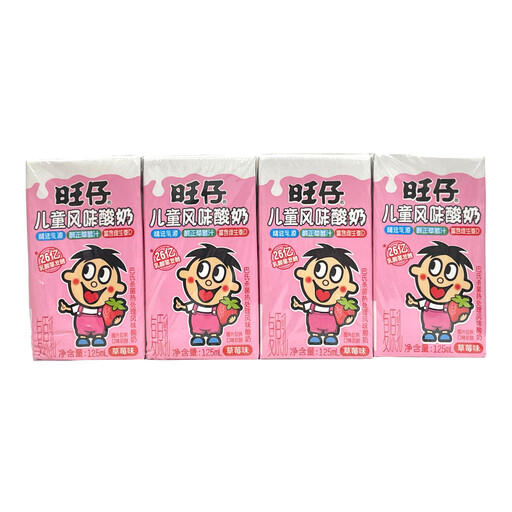 Image unavailable
This pack contains four individual 125 ml units, making it handy for a snack on the go. It’s a drink rather than a 125 g pot, so check the product name, ingredients and storage instructions on the packaging before choosing it instead.
It can be part of a snack without being the only thing on offer. Manger Bouger recommends giving children a variety of foods at snack time. You should also take into account what they’ve eaten during the day.
Start by comparing like-for-like portions and units, then check the sugar and fat per 100 g, ingredients, fruit content, allergens and use-by date. For texture, check whether the fruit is blended or in pieces: the words ‘with fruit’ don’t tell you that.
Keep refrigerated yoghurts chilled and follow the temperature shown on the packaging. ANSES stresses the importance of maintaining the cold chain. For the journey, minimise the time they’re out of the fridge and use an insulated bag if needed.