
Livraison le jour même ou le lendemain

Qualité garantie

Débloquez vos offres de bienvenue: Livraison GRATUITE | Jusqu'à -80 % | 30 jours d'essai gratuits à JoyPlus
Téléchargez l'application
Preparing a salad, an apple tart or a fresh pineapple does not necessarily require a full set of kitchen utensils. However, choosing the wrong tool can quickly become uncomfortable, difficult to clean or simply unsuitable for the food in question. Kitchen utensils for fruit and vegetables should therefore be chosen according to how often they will be used, the shape of the food and the level of precision required.
A utensil marketed as multifunctional may combine several uses without each one being genuinely practical for everyday use. A fruit and vegetable peeler may include a grater or bottle opener, while a fruit cutter will be designed for one specific task.
Before placing your order, take the time to check the product details:
A versatile model can save space, but a specialised accessory is sometimes simpler and more enjoyable to use.
An effective blade is not enough if the handle slips or its shape quickly causes hand fatigue. This is particularly important for families, amateur bakers and people who regularly prepare large quantities.
Check the overall length, weight, handle material and whether there is a non-slip area. A medium-sized model that can be used with one hand may be more practical in a small kitchen or rented accommodation.
The word “stainless steel” alone is not enough to assess a utensil’s durability or maintenance requirements. Also check the blade thickness, how securely the handle is attached and the cleaning recommendations. A tool that must be dried immediately does not require the same care as a dishwasher-safe model.
For sharp utensils, also read the safety instructions: store them out of children’s reach, handle them away from your body and use them only for their intended purpose.
Stainless steel is commonly used for stainless steel fruit knives, peelers, apple corers and cherry stoners. It is easy to clean and more resistant to oxidation than unprotected metal. However, you should still rinse the utensil after use and dry it thoroughly.
For regular peeling, also look at the blade shape:
Length has a direct impact on ease of use. For example, a 23 cm apple corer provides good reach for apples and pears, while a shorter model is easier to store in a drawer.
For frequent use, choose a well-balanced handle and a reasonable weight. The stated dimensions should suit your storage space, but also the size of the food you prepare. A pineapple cutter or watermelon slicer may take up some room, but this type of tool meets a very specific need during family meals or summer preparations.
A utensil that is easy to rinse helps prevent pulp and food residue from building up. Models advertised as dishwasher-safe offer a convenient solution, although hand washing can help preserve the sharpness and finish.
Also check the seller’s traceability information, the materials used and the safety warnings. For tools fitted with teeth or a blade, store them in a dry place and avoid forcing them into food that is too hard.
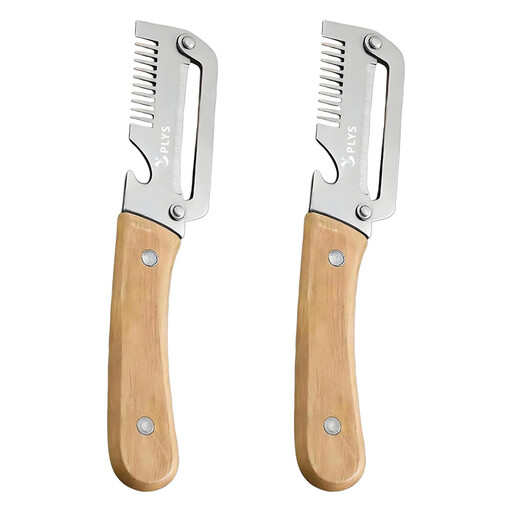
Why this choice suits this profile : This two-piece set is suitable for everyday food preparation and means you can keep a tool in more than one place in the kitchen. Each piece measures approximately 19 cm and weighs approximately 71.3 g.
The product details list three separate uses: peeling, cutting ginger or spring onions into thin strips and opening bottles. This lets you assess the set’s versatility before buying.
Stainless steel blade, sanded wooden handle and cleaning described as simple rinsing with clean water.
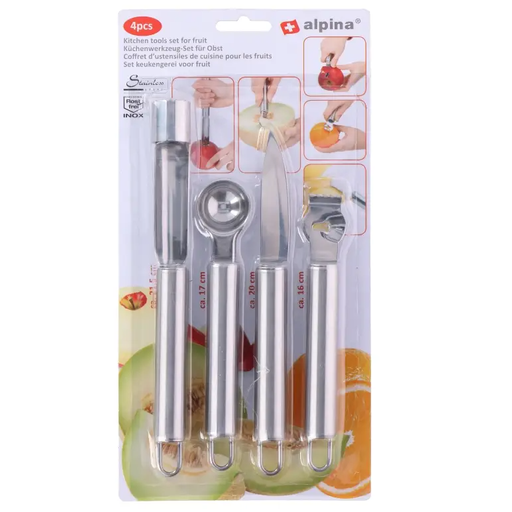
Why this choice suits this profile : This fruit utensil set is designed for people who want several dedicated accessories in one coordinated collection, equally useful for baking and creating attractive plate presentations.
The contents are clearly specified: apple corer, melon baller, curved fruit knife and citrus peeler. You know exactly what you are buying.
Four stainless steel pieces, with stated lengths of 16 to 21.5 cm and dishwasher compatibility.
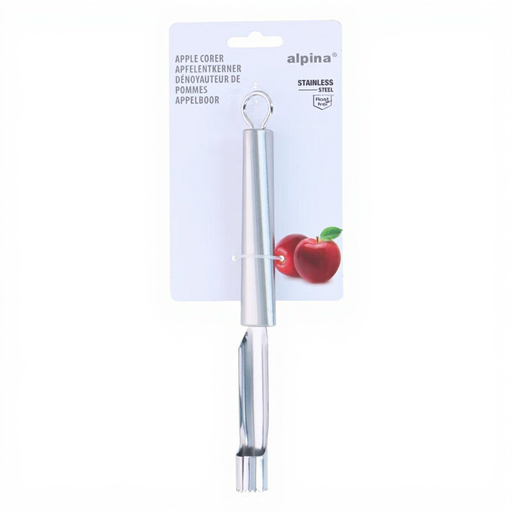
Why this choice suits this profile : A dedicated tool makes repeated preparation of apples and pears easier, particularly for tarts, compotes and whole fruit served at the table.
Its function is limited but perfectly clear: removing fruit cores. This specialist design avoids misusing a peeler or forcing an unsuitable blade.
23 cm length, stainless steel teeth and a polypropylene handle described as ergonomic.
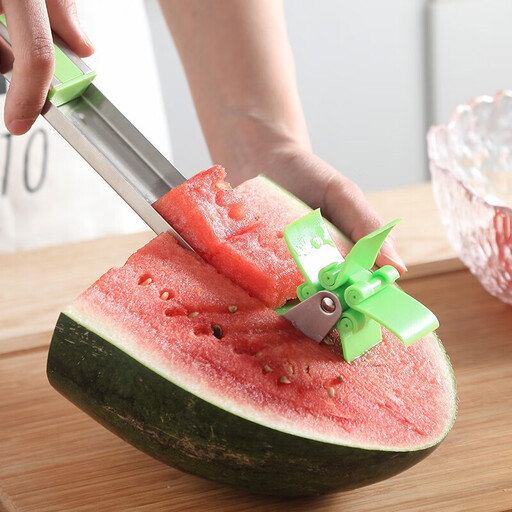
Why this choice suits this profile : A manual watermelon slicer can be useful for outdoor meals, snacks or large gatherings where several fruits need to be cut one after another.
It is clearly designed for watermelon. However, check its dimensions and make sure they match the size of your fruit before ordering.
A manual design requiring no installation, made for cutting watermelons into slices.
We have put together a complete, real-time updated list of products that meet these demanding selection criteria and European safety standards.
Rinse the utensil after every use, remove any residue and dry it completely. Even when dishwasher use is indicated, hand washing can reduce knocks and help preserve the blade’s sharpness. Store tools fitted with teeth or a blade in a secure drawer.
This depends on how often they are used, the quality of their construction and how well they are maintained. A stainless steel blade should not be left wet or used on materials for which it was not designed. Replace the tool if the handle becomes loose, the blade becomes deformed or the teeth are no longer properly aligned.
A fruit utensil kit is a sensible choice if you regularly prepare several types of food and want to limit the number of purchases. Separate tools are better suited to a specific need, such as a pineapple cutter, apple corer or cherry stoner. Always compare the actual contents of the set with your kitchen habits before making your choice.