A dessert to share
For a tart, crumble or fruit salad to serve to several people, look at larger packs and fruit cocktails. The way the fruit is cut matters too: halves, slices and pieces are suited to different recipes.


For a winter dessert to share, choose the fruit and drained weight to suit your recipe. If you want to serve an individual portion without opening a large tin, opt for small pots instead. If you’re choosing between syrup, light syrup, juice and products labelled ‘no added sugar’, compare the ingredients and the ‘of which sugars’ figure per 100 g. The claim on the front of the pack doesn’t tell you everything about what’s inside.
For a tart, crumble or fruit salad to serve to several people, look at larger packs and fruit cocktails. The way the fruit is cut matters too: halves, slices and pieces are suited to different recipes.
Small pots are ideal for an individual dessert or occasional use, without leaving you with a large opened tin. Check how many pots there are and how much each one contains.
If you want to compare syrup, light syrup, juice and products labelled ‘no added sugar’, read the ingredients list and nutritional information for the specific product. The ‘of which sugars’ figure per 100 g lets you compare total sugar content.
When stocking up for winter desserts, start with your recipe and the number of portions you need. Then compare the packing liquid and ingredients of the pack sizes that suit you.
| What to consider | What to check | Who is it for? |
|---|---|---|
| Amount for a recipe | The type of cut and the drained weight shown on the label, rather than the total weight alone. | For a tart or fruit salad to share, I want to know how much fruit will actually go into the dessert; around 45% of consumers prioritise this amount. |
| Portions with no leftovers | The number of pots and the amount in each one, matched to the portions you want. | When I make an individual dessert now and then, I’d rather open just one portion; around 33% of consumers prioritise this convenience. |
| Ingredients | The ingredients, packing liquid and ‘of which sugars’ figure per 100 g. | If I’m comparing fruit in juice with fruit in syrup, I want to understand what’s in each product beyond the front-of-pack claims; around 22% of consumers put this first. |
This claim alone doesn’t tell you the product’s total sugar content. According to the DGCCRF, the nutrition declaration on prepacked foods includes values per 100 g or 100 ml.
To compare two products, read the ingredients and the ‘of which sugars’ figure per 100 g, taking the packing liquid into account.
A large pack can be ideal for a dessert to share, but the date on the packaging doesn’t replace the storage instructions for after opening.
Plan to use the leftovers in another recipe, and follow the product’s storage instructions and guidance on how long it will keep once opened.
Any leftovers not used within the stated time may go to waste.
The packing liquid is included in the total weight. If your recipe calls for a specific amount of fruit, this difference could affect how many packs you need.
Check the drained weight on the label to estimate how much fruit you’ll have.
The Carrefour, Auchan and E.Leclerc ranges include different fruits, cuts and pack sizes. Compare the specific product that suits your dessert rather than assuming every product from a brand is the same.
The Carrefour range includes, among other products, tinned fruit and small pots.
The supermarket’s own range includes fruit in syrup, fruit in juice and small pots.
The E.Leclerc range includes peaches, fruit cocktails and small pots, among other products.
A brand found in the Carrefour and Auchan ranges, with fruit and cocktails available in several pack sizes.
The Auchan range includes Del Monte pineapple in juice and fruit in light syrup, among other products.
These tins include fruit cocktails for a dessert you can put together, fruit halves for a recipe and longans in syrup. Start by choosing the fruit and cut that suit your recipe, then check the drained weight on the product.
 Image unavailable
A fruit cocktail to consider for a fruit salad or dessert to share. The stated pack size is 850 g; check the drained weight to work out how much fruit you’ll need.
 Image unavailable
These pear halves are worth considering for a tart or a dessert where the shape of the fruit matters. The product name states 455 g drained; check this amount on the packaging before planning your portions.
 Image unavailable
A fruit cocktail to consider for a fruit salad or dessert that needs less than the 850 g pack. The stated pack size is 425 g; use the drained weight on the label to work out how much fruit you’ll have.
 Image unavailable
These peach halves are worth considering for a dessert or a small sweet treat. The product name states 230 g drained; check the weight on the packaging to adjust your recipe.
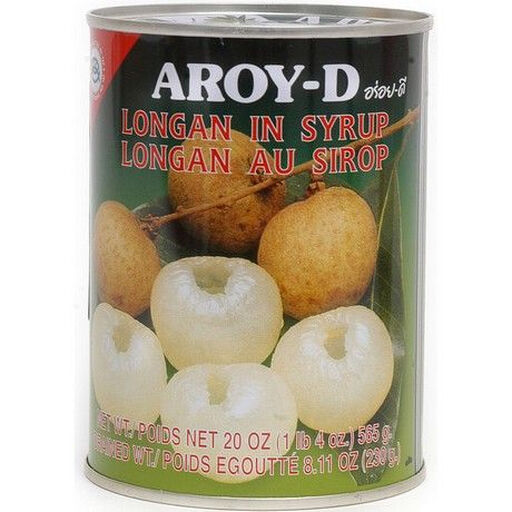 Image unavailable
These longans are worth considering if they suit the dessert you’re making. The jar is labelled 565 g; check the drained weight to estimate how much fruit it contains.
Compare the ingredients, packing liquid and ‘of which sugars’ figure on the same per-100 g basis. As the DGCCRF explains, nutrition information for prepacked foods is given per 100 g or 100 ml. For a recipe, check the drained weight too.
Read the label of the specific product you’re buying rather than relying on the fruit’s name or picture. The DGCCRF states that any allergens present must be highlighted in the ingredients list on prepacked foods.
A product isn’t automatically unsafe to eat just because its best-before date has passed, as long as the packaging is intact. However, the DGCCRF notes that some aspects of its taste may have deteriorated. Check the condition of the tin and follow any product-specific instructions.
Follow the storage instructions and guidance on how long the product will keep once opened. The DGCCRF points out that the date printed for an unopened product no longer applies once the container has been opened.