Anyone making a dessert to share
For a tart, a layered dessert or a fruit salad, the amount you need depends on how much fruit you’ll actually serve. Check the drained weight rather than just the weight of the tin, as the latter includes the liquid.


For a tart, a layered dessert or a fruit salad to share on Mother’s Day, a large tin could be a good choice if its drained weight gives you enough fruit and you can use the contents after opening. Individual pots make it easy to serve set portions. If sugar content is a factor in your choice, compare the ingredients list and nutritional information per 100 g, whatever the format.
For a tart, a layered dessert or a fruit salad, the amount you need depends on how much fruit you’ll actually serve. Check the drained weight rather than just the weight of the tin, as the latter includes the liquid.
Multipacks of individual pots listed by Carrefour and Auchan make it easy to serve portions without opening a large tin. Check the weight of each pot and how many people you’re serving before choosing a pack.
Whether you’re choosing fruit in light syrup, fruit in juice or products labelled “no added sugar”, the product name alone doesn’t tell you everything about its composition. Check the ingredients and the “of which sugars” line in the nutritional information per 100 g.
First, choose the amount of fruit you need for your dessert, then pick packaging that suits the way you’ll serve it. Check the ingredients separately if they’re important to your decision.
| Criteria | What to check | Who it matters to |
|---|---|---|
| Amount of fruit | Drained weight and fruit shape, depending on the recipe. | For topping a tart or making a fruit salad to share, I want to make sure there’s enough fruit without counting the liquid in the tin. Around 33% of consumers would prioritise this. |
| Using the whole pack | Amount needed for the recipe and instructions for storing after opening. | If my dessert needs less than a large tin, I’d rather choose a format where I can use all the contents. Around 25% of consumers would put using the whole pack first. |
| Sugar content | Ingredients list and “of which sugars” per 100 g. | I want to tell the difference between sugars naturally present in the fruit and added ingredients, without relying on the wording on the front of the pack alone. Around 25% of consumers would rank this as their top criterion. |
| Ease of serving | Number of individual pots and the weight of each, or serving from a tin. | For ready-portioned servings, I’d choose packaging that can be handed straight to guests. Around 17% of consumers would prioritise ease of serving. |
The total weight includes the liquid. For its 840 g Auchan peach halves, the retailer states that the drained fruit weighs 0.475 kg. This figure gives you a better idea of how much fruit you’ll have for your recipe.
Compare the drained weights of the products you’re considering, especially if you’re topping a tart or dividing the fruit between several portions.
How long a product keeps after opening depends on the product. The product information for Auchan’s 840 g peaches says to consume them within 2 days, while the Joybuy product information for St Mamet’s 850 g Williams pears gives 3 to 4 days. These instructions don’t apply to other products.
Follow the instructions on the tin you buy for transferring the fruit to a suitable container, refrigerating it and storing it.
A tin that’s too large for your dessert and the meals that follow could leave you with unused fruit.
Fruit contains natural sugars, which are included in the “of which sugars” line in the nutritional information. So the wording on the front of the pack doesn’t replace checking the ingredients.
Compare the ingredients lists and nutritional values per 100 g of the products you’re interested in.
The Carrefour Classic' range includes large tins of fruit in syrup, while Carrefour also stocks individual pots.
Auchan’s documented range includes large tins and individual pots of fruit in syrup.
The Eco+ range featured by E.Leclerc includes several types of fruit in light syrup.
St Mamet offers fruit in syrup in different forms, including fruit cocktails and Williams pears.
These fruits in syrup give you options for a dessert to share, whether you choose a fruit cocktail, pear halves, lychees or rambutans. The pack sizes vary, so check the drained weight to work out how much you’ll need for your recipe. If you won’t be serving the whole pack, check the storage instructions for that product.
 Image unavailable
The 850 g pack can be used as the base for a fruit salad or a dessert to share. Check the drained weight to work out how much fruit you’ll have. If you don’t use the whole tin, follow its storage instructions after opening.
 Image unavailable
These pear halves could work well in a tart or fruit salad if their shape suits your recipe. The 455 g shown is the drained weight. Work out how much you need based on the dessert and how many people you’re serving.
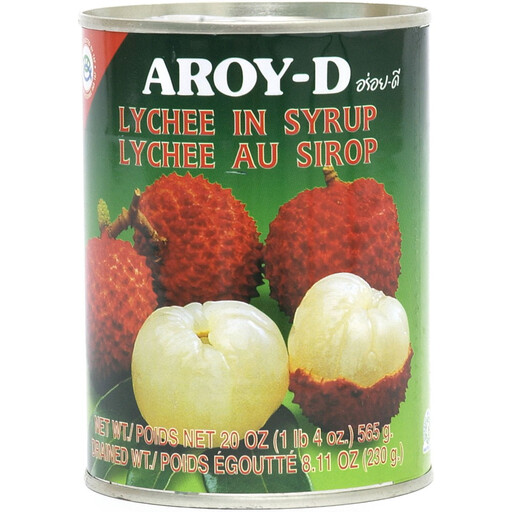 Image unavailable
These lychees can be added to a fruit salad or another dessert to share. The tin weighs 565 g in total, so check its drained weight to work out how many portions you’ll get. Follow the storage instructions if you have any left over.
 Image unavailable
This 425 g fruit cocktail could be a good choice if your recipe needs less than a large 850 g tin. Check the amount of drained fruit before deciding how many portions to make; the total weight also includes the syrup.
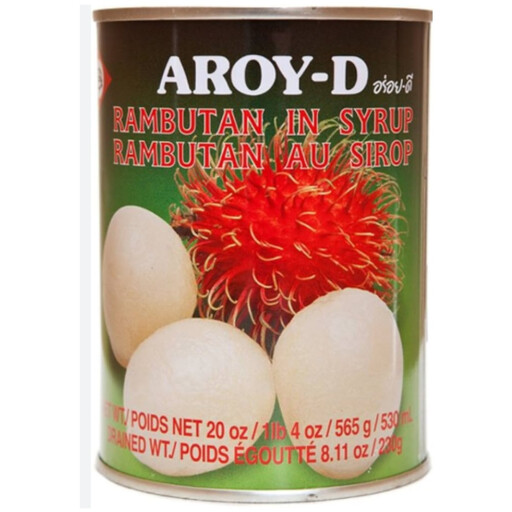 Image unavailable
Use these rambutans in a dessert or fruit salad if you’d like to serve this fruit. The tin contains 565 g including the syrup, so check the drained weight to work out how much to add to your recipe. Follow the storage instructions after opening.
Choose based on your recipe and how you plan to serve it. A large tin lets you take out fruit for a tart, a layered dessert or a fruit salad to share, while individual pots come in ready-separated portions. Either way, make sure you have enough fruit for everyone. If you’re choosing a tin, check the drained weight.
No: fruit contains natural sugars. To compare two products, check their ingredients and the “of which sugars” line in the nutritional information per 100 g, rather than relying on the wording on the front of the pack alone.
Follow the storage conditions and time stated on the product you buy, as they can vary. The product information for Auchan’s 840 g peaches says to keep them refrigerated in a suitable container and consume them within 2 days. The Joybuy product information for St Mamet’s 850 g Williams pears gives 3 to 4 days. Don’t automatically apply either of these time limits to another tin.