Households sharing desserts
A large tin can provide several portions or be used in a recipe. If you choose this format, check the net drained weight and plan how you’ll use the contents after opening.


If you’re serving dessert to several people, an 800 to 850 g tin of fruit in syrup is a good choice, provided you plan to use it soon after opening. For desserts at different times, individual pots mean you don’t have to open everything at once. Before choosing, compare the net drained weight, ingredients and nutritional information, then check the storage instructions for the product you’re buying.
A large tin can provide several portions or be used in a recipe. If you choose this format, check the net drained weight and plan how you’ll use the contents after opening.
Individual pots and multipacks are useful when everyone has dessert at a different time. You can open one portion at a time, as long as the amount suits how you plan to use it.
When comparing fruit in light syrup, fruit juice or products labelled ‘no added sugar’, read the ingredients list and the ‘of which sugars’ figure per 100 g rather than relying on the front of the pack alone.
For your first shop, start by thinking about how many portions you’ll use after opening. Then check the quantity of drained fruit and the ingredients in each product.
| What matters | What to check | Who it matters to |
|---|---|---|
| Enough to share | The tin size and net drained weight, which tells you how much fruit there is without the liquid. | If I’m making several desserts, I want enough fruit to serve everyone without opening several containers. Around 42% of shoppers prioritise having enough to share. |
| Individual portions | The number of pots and their weight, as well as whether they suit how quickly your household will eat them. | When people don’t have dessert at the same time, I prefer to open only the portion I need. This flexibility comes first for around 33% of shoppers. |
| Ingredients | The ingredients list and the ‘of which sugars’ figure per 100 g for the products you’re comparing. | If I’m choosing between fruit in syrup, fruit juice or products with no added sugar, I want to know what they contain before deciding on a format. Ingredients are the top priority for around 25% of shoppers. |
A tin of fruit in syrup also contains liquid. So the total weight isn’t the same as the amount of fruit you’ll serve.
When comparing two tins, check the net drained weight on the label. The DGCCRF says this information must be shown for foods presented in a covering liquid.
Fruit and fruit juice can contain naturally occurring sugars. The product listing for St Mamet pineapple labelled ‘no added sugar’ makes this clear.
Compare the ingredients and the ‘of which sugars’ figure per 100 g on the products you’re interested in.
Once-opened storage instructions vary by product: the listing for Auchan peaches, 840 g, says to use them within two days, while the listing for St Mamet fruit cocktail, 425 g, says three to four days.
Plan your portions or recipe before opening the tin, then follow the storage instructions on the product you’ve bought.
The range we looked at includes large tins and individual portions.
The products we looked at include tins, multipacks and some recipes with no added sugar.
The products we looked at include large tins of pears and peaches, as well as individual pots.
The light-syrup fruit cocktail listed by ALDI comes in a 330 g tin.
This selection includes a large tin of fruit cocktail, a multipack of individual portions and tinned fruit in other varieties and formats. To choose between them, think about how much you need to serve and check the drained weight and instructions on each pack.
 Image unavailable
This large format is a good choice if you’re planning several portions or a dish to share.
Check the net drained weight to see how much fruit you’ll get without the syrup, and follow the storage instructions after opening.
 Image unavailable
These pear halves are a good option if your dessert or recipe calls for pears rather than a fruit cocktail.
The 455 g is the drained weight, not the total weight of the tin. Check the total weight if you’re specifically looking for a large format.
 Image unavailable
The three pots are a convenient choice if you’ll be having the portions separately.
The pack contains 375 g in total, so it’s not the same as an 800 to 850 g tin for sharing in one sitting.
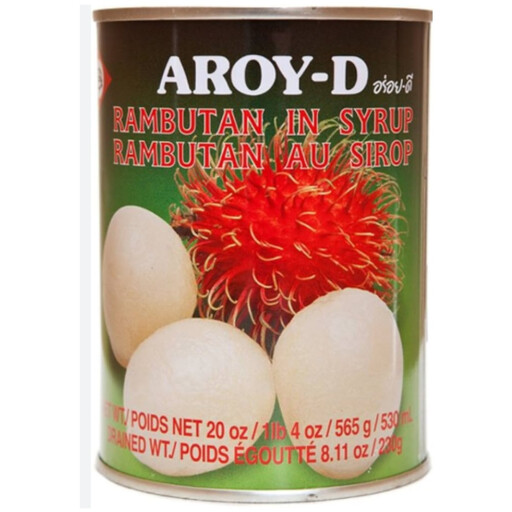 Image unavailable
Choose this tin if you’d like to serve rambutans rather than a mixed fruit selection.
At 565 g, it’s smaller than an 800 to 850 g tin. Check the drained weight and, if you have any concerns about allergens, read the information on the packaging.
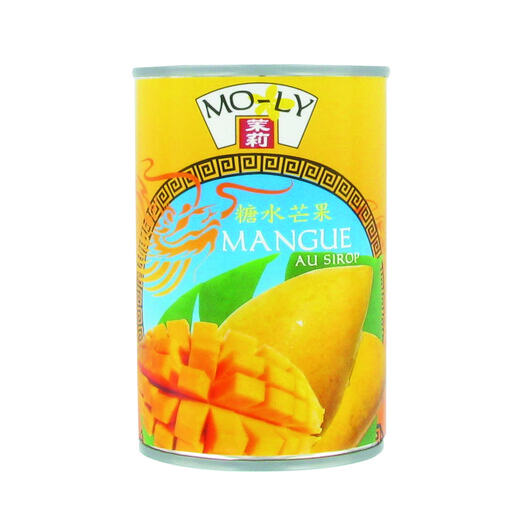 Image unavailable
This tin of mango is a good choice if you’re looking for a specific fruit for dessert in a smaller format than a family-size 800 to 850 g tin.
To compare the ingredients with another recipe, check the ingredients list and the ‘of which sugars’ figure on the packaging. Also check the drained weight and instructions for after opening.
Check the net drained weight to compare the amount of fruit without the covering liquid; the total weight includes the liquid too. The DGCCRF says the net drained weight must be shown when food is presented in a covering liquid.
No. A recipe with no added sugar may still contain sugars that occur naturally in the fruit or its juice. The listing for St Mamet pineapple makes this clear. When comparing products, also check the ‘of which sugars’ figure per 100 g.
Follow the storage instructions for the product you’ve bought, as they vary. The listing for Auchan peaches, 840 g, says to keep them in an airtight container in the fridge and use them within two days. The listing for St Mamet fruit cocktail, 425 g, says three to four days in the fridge.
Check the product name, ingredients, nutritional information, quantity, date marking and storage instructions. For fruit presented in a covering liquid, the DGCCRF says the net drained weight must also be shown.
According to the DGCCRF, passing a best-before date does not in itself mean the food cannot be eaten, provided the packaging is intact; however, it may have lost some of its quality. Check that the date is a best-before date and not a use-by date, then inspect the tin before using it.