People keeping an eye on salt
If you’re comparing tinned fruit as part of an effort to reduce your salt intake, the figure per 100 g tells you more than the product name alone.


When choosing fruit in syrup to serve with coffee, start by comparing the “salt” value per 100 g. A low figure doesn’t prove that a product is “reduced in salt”. Then check the sugars, the liquid it’s packed in and how much you plan to serve, as a large tin may not be the best choice for an occasional snack.
If you’re comparing tinned fruit as part of an effort to reduce your salt intake, the figure per 100 g tells you more than the product name alone.
To enjoy with your coffee, you may want to distinguish between fruit in light syrup, fruit in juice and fruit with no added sugars, then compare the “of which sugars” figures.
You’re looking for an easy-to-serve amount, without having to store a large opened tin for a single portion.
For fruit in syrup served with coffee, check the salt and sugars per 100 g separately, then choose a pack size that suits the number of portions you have in mind.
| Criterion | What to check | Who is it for? |
|---|---|---|
| Salt | Compare the “salt” figure per 100 g. Don’t assume a low figure means it’s lower than comparable products. | If my main aim is to limit salt in this snack, I want to be able to compare products on the same basis; around 42% of consumers would put this criterion first. |
| Sugars and packing liquid | Check “of which sugars” per 100 g and the ingredients list, whether it’s light syrup, juice or a product with no added sugars. | When I serve this fruit with my coffee, I want to make an informed choice about the liquid it comes in; sugars would be the priority for around 33% of consumers. |
| Individual portions | Check how many pots there are and how much fruit each portion contains. | For a snack on my own, I’d rather open only as much as I’m going to serve; around 17% of consumers would prioritise portion size. |
| Sharing pack | Check the drained weight and the instructions for after opening. | When several people are having a snack, I can use a larger tin without leaving too much opened fruit; around 8% of consumers would put a sharing pack first. |
Two Auchan product listings for fruit in light syrup each show less than 0.01 g of salt per 100 g. This figure describes those products, but on its own it doesn’t establish a reduction compared with similar products.
To compare your options, use the “salt” figure per 100 g. If the packaging makes a reduced-salt claim, check how it is worded and what it is being compared with.
According to Auchan, the two products mentioned also contain 14 g of sugars per 100 g. So the salt figure doesn’t tell you how much sugar they contain.
Compare “of which sugars” and the ingredients too. “No added sugars” doesn’t mean a product contains no sugars at all.
How long a product keeps after opening depends on the product: Auchan recommends using its exotic fruit mix within two days, while MARTIN'S INTERNATIONAL gives three days for its fruit cocktail. Both should be kept in the fridge in a suitable container.
If you’re planning just one snack, compare the pots with the amount in a tin before you choose.
Once a tin is open, you’ll need to plan another way to use the fruit within the time stated on the packaging.
Carrefour’s range includes fruit in tins and pots, with different packing liquids.
Auchan’s range includes fruit in light syrup, fruit pots and fruit in juice.
E.Leclerc stocks peaches, fruit mixes and pots under this brand, including options in light syrup or juice.
Aldi sells BACCARA fruit cocktails in light syrup in 330 g and 500 g packs.
These 565 g tins of fruit in syrup could work well for a snack to share. If salt is your main priority, compare the nutritional information for each product; being featured here doesn’t mean they carry a “reduced in salt” claim.
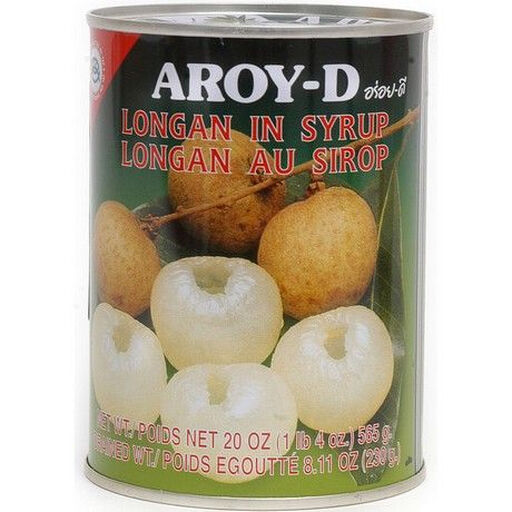 Image unavailable
Worth considering if you’re planning several portions of longans for your snack. Check how much you’ll serve, as well as the storage instructions for after opening.
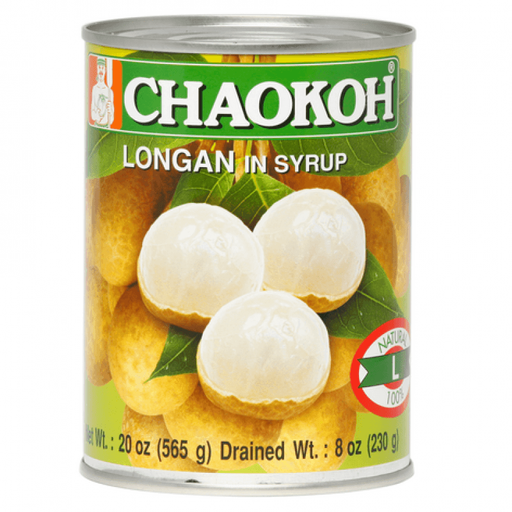 Image unavailable
This tin is worth comparing if you’re looking for longans in syrup to serve in several portions. Check the “salt” and “of which sugars” figures before comparing it with another product.
 Image unavailable
Consider this if you’d like to serve rambutans and can make use of a 565 g tin. If you’re only having them occasionally, check the storage instructions for the remainder after opening.
 Image unavailable
The drained weight of 260 g helps you work out how much pineapple you’ll have to serve, separately from the 565 g net weight. Compare salt and sugars separately: “light syrup” alone doesn’t tell you these values.
No. This figure lets you compare the stated salt content, but doesn’t prove a reduction compared with similar products. Two Auchan listings show less than 0.01 g per 100 g; check any comparative claim on the packaging rather than drawing that conclusion from the figure alone.
Compare salt and sugars per 100 g, then check the ingredients and how much you plan to serve. The product name and packing liquid help you tell the different options apart, but they don’t replace the nutritional information.
No. The name alone isn’t enough to compare either figure across products. For example, Auchan’s exotic fruit mix in light syrup contains 14 g of sugars and less than 0.01 g of salt per 100 g. Check the nutritional information for each product you’re considering.
Follow the time limit and storage instructions on the product you buy. Auchan recommends keeping its exotic fruit mix in the fridge in a suitable container and eating it within two days; the MARTIN'S INTERNATIONAL fruit cocktail listing gives three days.