Households that share desserts
If several people eat fruit in syrup, check the amount of fruit shown by the drained net weight and make sure the container can be used in line with the instructions for use after opening.


If desserts are regularly shared at home, a large tin may be a good choice. For someone who eats smaller portions, individual pots mean you don’t have to open a large quantity at once. Then compare the ingredients, the ‘of which sugars’ line and the drained net weight. Fruit in syrup can be part of a dessert or snack, but it is not a substitute for appropriate care in cases of malnutrition.
If several people eat fruit in syrup, check the amount of fruit shown by the drained net weight and make sure the container can be used in line with the instructions for use after opening.
Multipacks of individual pots let you serve a portion without opening a large container. E.Leclerc, for example, stocks pots of 4 × 70 g; the right size depends on how much is actually eaten.
‘No added sugars’ does not mean ‘sugar-free’: fruit naturally contains sugars. The ingredients list and nutrition information let you compare products in syrup, juice or with no added sugars.
When choosing fruit in syrup for a household that includes an older person, start with how often it will be eaten, then compare the labels and consider how the product fits into meals. The priorities below group consumers by their main concern.
| Criteria | What to check | Consumers concerned |
|---|---|---|
| Format and portions | Compare the drained net weight and instructions for use after opening with the amount you plan to serve. | If we often share dessert, I want a container that suits our portions; if only one person eats it, I’d rather not open too much at once. Around 40% of consumers might make format their priority. |
| Sugars and ingredients | Read the ingredients list, the ‘of which sugars’ line and the type of liquid the fruit is packed in. Don’t confuse ‘no added sugars’ with ‘sugar-free’. | I want to distinguish added sugar from the sugars naturally present in fruit before choosing a product. For around 40% of consumers, this could be their main concern. |
| Place in the diet | Consider the size of the pieces and the texture in light of the person’s needs. If they have lost weight unintentionally or are having difficulty swallowing, seek professional advice. | If their appetite is declining, I don’t want to assume this dessert will adequately meet their nutritional needs. This could be the main concern for around 20% of consumers. |
Fruit naturally contains sugars, so the claim on the front of the pack does not, by itself, tell you how much sugar the product contains.
Compare the ingredients and the ‘of which sugars’ line in the nutrition information.
The weight of the container doesn’t tell you how much fruit you’ll serve or whether it will all be eaten after opening.
Check the drained net weight and storage instructions, then choose a format that suits the portions you have planned.
Any opened quantity that cannot be used as instructed may go to waste.
According to Manger Bouger and Assurance Maladie, malnutrition involves insufficient intake of energy, protein and other nutrients. A fruit-based dessert alone cannot address this situation.
If there is unintentional weight loss or suspected malnutrition, seek medical advice rather than simply changing the dessert.
The size of the pieces and the texture can matter if someone has difficulty chewing or swallowing; the product name alone is not enough to judge whether it is suitable.
Check the product for the person who will be eating it, and ask a healthcare professional for advice if they have difficulty chewing or swallowing.
Carrefour’s range includes tinned fruit in syrup and multipacks of individual pots.
E.Leclerc’s range includes tinned fruit in syrup and individual pots.
Auchan offers individual pots as well as fruit in light syrup or juice.
ALDI France offers a BACCARA® fruit cocktail in light syrup as well as individual pots of fruit.
These single-container products let you compare different types of fruit in syrup for desserts served over several meals. The 230 g shown for St Mamet peach halves is the drained weight, so it cannot be compared directly with the weights shown in the other product titles.
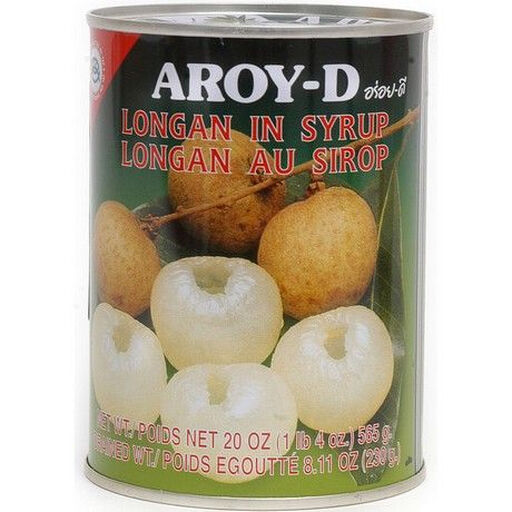 Image unavailable
A container to consider if you’ll be serving longans for several desserts.
The title states 565 g. Check the drained net weight and instructions for use after opening on the packaging to assess the amount of fruit.
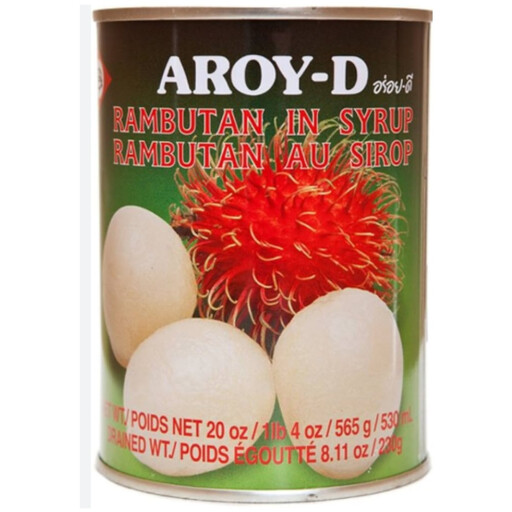 Image unavailable
This container could be part of a dessert to share if you’re looking for rambutans.
The title states 565 g. Before buying, check the drained net weight, ingredients and any allergen information on the packaging.
 Image unavailable
Mango slices are another fruit to consider for a dessert served from one container.
The title states 425 g. Check the drained net weight and instructions for use after opening to see whether this quantity suits the portions you have planned.
 Image unavailable
This product gives you a stated drained fruit weight to work with.
The 230 g is the drained weight, not the total weight of the container. Check whether this quantity is enough for the people you’re serving; ‘light syrup’ doesn’t mean you can skip checking the ingredients and sugars.
 Image unavailable
This container of lychees could be considered for a dessert to share.
The title states 567 g. To compare the amount of fruit and sugars with another product, refer to the drained net weight and nutrition information on the packaging.
No: fruit naturally contains sugars. To compare two products, read their ingredients and the ‘of which sugars’ line in the nutrition information rather than relying only on the claim on the front of the pack.
No. A fruit-in-syrup dessert alone is not a solution to unintentional weight loss. Manger Bouger and Assurance Maladie stress the importance of appropriate food intake when there is a risk of malnutrition; discuss the weight loss with a healthcare professional.
First, check that the amount of drained fruit suits the portions you have in mind. For a product packed in liquid, the DGCCRF says the drained net weight must appear on the label. Also read the ingredients, sugars and instructions for use after opening.
No. A best-before date (DDM) does not have the same role as a use-by date (DLC). The DGCCRF distinguishes between the two and explains that the condition of the packaging matters for food past its DDM. Also follow the product’s storage instructions, particularly after opening.