Hosts who keep an eye on salt
If you want to take salt into account when choosing a dessert, compare the value shown per 100 g for each product rather than relying on the syrup description.


For a world cuisine evening, choose fruit to suit the dessert you’re planning, then compare the ‘salt’ value per 100 g for the products you’re considering. ‘Light syrup’ and ‘no added sugar’ don’t tell you anything about this figure on their own. The drained net weight helps you work out how much fruit to serve; pack size and storage instructions after opening also matter if you’re likely to have leftovers.
If you want to take salt into account when choosing a dessert, compare the value shown per 100 g for each product rather than relying on the syrup description.
A fruit cocktail can be used as the base for a layered dessert or rice pudding topped with fruit. If your recipe calls for a particular fruit, the ingredients list is key.
When choosing between individual pots and a sharing tin, consider the number of guests, the drained net weight and the storage instructions after opening.
Start with your recipe and how much fruit you’ll need, then check the declared salt content, ingredients and pack size separately. Everyone may have a different priority for this evening.
| Criterion | What to check | Who is it for? |
|---|---|---|
| Declared salt | Compare the ‘salt’ value per 100 g for each product. ‘Light syrup’ and ‘no added sugar’ are no substitute for checking this. | If salt is my top priority, I want to be able to compare the values for two products before choosing. Around 36% of consumers would also put declared salt first. |
| Pack size and leftovers | Check the drained net weight, number of portions and instructions for storage after opening. | For a small group, I’d rather plan how much fruit will actually be served than open a tin that’s too large. Pack size would be the top priority for around 29% of consumers. |
| Fruit and recipe | Read the fruit list: choose a cocktail or a single fruit to suit the dish you’re planning. | If my recipe is based on pieces of pear or peach, I want to know which fruits will end up on the plate. Ingredients would come first for around 21% of consumers. |
| Availability | Check that the product and pack size you want are available in your delivery area or local shop. | When I’m planning the evening, I need to be able to get the fruit and pack size I’ve chosen in time. Around 14% of consumers would prioritise this practical consideration. |
This description doesn’t let you compare the declared salt content. Similarly, ‘no added sugar’ refers to a different criterion.
Check the ‘salt’ value per 100 g, the sugars and the ingredients list for your chosen product separately.
The total weight includes the syrup, so it doesn’t necessarily reflect how much fruit you’ll have for the buffet or recipe.
Use the drained net weight to estimate how much to serve, especially if you’re mixing the fruit with other ingredients.
Instructions for use after opening vary by product. The Auchan and Joybuy listings cited for some products recommend refrigeration and give different storage times.
Read the instructions on the tin you buy and make room in the fridge if you won’t be serving all of it.
The ingredients vary from one cocktail to another, and a mixed selection may not provide enough of the fruit your dessert needs.
Check the ingredients and choose a single fruit if your recipe mainly calls for pear, peach or another specific fruit.
Auchan offers a 410 g four-fruit cocktail in light syrup, suitable for serving chilled or using in desserts.
This brand, available at Auchan, offers a four-fruit cocktail in light syrup, with 825 g shown in the product title.
St Mamet offers fruit cocktails in tins as well as individual portions. The 425 g cocktail available on Joybuy also lets you compare its declared salt value.
E.Leclerc’s Marque Repère range includes fruit cocktails, single fruits and individual pots, including a 4 × 70 g pack.
ALDI France offers a Baccara five-fruit cocktail in light syrup in a 330 g pack.
This selection includes two sharing-size fruit cocktails, pear and peach halves for recipes focused on a single fruit, and cherries in syrup. First choose the ingredients and quantity to suit your dessert, then compare the nutritional information for each product.
 Image unavailable
A pack size to consider for a fruit dish to share. To work out how much you’ll need for your recipe, check the drained net weight on the product.
 Image unavailable
This cocktail can be used as the base for a dessert made with several fruits. Its Joybuy listing gives less than 0.01 g of salt per 100 g and says to refrigerate for three to four days after opening. If your recipe calls for a specific quantity of fruit, check the drained net weight.
 Image unavailable
Worth considering for a dessert that calls for pear halves rather than a fruit mix. The title gives a drained weight of 455 g; check the ‘salt’ value separately if this is a priority for you.
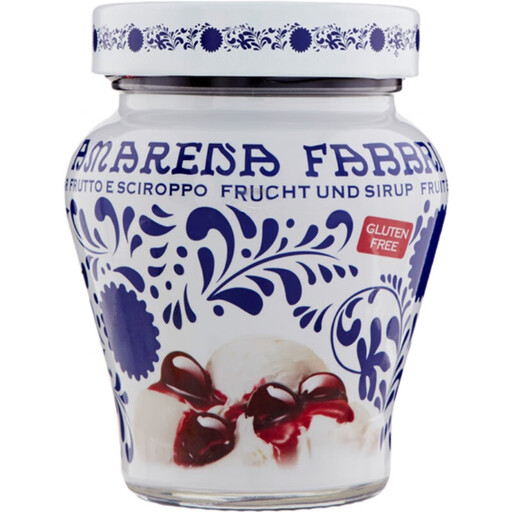 Image unavailable
An option to consider if your dessert calls for cherries rather than a fruit cocktail. Check the drained weight and instructions after opening before planning portions and leftovers.
 Image unavailable
Worth considering for a dish where you want to serve peach halves. The title gives a drained weight of 230 g; ‘light syrup’ doesn’t mean you can skip checking the product’s salt value.
No: this description doesn’t show that the product is lower in salt. To compare fruit in syrup, check the ‘salt’ value per 100 g for each product; the Directorate-General for Competition Policy, Consumer Affairs and Fraud Control (DGCCRF) reminds shoppers that nutrition claims are regulated.
Use the drained net weight to plan how much fruit to serve, as the total weight also includes the syrup. For example, Auchan’s listing for its 410 g cocktail gives 0.25 kg of drained fruit: the two figures answer different questions.
Follow the instructions for the product you buy and refrigerate it if advised. The Auchan and Joybuy product listings cited here give different storage times after opening, so don’t apply the guidance for one tin to another.
Choose a cocktail if your recipe works with a mix, but go for a single fruit if it calls for pieces of pear, peach or another specific fruit. Either way, read the ingredients list: the word ‘cocktail’ alone doesn’t tell you how much of each fruit the recipe contains.