What should you look for?
When planning your dessert, first work out how much you’ll serve. Then choose a pack size to suit how you’ll portion it up and use any leftovers. Compare the ingredients on the labels of the specific products you’re considering, regardless of pack size.
| What to consider |
What to check |
Who is this for? |
| Amount of fruit |
Drained weight and the number of portions you’re planning. |
If I’m topping a dessert for several guests, I want to know how much fruit I’ll actually be able to use. Around 42% of consumers prioritise this usable quantity. |
| Serving and leftovers |
Number of containers, quantity per container and instructions for storing after opening. |
If I’m serving each plate separately, I’d rather open only what I need. Around 33% of consumers prioritise serving in portions. |
| Ingredients |
Ingredients and the “of which sugars” line per 100 g; check for a “no added sugars” claim if it appears on the product. |
When planning the menu, I want to distinguish added ingredients from the sugars listed in the nutritional information. Around 25% of consumers put this check ahead of other criteria. |
Fruit in syrup available on Joybuy
This selection includes fruit cocktails in large and small containers, pear halves and two other fruits in syrup for use in desserts. Choose according to the number of portions you’re preparing, then check the label on the product you receive for its ingredients and storage instructions after opening.
 Image unavailable
ST MAMET fruit cocktail in syrup 850 g
For a fruit salad or topping to share, this cocktail brings several fruits together in an 850 g container.
Check the drained weight to work out how much to serve, then follow the storage instructions after opening.
View on Joybuy
 Image unavailable
ST MAMET fruit cocktail in syrup, 3 × 125 g
If you want to serve the cocktail at different points during the meal, this pack lets you open its three 125 g tins separately.
These are tins, not individual pots ready to serve on a plate; check the drained weight of fruit in each tin.
View on Joybuy
 Image unavailable
St Mamet Williams pear halves in light syrup, 455 g drained
For a tart or dessert to share made with pear halves, this product lists a drained weight of 455 g in its name.
Check the drained weight on the label of the product you receive before deciding how many portions to serve.
View on Joybuy
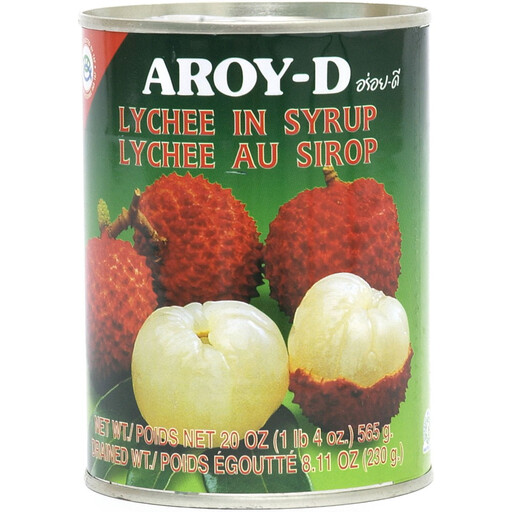 Image unavailable
Aroy-D lychees in syrup 565 g
For a fruit bowl with lychees, this product comes in a 565 g container.
Check the drained weight to find out how many lychees you can use, and read the storage instructions after opening.
View on Joybuy
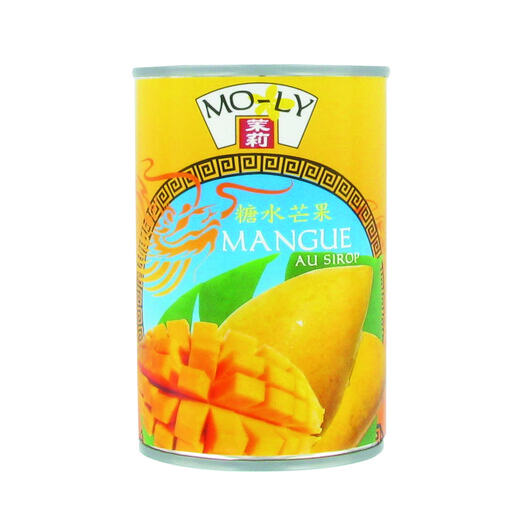 Image unavailable
MOLI mango in syrup 425 g
If you’d like to add mango in syrup to a fruit salad or dessert, this container has a total weight of 425 g.
Check the drained weight when planning portions, and refer to the label for instructions on using the product after opening.
View on Joybuy
Frequently asked questions
Large tin or small containers: which should you choose for New Year’s Eve?
Choose a large tin if you’re making several portions and can use the contents after opening; several small containers are a good option if you’d rather open them as needed. Either way, check the drained weight instead of estimating the amount of fruit from the total weight alone.
Does “no added sugars” mean “sugar-free”?
No. This claim doesn’t mean the product contains no sugars. To compare two fruits in syrup, check their ingredients and the “of which sugars” line in the nutritional information, per 100 g and, if shown, per portion.
How should you store an opened tin of fruit in syrup?
Follow the storage instructions and use-by period shown on the tin you bought. As a specific example, Auchan says to transfer its exotic fruit mix in light syrup to an airtight container, refrigerate it and eat it within two days of opening.
Can you use a tin after its best-before date?
Passing a best-before date doesn’t automatically mean you can’t use a tin if its packaging is intact: France’s consumer protection agency, the DGCCRF, distinguishes between a best-before date and a use-by date. Check the condition of the tin or jar, and don’t apply this distinction to a product with a use-by date.


