People keeping an eye on fat
If fat content is your main concern, compare the amount of fat per 100 g. The word ‘light’ sometimes describes the syrup, not this nutritional value.


When choosing fruit in syrup as part of a low-fat diet, first compare the ‘fat’ value per 100 g, then check the recipe and pack size. Regulation (EC) No 1924/2006 sets a limit of 3 g of fat per 100 g for the ‘low fat’ claim on solid foods. Syrup described as ‘light’ does not necessarily mean there are no added sugars; conversely, ‘no added sugars’ does not mean sugar-free, as the French Agency for Food, Environmental and Occupational Health & Safety (Anses) points out.
If fat content is your main concern, compare the amount of fat per 100 g. The word ‘light’ sometimes describes the syrup, not this nutritional value.
If the syrup matters to you too, look for the ‘no added sugars’ claim, read the ingredients and compare the ‘of which sugars’ line. Anses points out that this claim does not rule out naturally occurring sugars.
If you’re having fruit as a standalone dessert or only occasionally, compare the pots and tins by the drained fruit content and storage instructions after opening.
Start with the nutritional values per 100 g, then check the liquid the fruit is packed in and choose a pack size that suits how much you’ll eat.
| Criterion | What to check | Who is this for? |
|---|---|---|
| Fat | The value per 100 g in the nutritional information, rather than relying on the word ‘light’ alone. | To meet my low-fat goal, I want to know the value for the product I’m buying. Around 36% of consumers would make this their top priority. |
| Added sugars | The ingredients list, any ‘no added sugars’ claim and the ‘of which sugars’ line per 100 g. | If I also want to avoid added sugar in the syrup, the recipe matters just as much as the fruit name. This distinction would be a priority for around 46% of consumers. |
| Pack size and leftovers | Drained weight, number of portions and instructions for after opening. | If I’m only having one portion, I prefer to choose between pots and a tin based on how easily I can store any leftovers. Around 18% of consumers would put this need first. |
The ST MAMET peaches in light syrup listed by Carrefour contain sugar in their recipe. ‘Light’ and ‘no added sugars’ describe two different things.
If you want to limit added sugar, check the claim on the product you’re considering, then compare its ingredients and ‘of which sugars’ value per 100 g.
The name of the liquid the fruit is packed in is no substitute for the nutritional declaration. For solid foods, Regulation (EC) No 1924/2006 reserves the ‘low fat’ claim for products containing no more than 3 g of fat per 100 g.
Check the value per 100 g for the specific product you’re thinking of buying.
Once opened, a tin may leave you with fruit to store, whereas pots let you have one portion at a time.
Compare the drained weight and number of portions, then follow the pack’s instructions for storing leftovers after opening.
A range of peaches in light syrup and fruit cocktails with different recipes.
A Marque Repère range that includes fruit in light syrup and pineapple in pineapple juice.
The retailer’s range includes pots of fruit in light syrup and tins of fruit.
Auchan’s catalogue includes pineapple in juice with no added sugars.
Pots of fruit in light syrup listed by ALDI.
This selection includes fruit in light syrup and fruit in regular syrup. First choose the fruit and pack size that suit you, then compare the fat, sugar and ingredients listed for each product.
 Image unavailable
A product to consider if you’re looking for pears in light syrup and comparing drained fruit weights. If you’re also watching your added sugar, check the ingredients and the ‘of which sugars’ line for this product.
 Image unavailable
These peach halves could suit you if you’re looking for fruit in light syrup with a stated drained weight. ‘Light syrup’ does not mean ‘no added sugars’, so check the recipe if this matters to you.
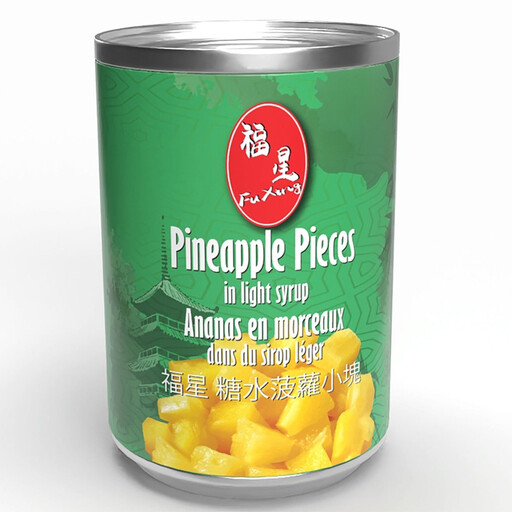 Image unavailable
Comparing the total and drained weights helps you see how much pineapple you’re getting compared with other tins. To compare recipes in light syrup, also check the ingredients and sugar per 100 g.
 Image unavailable
This tin lets you choose sliced mango instead of another fruit. The product name says it’s in syrup but doesn’t describe it as ‘light’, so compare its nutritional information and ingredients with those of other products.
 Image unavailable
This tinned fruit cocktail could suit you if you’re planning several portions of mixed fruit. Don’t confuse it with a ST MAMET product explicitly labelled ‘no added sugars’: compare the ingredients and plan how to store any leftovers after opening.
No. According to Anses, this claim does not rule out naturally occurring sugars. Fruit and juices used in a recipe may contain sugar; if the amount affects your choice, compare the ‘of which sugars’ value per 100 g.
For solid food, Regulation (EC) No 1924/2006 sets a maximum of 3 g of fat per 100 g for using this claim. Check the value on the product you choose rather than relying on the term ‘light syrup’.
Follow the instructions for the tin you’ve bought. For its 425 g fruit cocktail in syrup, the Joybuy product page says to keep it in a suitable container in the fridge for 3 to 4 days after opening. Don’t apply this guidance to another product without checking its packaging.
Check the nutritional information, particularly the ‘fat’ and ‘of which sugars’ lines, using the same 100 g basis. The Directorate General for Competition, Consumer Affairs and Fraud Control says that the nutritional declaration for prepacked foods includes these values; read the ingredients list too, to compare recipes.