Avoiding added sugars
If you’re looking for a dessert with no added sugars, check for this claim, then look at the sugars per 100 g. Fruit can contain sugars that occur naturally.


When choosing fruit in syrup for Easter lunch and prioritising fat content, start by comparing the fat figures per 100 g. Check the sugars and ingredients separately: ‘no added sugars’ does not mean ‘sugar-free’, and the pack size should provide enough fruit for the dessert you’re planning.
If you’re looking for a dessert with no added sugars, check for this claim, then look at the sugars per 100 g. Fruit can contain sugars that occur naturally.
For a tart, a dessert glass or a fruit salad, choose the shape of fruit to suit your recipe. Check the drained net weight to work out how much you’ll have to serve.
Individual pots make serving easier. However, the pack format alone doesn’t tell you how much fat or sugar the product contains, so compare the nutrition information for the product you choose.
For an Easter dessert, start by checking the fat per 100 g, then look at the sugars and how much fruit you’ll actually have. The DGCCRF notes that nutrition information presented per 100 g makes it easier to compare prepacked foods.
| What to consider | What to check | Who is it for? |
|---|---|---|
| Added sugars | Compare the fat and sugars per 100 g, then read the ingredients list. | If I want to avoid added sugar without confusing this with being sugar-free, I also check the nutrition information. Around 40% of consumers put this need first. |
| Quantity to share | Check the drained net weight and choose a fruit shape to suit your recipe. | For a tart or a fruit bowl, what matters most to me is having enough fruit once the liquid has been drained. Getting enough to share is the top priority for around 30% of consumers. |
| Individual servings | Check how many pots are included and how much fruit there is per serving. | When I want to serve dessert in individual portions, I prioritise convenient packaging. This is the main requirement for around 30% of consumers. |
The Auchan fruit cocktail in light syrup featured by the retailer contains water and sugar, among other ingredients. The name of the covering liquid isn’t enough to establish that no sugars have been added.
If avoiding added sugars is your priority, look for the relevant claim and check the ingredients list on the specific product.
The St Mamet fruit cocktail pots featured by Auchan carry a ‘no added sugars’ claim but still contain 13 g of sugars per 100 g, including naturally occurring sugars.
Compare the ‘of which sugars’ figures per 100 g across products in a format that suits you.
The weight of a tin includes its covering liquid. For a recipe or a dessert to share, the drained net weight helps you work out how much fruit you’ll have.
Check this weight on the packaging before deciding how many tins to serve.
The St Mamet products featured by Carrefour and Auchan have different pack sizes and nutrition figures. The pineapple in juice contains 0 g of fat per 100 g, while the cocktail pots featured by Auchan contain less than 0.5 g.
Check the nutrition information and ingredients for the specific recipe and pack size you choose.
Carrefour sells several types of fruit in syrup under this brand, including peaches and no-added-sugar options in small pots.
The products featured by Carrefour and Auchan include pineapple in juice and no-added-sugar fruit cocktail pots.
The retailer offers, among other products, half peaches in tins and fruit pots in light syrup.
These pears, mangoes, lychees and fruit cocktails in syrup offer a range of options to consider for an Easter dessert. Compare the nutrition information and, if you’re making a dessert to share, check the drained net weight shown for each product.
 Image unavailable
These pear halves are an option for a dessert to share, and the 455 g shown is the drained weight. If you’re comparing different recipes, check the fat, sugars and ingredients.
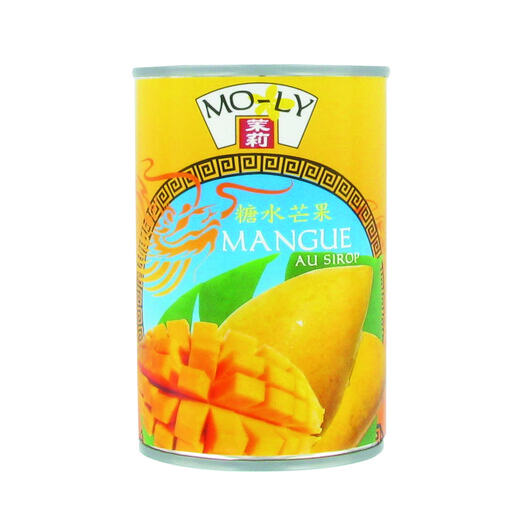 Image unavailable
This mango in syrup is one option to consider for your dessert. If the amount of mango you’ll serve is important, check the drained net weight rather than relying on the tin’s total weight of 425 g.
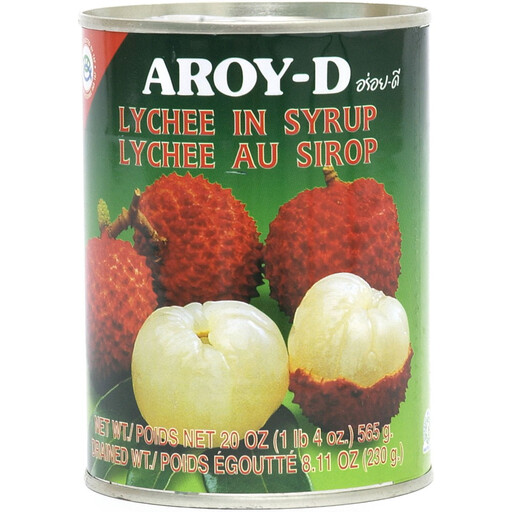 Image unavailable
These lychees in syrup are another fruit option for dessert. To work out how much to serve, check the drained net weight. For your nutritional priorities, compare the fat and sugars per 100 g.
 Image unavailable
The 850 g tin is worth considering for a dessert to share. Check its drained net weight to work out how much fruit you’ll have, then check the label for the fat, sugars and ingredients in this recipe.
Image unavailable
This fruit cocktail in syrup comes in a 425 g pack. To decide how many portions to serve, check the drained net weight. Don’t assume its nutrition figures are the same as those of another St Mamet fruit cocktail.
No. Fruit with no added sugars can still contain sugars that occur naturally. The St Mamet fruit cocktail pots featured by Auchan contain 13 g of sugars per 100 g, for example. Read the claim alongside the ingredients list and nutrition information.
Check the ‘fat’ figure per 100 g for each product, then compare the sugars separately. The DGCCRF says that presenting nutrition information on this basis makes it easier to compare prepacked foods. The word ‘light’ on a syrup isn’t a substitute for checking the label.
If you’re making a dessert to share, choose a tin of fruit that suits your recipe. If you want to serve individual portions, pots are a convenient option. In either case, check the drained net weight to estimate how much fruit you’ll have.
Follow the instructions on the product you’ve chosen. For its Martin's International fruit cocktail in light syrup, Auchan advises transferring the contents to a sealed food container, keeping it in the fridge and eating it within three days of opening. This guidance doesn’t automatically apply to other products.