Hosts keeping an eye on fat
You’d like to serve fruit in syrup at dinner while checking its fat content. The words ‘light syrup’ are no substitute for the figure per 100 g on the product you choose.


To choose fruit in syrup for your dinner, check the ‘fat’ figure per 100 g for the specific product rather than relying on the words ‘light syrup’. European Union Regulation (EC) No 1924/2006 sets a limit of 3 g per 100 g for the ‘low fat’ claim on solid foods. Then check the ingredients and choose between a tin to serve at the table and individual portions, depending on how you plan to serve it.
You’d like to serve fruit in syrup at dinner while checking its fat content. The words ‘light syrup’ are no substitute for the figure per 100 g on the product you choose.
You prefer a recipe with no added sugars and want to keep this separate from fat content. The St Mamet pineapple featured by Carrefour and Carrefour Classic’ peaches carry this claim; check their pack sizes and nutritional information separately.
You’re deciding between fruit to arrange in a serving bowl, individual glasses or as a topping, and portions that are ready to serve. Drained weight, the shape of the fruit and storage instructions after opening can help you choose between formats.
For this dinner, check the fat per 100 g first. Then consider your preference for added sugars and the format you need for dessert.
| Criteria | What to check | Who might this suit? |
|---|---|---|
| Fat | Check the figure per 100 g for the exact product. For a solid food carrying the ‘low fat’ claim, European Union Regulation (EC) No 1924/2006 sets a maximum of 3 g per 100 g. | If checking this is my top priority for dessert, the syrup description alone isn’t enough; around 42% of consumers would put fat first. |
| Added sugars | Check the ingredients list and the ‘sugars’ figure per 100 g; ‘light syrup’ does not mean ‘no added sugars’. | If I’m choosing a recipe with no added sugars, I want to distinguish sweetening ingredients from the sugars shown in the nutritional information; around 33% of consumers would prioritise this. |
| Serving and leftovers | Compare the drained weight, the shape of the fruit and the storage instructions after opening. | If I’m preparing individual glasses or plates, I want a quantity and format that suit the number of guests; around 25% of consumers would put serving first. |
The four-fruit cocktail in light syrup featured by Auchan contains sugar in its ingredients list and has 14 g of sugars per 100 g, even though its fat content is below 0.5 g per 100 g.
Check the ingredients, sugars and fat separately for the product you plan to serve.
The name of the syrup does not tell you the fat content of the fruit you choose. European Union Regulation (EC) No 1924/2006 sets a limit of 3 g per 100 g for the ‘low fat’ claim on solid foods.
Compare the ‘fat’ figures on the same per-100 g basis.
A tin intended for several desserts may leave you with fruit after dinner. How long it can be kept once opened depends on the instructions for that specific product.
Choose a drained weight that suits your planned serving, and follow the packaging instructions on transferring and refrigerating the contents.
The St Mamet pineapple with no added sugars featured by Carrefour has 0 g of fat per 100 g; this figure may not apply to other fruits or formats from the brand.
Check the full product name, ingredients and nutritional information for each product you’re considering.
A no-added-sugar sliced pineapple product could work well in a dessert to serve at the table or use as a topping.
The no-added-sugar peaches come in four pots of 70 g net drained weight, making them easy to serve in individual portions.
The range includes a fruit cocktail and peach halves in light syrup, both suited to serving as part of a dessert to share.
This range, sold by E.Leclerc, includes tins and individual pots of fruit in light syrup.
ALDI France offers a 500 g Baccara fruit cocktail in light syrup.
These tinned fruits can be used to make or top a dessert. Compare their quantities and presentation, then check the fat content and ingredients for each product before choosing.
 Image unavailable
The pear halves can be arranged in a dessert to share. The stated drained weight is 455 g; if these criteria will determine your choice, check the fat content and ingredients for this product.
 Image unavailable
These peach halves offer another shape of fruit to arrange in a dessert. The stated drained weight is 230 g; check the nutritional information and ingredients list for this product rather than assuming its contents from the words ‘light syrup’.
 Image unavailable
The 850 g size could work well for a fruit dessert to share. Plan what you’ll do with any leftovers, and check the fat content and ingredients for this tin.
 Image unavailable
This 425 g cocktail is worth considering if you want to serve a smaller quantity. Its Joybuy listing shows less than 0.5 g of fat per 100 g. Once opened, it should be kept in a suitable container in the fridge for 3 to 4 days.
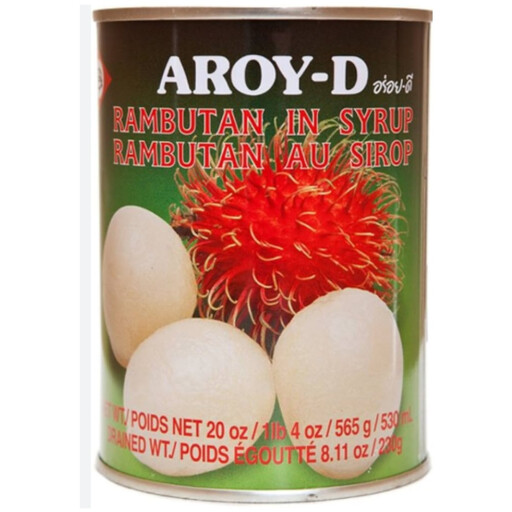 Image unavailable
These 565 g of rambutans give you another fruit option for dessert. Check the fat, sugars and allergen information for the product you buy, and consider the fruit’s texture for any guests who may be affected.
For a solid food, European Union Regulation (EC) No 1924/2006 allows this claim when the product contains no more than 3 g of fat per 100 g. Check the figure for the specific product: ‘light syrup’ on its own doesn’t tell you its fat content.
No. Auchan’s listing for its four-fruit cocktail in light syrup includes sugar in the ingredients and shows 14 g of sugars per 100 g. For any other product, check its own ingredients list.
No, these claims relate to different criteria. The St Mamet pineapple with no added sugars featured by Carrefour also has 0 g of fat per 100 g, but you’ll need to check this figure on each other product you’re considering.
Yes, as long as you follow the storage instructions for your chosen product and the stated storage time. For the 425 g St Mamet cocktail, the Joybuy listing advises transferring the contents to a suitable container, refrigerating them and using them within 3 to 4 days of opening.