Organisers keeping an eye on fat
If low fat is your top priority, compare the ‘fat’ value per 100 g rather than relying on the product name alone.


For a christening buffet, compare the fat and sugar values per 100 g, then choose a format to suit how you plan to serve the fruit. A large tin is ideal for serving in a bowl or individual glasses, while individual pots can be placed straight onto the buffet. The words ‘light syrup’ alone don’t tell you the sugar content or how much fruit you’ll have once it’s drained.
If low fat is your top priority, compare the ‘fat’ value per 100 g rather than relying on the product name alone.
If you’re serving the fruit in a bowl or individual glasses, check the drained weight. If you’d rather put portions straight onto the table, look at individual formats.
The fat content won’t answer your questions about sugars. Compare the ingredients list and the ‘of which sugars’ value, and look for a ‘no added sugar’ claim if it appears on the product.
When choosing fruit in syrup for a christening buffet, check the nutrition information per 100 g first, then work out portions based on the drained weight and how you’ll serve it.
| Criterion | What to check | Who is this for? |
|---|---|---|
| Fat | Check the fat content per 100 g and compare sugars separately. | I’m mainly looking for a low-fat option and want to be able to check this on the label. Around 40% of consumers prioritise this need. |
| Format and quantity | Compare the drained weight, number of portions and instructions for after opening. | For a self-service buffet, I need to choose between individual portions and fruit to share out into dishes. Around 30% of consumers prioritise this way of serving. |
| Sugars and ingredients | Check the ingredients list and the ‘of which sugars’ value per 100 g; don’t confuse ‘light syrup’ with ‘no added sugar’. | Even if the fat content suits me, I want to know which sugars are in the recipe. For around 30% of consumers, the ingredients come before other criteria. |
The Auchan and Del Monte fruit cocktails described as being in light syrup contain sugar in their ingredients lists. The St Mamet cocktail labelled ‘no added sugar’, on the other hand, states that it contains naturally occurring sugars.
For the product you’re considering, check the product name, ingredients and ‘of which sugars’ value per 100 g together.
The total weight includes the liquid covering the fruit. When working out how much fruit you’ll need for bowls or individual glasses, the drained weight is the useful figure.
Note the drained weight of each container and add the amounts together based on the portions you plan to serve.
Instructions for after opening vary between products: the Auchan cocktail reviewed says to consume within 2 days, while the Del Monte cocktail reviewed should be consumed within 3 to 4 days.
Plan your preparation around the instructions on each product and keep any leftovers in the recommended container in the fridge.
The formats and values below relate to the specific products mentioned, not every product from each brand.
The cocktail in individual pots is handy for serving portions, while the whole apricots offer another way to arrange fruit for the buffet.
The 825 g fruit cocktail in light syrup, with a drained weight of 500 g, can be served in a bowl or individual glasses.
The four-fruit cocktail in light syrup mentioned here comes in a 410 g tin, with a drained weight of 250 g.
These containers of fruit in syrup offer options for serving in a bowl, individual glasses or on plates. For each one, consider the amount of fruit you plan to serve alongside the ingredients and instructions shown on the product you choose.
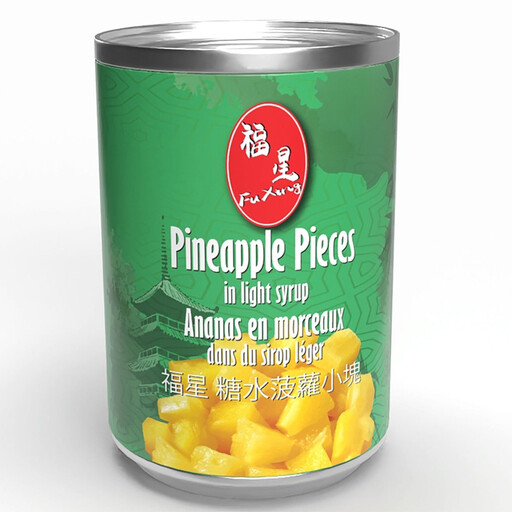 Image unavailable
The pineapple pieces can be served in individual dishes or added to a fruit bowl for the buffet.
The product is labelled as 565 g in total, including 260 g drained: use the latter figure to work out how much fruit you’ll have. Check the sugars and instructions for after opening separately.
 Image unavailable
Rambutans offer another fruit option to serve in individual dishes or alongside other fruit on the buffet.
The container is labelled as 565 g. To work out portions, check its drained weight; also check the ingredients, nutrition information and allergen information on the product.
 Image unavailable
The mango slices can be served on individual plates or added to a fruit mix for the buffet.
The container is labelled as 425 g. Before deciding how many portions you’ll need, check the drained weight, then compare the sugars per 100 g and the instructions for after opening.
 Image unavailable
This large container of fruit cocktail can be shared from a bowl or served in individual glasses.
The container is labelled as 850 g. To plan the buffet, check the drained weight rather than using the total weight; also read the sugar information and storage instructions for after opening.
 Image unavailable
This cocktail can be used to make individual glasses or to top up a bowl of fruit for the buffet.
The container is labelled as 425 g. Check the drained weight to work out how much fruit you’ll have, then check the sugars per 100 g and the instructions for after opening.
Check the ‘fat’ value per 100 g on the label of the product you’ve chosen. Don’t infer either the fat content or sugar content from the words ‘light syrup’ alone.
No: the Auchan and Del Monte fruit cocktails in light syrup mentioned here include sugar in their ingredients lists. The St Mamet cocktail listed by Carrefour says ‘no added sugar’, but states that it contains naturally occurring sugars. Always check the specific product and its ‘of which sugars’ value.
If the fruit is sold in liquid, use the drained weight: the total weight includes the liquid too. Check this information on each container before estimating how much to serve in a bowl or individual glasses.
Follow the instructions for the product you’ve opened: the Auchan and Del Monte cocktails mentioned here say to keep them in the fridge for 2 days and 3 to 4 days respectively after opening. Use the container recommended on the packaging and bear this timeframe in mind when preparing the buffet.
No: for this specific criterion, compare the fat content per 100 g directly. Check the sugars and ingredients too, then look at the drained weight to choose a format that works for how you’ll serve it.