For a dessert to share
If you’re making a tart, cake or plated desserts, choose the way the fruit is cut to suit your presentation. The drained weight helps you work out how much fruit you’ll have to arrange.


For a plated dessert, start by choosing the shape of the fruit and checking its drained weight. Halves and slices work well when you want clearly visible pieces, while a diced fruit cocktail is better suited to a dessert glass. Then choose a pack size to suit the number of guests, and compare the ingredients and nutrition information if sugar content matters for your menu. If you’re buying in advance, follow the storage instructions before and after opening.
If you’re making a tart, cake or plated desserts, choose the way the fruit is cut to suit your presentation. The drained weight helps you work out how much fruit you’ll have to arrange.
If you’re serving the fruit with biscuits, cream or a coulis, compare the ingredients list and the “of which sugars” line for the products you’re considering. “No added sugar” does not mean “sugar-free”.
If you’re buying in advance for a set number of guests, compare individual pots with larger packs based on the portions you need and how much might be left after opening.
For this dinner, start with the dessert you plan to serve. The presentation will determine how the fruit should be cut, then the ingredients and quantity will help you choose the right pack size.
| Criteria | What to check | Who is it for? |
|---|---|---|
| Presentation | The cut specified — halves, slices or pieces — and the drained weight. | For a tart or plated desserts, I want visible pieces that suit my recipe. Around 36% of consumers are said to prioritise presentation. |
| Ingredients | The preserving liquid, ingredients and “of which sugars” per 100 g. | If the dessert already includes sweetened cream or coulis, I want to be able to choose fruit with its ingredients in mind. Around 36% of consumers are said to put ingredients first. |
| Quantity | The drained weight, the number of portions you plan to serve and the instructions for after opening. | To serve the planned number of guests without opening more fruit than necessary, I prefer a pack size that suits the dessert. Getting the quantity right is said to be the main consideration for around 28% of consumers. |
Peach halves, pineapple slices and diced fruit cocktail won’t look the same on a tart or in a dessert glass.
Decide what shape you need for your dessert, then check the variety and drained weight.
Fruit and juice can contain naturally occurring sugars, even in a recipe with no added sugar.
Read the ingredients and compare the “of which sugars” figure per 100 g across the products you’re considering.
The weight of a tin or pot may include the preserving liquid, so it doesn’t tell you how much fruit you’ll have to serve.
Use the drained weight shown on the label and compare it with the number of portions you plan to serve.
Once opened, follow the storage instructions for that product. The Joybuy listing for St Mamet 425 g fruit cocktail says that this product can be kept in a suitable container in the fridge for 3 to 4 days.
Follow the instructions for the product you’ve bought rather than applying this storage time to all tinned fruit.
The range featured by Carrefour France includes different cuts of fruit in syrup, fruit cocktails and products labelled “no added sugar”.
The range featured by E.Leclerc includes peaches in light syrup, as well as other fruit and fruit cocktails in tins or individual pots.
The products featured by Carrefour France include peaches, fruit cocktails and pineapple slices with no added sugar.
Beyer offers jars of preserved fruit, including peaches, pears, apricots and fruit cocktails.
These Joybuy products offer a few different ways to serve fruit at dinner: halves or slices for a more striking presentation, cherries as a garnish, and fruit cocktail pieces for dessert glasses or individual portions. Choose according to your recipe and the quantity listed for each pack.
 Image unavailable
The pear halves can be arranged on a tart or in a dessert to share.
The title lists 455 g drained; check the label on the product you receive to plan how much to serve.
 Image unavailable
Peach halves are ideal for a dessert where you want each piece to stand out.
The title lists 230 g drained, which you can compare with the portions you plan to plate. Check the label on the product you receive.
 Image unavailable
Mango slices can be used to top a dessert rather than making a diced fruit cocktail.
The 425 g refers to the pack size shown in the title. Check the drained weight to work out how much fruit you’ll have to serve.
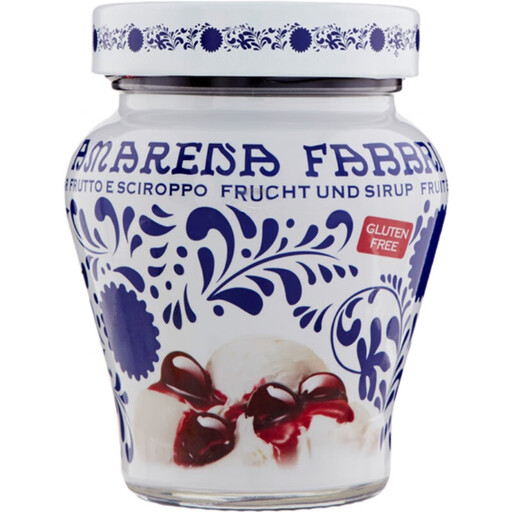 Image unavailable
These jarred cherries can finish off a plated dessert when you want a distinct garnish.
The title lists 230 g. Check the drained weight to work out the number of portions, and check the nutrition information if sugar content affects your choice.
 Image unavailable
The pieces are ideal for dessert glasses or desserts that don’t need large, even slices.
The pack contains three 125 g tins. Check the drained weight of each one before deciding on portions.
Start with the drained weight and the portions you plan to serve, rather than the total weight of the pack alone. For a dessert to share, tinned or jarred halves or slices may work well; individual pots let you open the fruit portion by portion.
No. Fruit and juice can contain naturally occurring sugars. Compare the ingredients list and the “of which sugars” figure per 100 g for the products you’re considering.
Yes, as long as you follow the date and storage instructions on the packaging before opening. For a best-before date, the Directorate-General for Competition Policy, Consumer Affairs and Fraud Control states that going past the date does not necessarily mean the product cannot be eaten if the packaging is intact. Once opened, follow the product’s own instructions.
Follow the instructions for the product you’ve bought, and refrigerate leftovers when directed. The Joybuy listing for St Mamet 425 g fruit cocktail recommends storing it in a suitable container in the fridge for 3 to 4 days after opening. This storage time does not automatically apply to other products.