
Livraison le jour même ou le lendemain

Qualité garantie

Débloquez vos offres de bienvenue: Livraison GRATUITE | Jusqu'à -80 % | 30 jours d'essai gratuits à JoyPlus
Téléchargez l'application
Buying fruit juices and drinks seems straightforward… until you have to compare the labels. Between multi-fruit juice, fruit nectar, fruit drink and fruit refreshment, the differences in ingredients can affect the taste, price and everyday use.
To avoid any nasty surprises, three common pitfalls keep cropping up:
Here are the criteria to check before choosing a bottled fruit juice or a pack of fruit drinks.
The name itself gives you valuable clues about what's inside:
For a tropical fruit juice, check the proportions of mango, pineapple, passion fruit, guava or banana in particular. The brand name may highlight a flavour that actually makes up only a small part of the recipe.
Always check the nutritional information panel on an equal-volume basis. A drink that shows few calories per serving may be sold in a large container – the amount you actually drink then changes.
The no added sugar claim means no sugar has been added to the recipe. It does not mean the drink contains no sugar at all. For example, JOKER No Added Sugar Mixed Fruit Juice has 9.2 g of sugars per 100 ml, naturally present from its blend of apple, orange, pineapple and passion fruit juice.
For children, also consider the serving size. A small 200 ml bottle doesn't deliver the same amount as a glass poured from a 1.5 litre family bottle.
The size directly affects convenience and the price per litre:
Once opened, always follow the storage instructions on the packaging. Several products need to be kept in the fridge and consumed within two to five days.
The products below suit different needs. Always check the nutritional information and ingredient list on the packaging you receive: batches and presentations can change.

Why this choice suits this profile: Its 1.5 litre size works well for a household looking for a multi-fruit drink for mornings or meals, without cluttering the fridge with small bottles.
The no added sugar claim comes with an easy-to-read nutrition panel: 39 kcal and 9.2 g of sugars per 100 ml.
A blend made up of 70% apple, plus orange, pineapple and passion fruit. Keep refrigerated after opening.
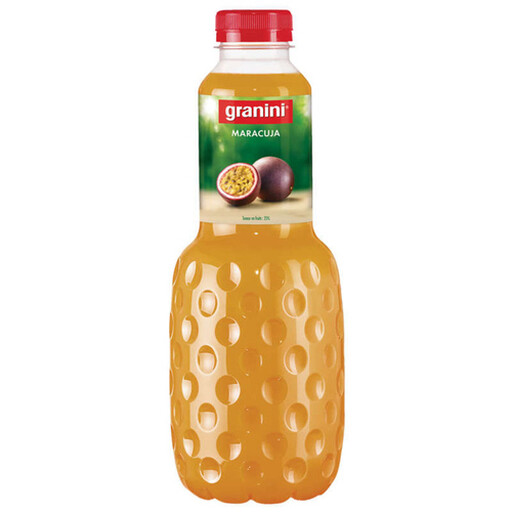
Why this choice suits this profile: This one-litre drink is aimed at those looking for a bold passion fruit and maracuja flavour for a tasting or brunch.
The recipe is clearly listed: water, passion fruit juice from concentrate, sugar, pectin and natural flavourings.
A well-defined flavour profile, with 52 kcal and 12 g of sugars per 100 ml.
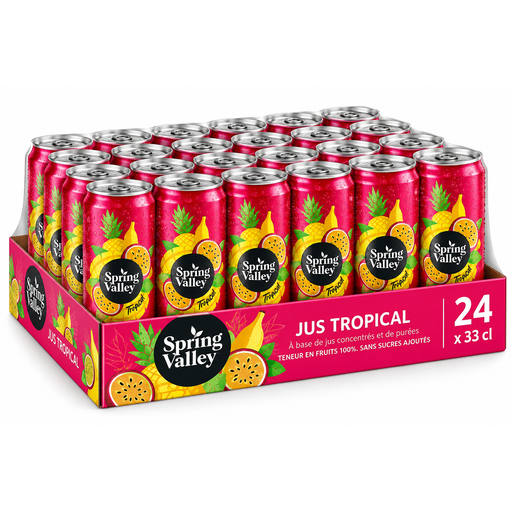
Why this choice suits this profile: The pack of 24 x 330 ml cans is ideal for parties, events, picnics and households that want to stock up.
Each can has a fixed volume, so you don't have to open a large bottle for just one serving.
A blend of tropical fruits, sold in a 24 x 330 ml format and storable at room temperature before opening.
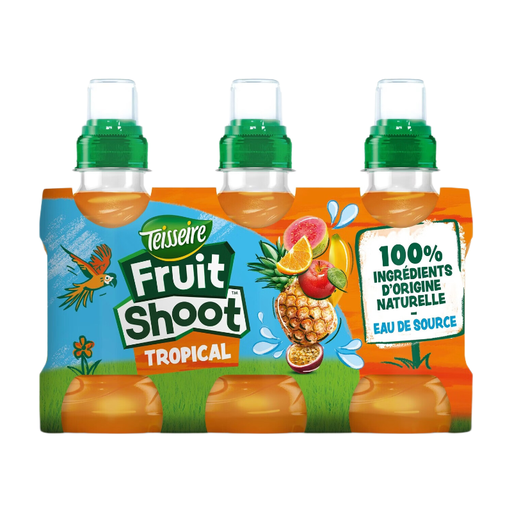
Why this choice suits this profile: The 200 ml bottles with a sports cap are easy to handle on a journey, an outing or at snack time.
The small size reduces leftovers after opening, and the recipe shows 23 kcal per 100 ml.
A drink made with 85% spring water and 10% fruit juice and purées, with bottles described as recyclable.
We've put together a comprehensive, real-time updated list of products that meet these strict selection criteria as well as European safety regulations.
Multi-fruit juice combines several fruit juices or purées. A fruit drink generally contains a more variable proportion of fruit, along with water and possibly sugar, sweeteners or flavourings. The ingredient list and nutrition panel let you compare different products on a concrete basis.
It depends on the product. Some products say two days, others three to five days. In any case, put the bottle in the fridge after opening, close it tightly and follow the instructions on the label. Individual portions can help reduce waste if you only drink it occasionally.
A 1 to 1.5 litre bottle works well for meals and breakfast. For a party, a pack of 24 cans or several 50 cl bottles makes serving easier. For children and on the go, 200 ml formats are more portable. Just remember to compare their sugar content per 100 ml.