People avoiding added sugars
You’re looking for this label on the product you choose, without mistaking it for a claim that it contains no naturally occurring fruit sugars.


For your weekly shop, look for a product labelled ‘no added sugar’, then compare its product description, ingredients, sugars per 100 ml and storage instructions after opening. Pure juice, juice made from concentrate and nectar may not meet the same expectations in terms of ingredients, but none of them is ‘sugar-free’ just because it carries this label.
You’re looking for this label on the product you choose, without mistaking it for a claim that it contains no naturally occurring fruit sugars.
You choose a pack size based on the portions you plan to serve and the storage instructions after opening, while taking everyone’s tastes into account.
You want to understand where juice fits into your weekly drinks. Manger Bouger recommends limiting fruit juice and choosing whole fruit instead.
Start with the label and the ‘of which sugars’ line, then compare the recipes according to your tastes. Finally, choose a pack size that you can finish within the stated period after opening.
| Criterion | What to check | Who it matters to |
|---|---|---|
| Added sugars and sugars present | The ‘no added sugar’ label on the exact product, and the ‘of which sugars’ line per 100 ml. | I want to avoid added sugars without taking the label to mean the juice contains no sugars. Around 42% of shoppers concerned about this would make this their priority. |
| Product type and recipe | The product description — pure juice, juice made from concentrate or nectar — and the ingredients; check for pulp if texture matters to you. | If my household’s tastes guide my purchase, I need to tell the recipes apart rather than rely on the label on the front alone. The recipe would be the priority for around 33% of shoppers concerned about this. |
| Pack size and storage | The pack size, the portions you plan to serve and the instructions for the specific product after opening. | I’d rather choose a size the household can finish within the stated period than open a large carton for just a few glasses. For around 25% of shoppers concerned about this, it would be the first thing to consider. |
Sugars naturally present in the fruit remain in the product. For example, the Joybuy product page for a Joker mixed fruit juice lists 11 g of sugars per 100 ml.
Compare the ‘of which sugars’ line per 100 ml, then take into account how much you plan to serve.
A carton you plan to use throughout the week may need to be finished sooner. Auchan’s product page for a 1 L mixed fruit juice says to refrigerate it and consume it within 5 days of opening.
Match the pack size to the number of glasses you’ll actually serve, and follow the instructions on the packaging you buy.
Having no added sugar doesn’t remove the sugars that are naturally present. Manger Bouger recommends limiting fruit juice and choosing whole fruit instead.
Plan how much juice you’ll serve as part of your shop, rather than basing the amount you buy solely on the size of the bottles.
Product descriptions, ingredients, pulp and pack sizes can vary across the same range.
Compare the labels of the specific products you’re interested in, using the same nutritional measure of 100 ml.
The range includes mixed fruit juices labelled ‘no added sugar’.
Carrefour product pages show some pure juices and multivitamin juices labelled ‘no added sugar’.
Carrefour Classic' and Carrefour Extra ranges include products to consider among juices with no added sugar.
Auchan’s 1 L mixed fruit juice is made from concentrate, contains no pulp and has no added sugar.
E.Leclerc lists a 1 L Jafaden mixed fruit nectar with no added sugar.
This range includes mixed fruit juices, an apple juice and a mixed fruit nectar. For your weekly shop, first distinguish nectar from juice, then choose a pack size that suits the portions you plan to serve and the storage instructions.
 Image unavailable
A 1 L pack to consider if you’re planning several portions of mixed fruit juice. The product page says to refrigerate it after opening and consume it within 5 days; ‘no added sugar’ does not mean ‘sugar-free’.
 Image unavailable
Worth considering if your household plans to finish a 1.5 L carton within a few days. The product page says to refrigerate it after opening and finish it within 3 to 4 days; check that this suits your routine.
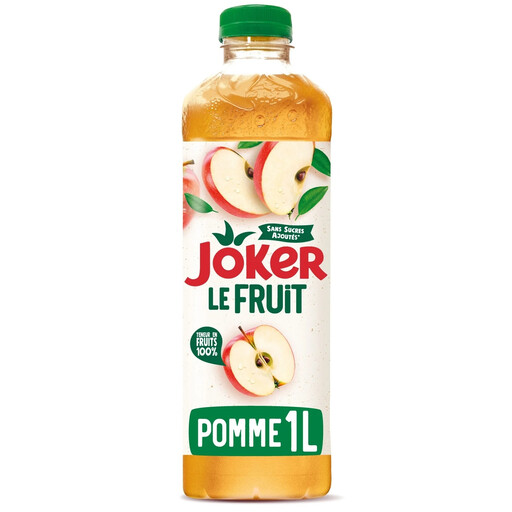 Image unavailable
A 1 L option if you prefer an apple-based recipe to mixed fruit. Check the storage instructions on the packaging after opening before planning to use this carton throughout the week.
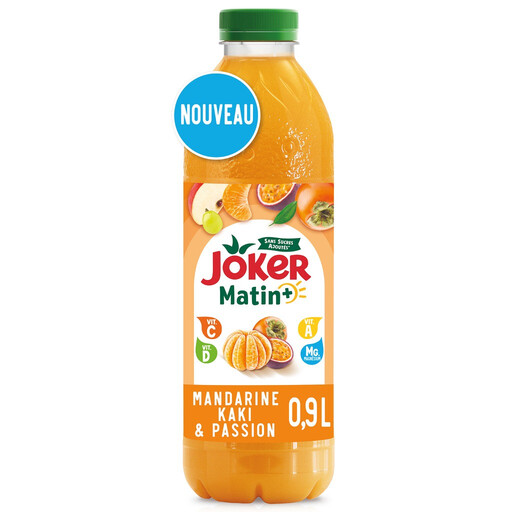 Image unavailable
This 900 ml pack may suit you if you’re looking for something smaller than 1 L and like this combination of fruit. The product page says to refrigerate it after opening and consume it within a few days; check the packaging to help plan your portions.
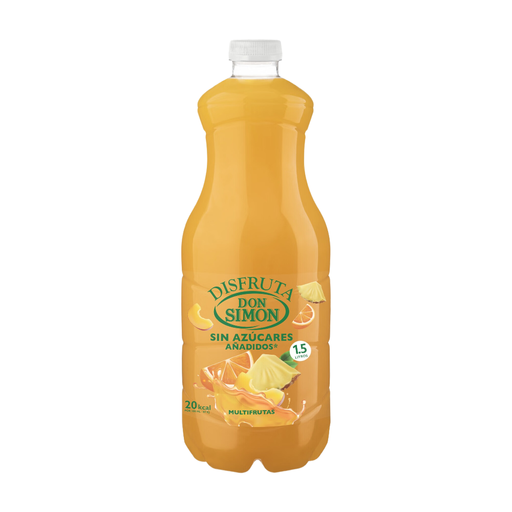 Image unavailable
Worth considering if you’re looking at nectar rather than juice: the two descriptions aren’t interchangeable. The recipe lists the sweetener E-955; check the ingredients if this matters to you. The product page says to refrigerate it after opening and consume it within 3 to 4 days.
No: sugars that are naturally present remain in the juice. To find out how much sugar is in the product you’ve chosen, check the ‘of which sugars’ line per 100 ml in its nutritional information.
Not necessarily: these descriptions distinguish different products, but they don’t tell you which contains less sugar. Compare the ingredients, the texture you prefer and the sugar content per 100 ml of the specific products.
Choose a pack size your household can finish within the stated period after opening. For example, Auchan’s product page for a 1 L mixed fruit juice says to consume it within 5 days of opening; always follow the instructions for the product you buy.
No: ‘nectar’ and ‘pure juice’ are different product descriptions. If you’re considering both, check their ingredients and nutritional information separately rather than assuming what they contain based on the ‘no added sugar’ label alone.