Hosts keeping an eye on sugar
If you want to limit the grams of sugar in each glass, compare the ‘of which sugars’ figures per 100 ml and the portion you plan to serve. ‘No added sugar’ alone isn’t enough to tell two drinks apart.


To serve a lower-sugar juice at your Christmas drinks, compare the ‘of which sugars’ figure per 100 ml, then consider how much you’ll pour. ‘No added sugar’ doesn’t mean sugar-free. For example, E.Leclerc lists 7.4 g of sugars per 100 ml for its JAFADEN reduced-sugar mixed fruit juice, while Auchan lists 10 g for JOKER Le Fruit with no added sugar. If you’d rather choose a 100% fruit juice, check the ingredients without assuming it will contain less sugar.
If you want to limit the grams of sugar in each glass, compare the ‘of which sugars’ figures per 100 ml and the portion you plan to serve. ‘No added sugar’ alone isn’t enough to tell two drinks apart.
You’re looking for a fruit-based drink with no added sugar, while being happy to accept the sugars naturally present in fruit. Check the product description and ingredients: a nectar and a 100% fruit juice are different types of drink.
An orange or grapefruit drink could be a good match for the flavours you’re looking for. Before choosing a fresh juice, check how it needs to be stored. If it contains grapefruit, also bear in mind the precautions relating to certain medicines highlighted by France’s national health insurance service.
For your Christmas drinks, first decide whether you want to reduce the amount of sugar served, choose a recipe with no added sugar or focus on a particular flavour. Then check the portion size, ingredients and storage instructions for your chosen bottle.
| What to consider | What to check | Who is it for? |
|---|---|---|
| Sugar per glass | The ‘of which sugars’ figure per 100 ml and the amount you’ll actually serve. | If I want to limit the sugar in my glass, a recipe with no added sugar isn’t enough on its own: I check the amount listed. Around 36% of consumers would make reducing sugar their priority. |
| Fruit content | Whether it’s described as juice, 100% fruit juice or nectar, as well as the ingredients list. | I prefer a recipe with no added sugar and am happy to accept sugars naturally present in fruit. Around 29% of consumers would put this preference first. |
| Flavours and serving | The fruit used and storage conditions before serving. | For drinks before a meal, I first choose the flavours I’d like to offer, then make sure I can keep the bottles at the required temperature. This would be the priority for around 21% of consumers. |
| Serving precautions | Whether the recipe contains grapefruit and the size of the portions. | Before serving grapefruit juice, I want to be able to take account of guests who take medicines. Around 14% of consumers would prioritise these precautions and the portions served. |
Sugars naturally present in fruit are still included in the nutrition information. Auchan lists 10 g of sugars per 100 ml for JOKER Le Fruit with no added sugar, compared with 7.4 g per 100 ml on E.Leclerc’s product information for JAFADEN reduced-sugar mixed fruit juice.
Compare the ‘of which sugars’ figure per 100 ml, then work out how much sugar that means for the amount you plan to pour.
Carrefour describes its Classic’ mixed fruit nectar as containing at least 75% fruit, while its Bio mixed fruit drink is described as a 100% fruit juice. These terms aren’t interchangeable.
Check the product description, fruit content and ingredients list. For Carrefour Classic’ nectar, also check the packaging for information about added sugars.
Carrefour says its Extra 3 Agrumes fresh juice must be kept between 0 °C and +6 °C, including while you’re getting ready to serve drinks.
Keep the bottles in the fridge and only take out the amount you need when it’s time to serve.
France’s national health insurance service says grapefruit juice can increase the absorption of certain medicines.
Have a drink without grapefruit available, and ask any guests who may be affected to check the information leaflet or speak to their pharmacist or doctor.
The range includes mixed fruit juices with no added sugar, as well as recipes described as containing fruit and vegetables.
The products reviewed include a Bio 100% mixed fruit juice, an Extra 3 Agrumes fresh juice and a Classic’ mixed fruit nectar. Check the category before comparing their labels.
This reduced-sugar mixed fruit juice is worth looking at if the amount of sugar in each serving is your main priority.
These DON SIMON DISFRUTA and JOKER bottles give you the choice of nectars and mixed fruit juices for drinks before a meal. Their categories and sizes are shown in the product names. To compare the amount of sugar you’ll serve, check the nutrition information on each bottle.
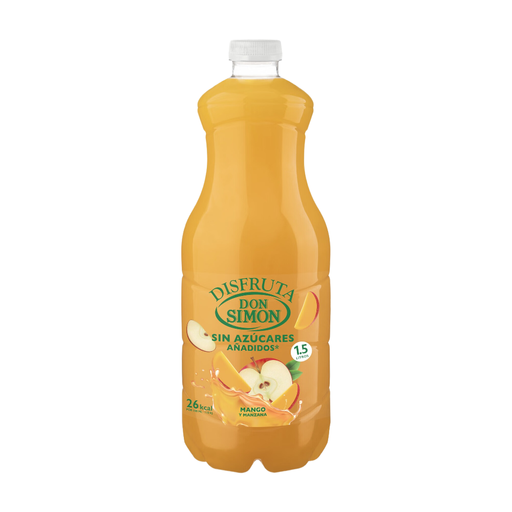 Image unavailable
Choose this 1.5 L PET bottle of mango and apple nectar if you’d like to offer a fruity flavour. If your priority is to reduce the amount of sugar served or choose a 100% fruit juice, check the ‘of which sugars’ figure and ingredients.
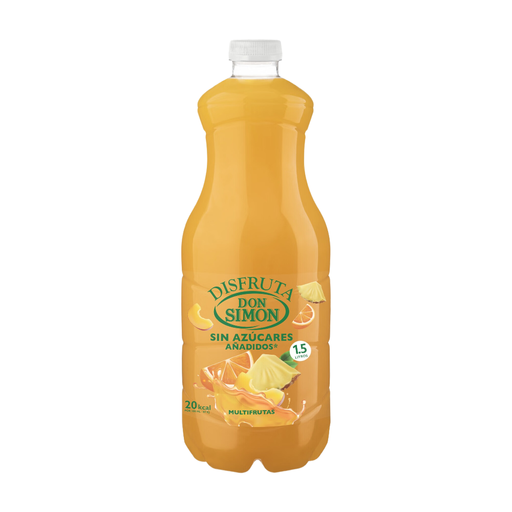 Image unavailable
This 1.5 L PET bottle of mixed fruit nectar is a handy choice if you’re looking for this type of drink to serve several guests. To compare it with a juice, check the ingredients list and the sugar content per 100 ml.
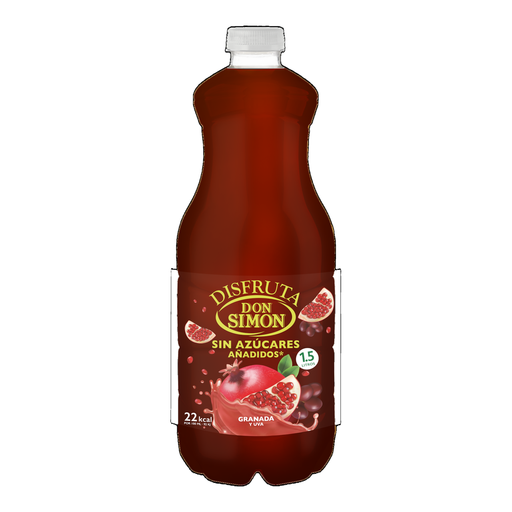 Image unavailable
If you’d like a pomegranate option, this nectar comes in a 1.5 L PET bottle. ‘No added sugar’ doesn’t replace the need to check the sugar content per 100 ml and the ingredients.
 Image unavailable
If you’d rather serve mixed fruit juice than nectar, this option comes in a 1 L bottle. Check the ingredients and sugar content before deciding on portion sizes.
 Image unavailable
This 1.5 L bottle of mixed fruit juice could be a good choice if you’re serving several guests. To choose between this and a nectar, compare the product description, ingredients and sugar content per 100 ml.
No. Sugars naturally present in fruit are still included in the nutrition information. For example, Auchan lists 10 g of sugars per 100 ml for JOKER Le Fruit mixed fruit juice with no added sugar. Check the ‘of which sugars’ figure to compare bottles.
Compare the grams of sugar per 100 ml, then consider how much you’ll serve. E.Leclerc lists 7.4 g of sugars per 100 ml for its JAFADEN reduced-sugar mixed fruit juice; however, ‘reduced sugar’ doesn’t mean sugar-free.
Follow the storage temperature shown on your chosen bottle. Carrefour says its Extra 3 Agrumes fresh juice should be kept between 0 °C and +6 °C. Serve a small amount at a time and keep the rest in the fridge.
Yes, if you don’t know whether all your guests can drink it. France’s national health insurance service says grapefruit juice can increase the absorption of certain medicines. Anyone taking medication can check the information leaflet or ask a pharmacist or doctor for advice.
Offer small portions rather than filling large glasses straight away. Manger Bouger recommends limiting all fruit juice to one glass a day; you could also offer water.