People keeping an eye on sugar
You want to avoid added sugars without overlooking those naturally found in fruit. The ‘of which sugars’ figure per 100 ml helps you compare bottles, but the amount you pour matters too.


When choosing juice for breakfast, compare the ‘of which sugars’ figure per 100 ml with the amount you plan to pour: ‘no added sugars’ does not mean ‘sugar-free’. If fibre matters more to you than the convenience of a bottle, Manger Bouger recommends choosing whole fruit and limiting fruit juice to one glass a day.
You want to avoid added sugars without overlooking those naturally found in fruit. The ‘of which sugars’ figure per 100 ml helps you compare bottles, but the amount you pour matters too.
You want juice that’s ready to serve before you head out. Choose a format that suits how you’ll use it during the week, but don’t let convenience replace checking the ingredients and nutrition information.
If you’re deciding between juice and fruit at breakfast, Manger Bouger recommends whole fruit instead: fruit juices are low in fibre.
First decide whether you really want a ready-to-serve drink or whether whole fruit would better suit your needs. If you choose juice, compare the sugar content on the same per-100 ml basis, then pick a format that matches the amount you plan to serve.
| What matters | What to check | Who is this for? |
|---|---|---|
| Sugars and serving size | Compare the ‘of which sugars’ figure per 100 ml and decide how much to pour. ‘No added sugars’ does not mean there are no sugars. | I want to choose my juice without relying solely on the wording on the front of the pack; around 36% of consumers put checking sugar and serving size at the top of their list. |
| Whole fruit or juice | If fibre is your priority, consider whole fruit first, as Manger Bouger recommends. | To make sure I get fibre at breakfast, I prefer to compare juice with whole fruit; this is a priority for almost 29% of consumers. |
| Morning routine | Check the ingredients, bottle size and storage instructions after opening. | On weekday mornings, I want to serve a drink quickly in a format that suits how I’ll use it; around 21% of consumers prioritise this convenience. |
| Availability in store | Check that your preferred product and format are available at your usual shop. | I want to be able to find the same product easily for weekday breakfasts; local availability comes first for around 14% of consumers. |
Juice can still contain sugars naturally present in fruit. Joybuy product pages for Joker multifruit juice and Tropicana Fruity Wake-Up each list 11 g of sugars per 100 ml; that figure alone doesn’t mean both recipes can carry the same claim.
Compare the ‘of which sugars’ figure per 100 ml with the amount served. Check separately for any claim about added sugars on the specific product you’re considering.
Manger Bouger says that fruit juices are low in fibre and recommends choosing whole fruit instead. Choosing juice that’s ready to pour therefore meets a different need from choosing a source of fibre.
If fibre is the reason you’re choosing what to have for breakfast, consider whole fruit first. If you serve juice, Manger Bouger recommends having no more than one glass a day.
ANSM warns that grapefruit juice can interact significantly with certain medicines and increase their side effects.
If you take medication, check with your pharmacist or prescriber whether grapefruit could be an issue before consuming it.
A supermarket selection may include products from different categories. A similar flavour or format doesn’t mean their recipes are comparable.
Read the product description, then check the ingredients and nutrition information before comparing two bottles.
The range includes multifruit options and juices marketed for breakfast.
The range includes apple and multifruit recipes marketed as having no added sugars.
The Carrefour Classic’ and Carrefour Extra ranges include fruit juices in a variety of flavours.
E.Leclerc’s range includes multifruit juices, pure juices and juices made from concentrate.
The retailer features a product page for Joker Le Fruit apple juice, which is described as having no added sugars.
These ready-to-serve fruit juices let you compare different flavours and formats for weekday breakfasts. Check the claim about added sugars on each bottle: you can’t infer it from the brand name or from another product’s claim.
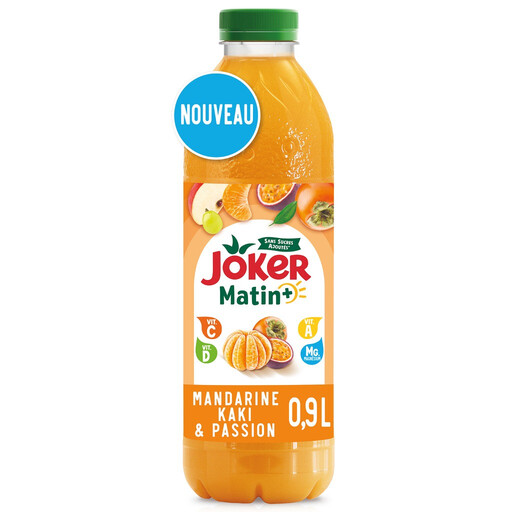 Image unavailable
Worth considering if you’re looking for multifruit juice that’s ready to serve at breakfast. The bottle holds 900 ml; compare the sugars per 100 ml and check the label claims before deciding how much to serve.
 Image unavailable
For anyone who wants to serve multifruit juice during the week and is looking for an option with no added sugars. The bottle holds 1 L; the product claim doesn’t replace checking the ‘of which sugars’ figure per 100 ml and the amount you serve.
 Image unavailable
Worth considering if you’re looking for a larger bottle to serve over several mornings. It holds 1.5 L; check the sugars per 100 ml, how much you pour and the storage instructions after opening.
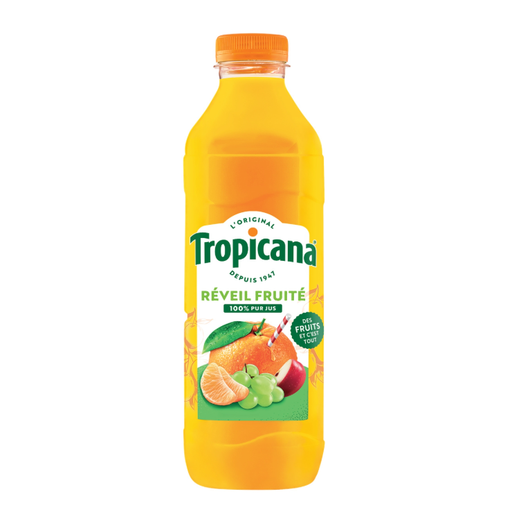 Image unavailable
For anyone looking for a fruit juice blend that’s ready to serve at breakfast. The bottle holds 1 L and the Joybuy product page lists 11 g of sugars per 100 ml. If no added sugars is important to you, check the claim on the label of this specific product.
No. Sugars naturally present in fruit can remain in the juice. To compare two bottles, read the ‘of which sugars’ figure per 100 ml. The DGCCRF explains that, for fruit juices in France, the wording ‘contains naturally occurring sugars’ is used to indicate that no sugar has been added.
Compare their product descriptions, ingredients and ‘of which sugars’ figures on the same per-100 ml basis, then take into account how much you’ll serve. The DGCCRF says that nutrition information for pre-packed foods is given per 100 g or 100 ml to make comparisons easier.
If your priority is getting fibre from fruit, choose whole fruit instead: this is what Manger Bouger recommends. If you prefer to serve juice, Manger Bouger advises limiting your intake to one glass a day.
First, check whether any medicine you take could interact with grapefruit. ANSM warns that grapefruit can interact significantly with certain medicines; your pharmacist or prescriber can help you check whether this applies to you.