What should you check before buying?
First decide whether the bottle needs to go through security, then consider whether your group can finish it and which type of drink you’d like to serve.
| What to consider | What to check | Who it matters to |
|---|
| Going through security |
When you’ll be eating and, at Paris-Charles de Gaulle or Paris-Orly, the 100 ml per-container limit for liquids before cabin security; check your airline’s rules too. |
If I still need to go through security with my drink, I don’t want to buy a bottle I won’t be able to take with me; around 42% of consumers would make this their top priority. |
| Sharing the bottle |
How many people are eating, how much will be drunk there and what the storage instructions say once the bottle is opened. |
For a meal shared before security, I want enough for the group without leftovers that are difficult to store; around 33% of consumers would prioritise sharing. |
| Category and ingredients |
The product name, ingredients and ‘sugars’ line in the nutritional information, comparing like with like. |
I want to know whether I’m choosing juice, nectar or a fruit drink, rather than relying on the recipe name alone; around 25% of consumers would make ingredients their top priority. |
2 L drinks available on Joybuy
These 2 L nectars and fruit drinks are worth considering for a meal shared before security, or when you won’t need to take the bottle through cabin security. Check the category shown on the packaging and, if you want a single bottle, the quantity included in the offer.
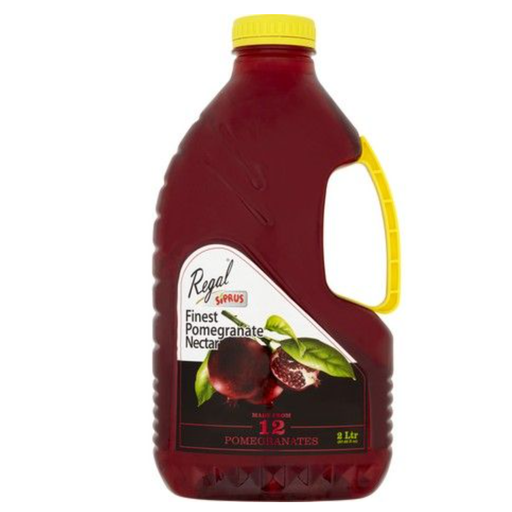 Image unavailable
REGAL Pomegranate Nectar 2 L
A 2 L bottle of nectar to consider if you’ll be sharing the drink before security or away from the boarding route.
Check the ingredients on the packaging and the storage instructions for after opening.
View on Joybuy
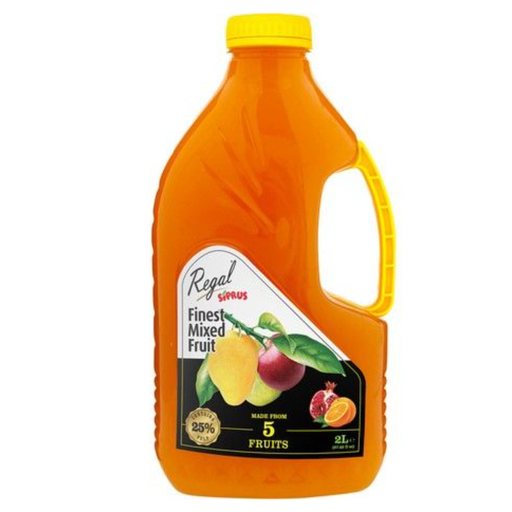 Image unavailable
REGAL Mixed Fruit Drink 2 L
This 2 L mixed fruit drink may be suitable for sharing if you won’t need to take the bottle through cabin security afterwards.
The words ‘juice drink’ don’t mean it’s pure juice: check the product name and ingredients on the packaging, as well as the instructions for after opening.
View on Joybuy
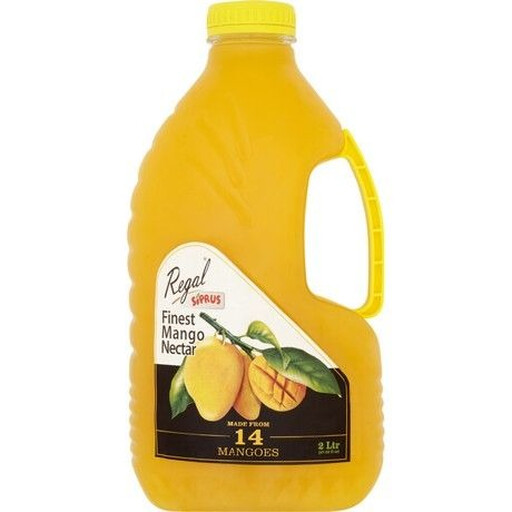 Image unavailable
Mango Nectar 2 L
This 2 L mango nectar is an option for sharing over a meal away from the security checkpoint.
Before ordering, check whether the offer includes one bottle or a pack of six. When comparing nutritional information, use the same basis for each product and check the instructions for after opening.
View on Joybuy
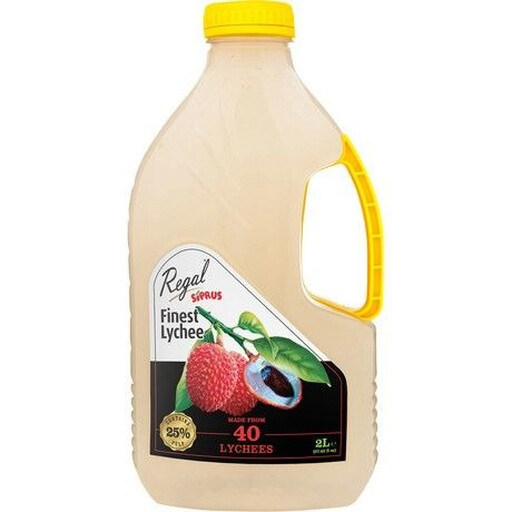 Image unavailable
Lychee Drink 2 L
This 2 L lychee drink is worth considering for a meal where it’ll be shared and you won’t need to take it through cabin security afterwards.
Check the exact product name on the packaging before comparing it with juice or nectar. Also check how many bottles the offer includes and the instructions for after opening.
View on Joybuy
Frequently asked questions
Can I take a 2 L bottle of juice through cabin security?
No, not through standard security at Paris-Charles de Gaulle or Paris-Orly: Paris Aéroport limits liquids to 100 ml per container, which must fit in a single sealed, transparent bag with a maximum capacity of one litre. Check your airline’s rules too, as they may be more restrictive.
Can I take a large drink bought after security into the cabin?
Paris Aéroport says that liquid purchases made after security at Paris-Orly can be taken into the cabin. Before relying on this, check what’s available in your terminal and the rules for your airline and any connecting flights.
How can I tell the difference between pure juice, nectar and a fruit drink?
Start with the product name, then check the ingredients: these terms don’t automatically mean the same thing. The DGCCRF explains the labelling rules for juices and nectars; for fruit drinks, Carrefour’s product listing for Classic’ orange, 2 L, specifies spring water and juice from concentrate, among other ingredients.
How can I compare the sugar content of two fruit drinks?
Compare the ‘sugars’ line in the nutritional information on the same basis, such as per 100 ml on both packs. The DGCCRF says that nutritional information can be given per 100 g or per 100 ml, so don’t compare figures shown on these two different bases directly.


