People hosting several guests
For a dessert to share, large tins of peaches, pears or fruit cocktail make it easy to divide the fruit between guests. Check the drained net weight to see how much fruit you’ll have.


If you’re serving several people, start by choosing the fruit and the drained quantity you’ll need. A large tin is a good option if you plan to use it all or store any leftovers according to the instructions on the packaging. Individual pots make it easy to serve separate portions. If ingredients are your priority, check the ingredients list and nutritional information for each recipe, including products labelled ‘no added sugar’.
For a dessert to share, large tins of peaches, pears or fruit cocktail make it easy to divide the fruit between guests. Check the drained net weight to see how much fruit you’ll have.
Individual pots save you having to portion out the contents of a tin at dessert time. They’re also a good choice if you’d rather open only as many portions as you need.
If you’re looking for a recipe with no added sugar, read the ingredients list and the ‘of which sugars’ line in the nutritional information. ‘No added sugar’ does not mean that the product contains no sugars.
First decide how you’ll serve the fruit, then compare the drained quantity, packaging and ingredients of products that suit your dessert.
| What to consider | What to check | Who is it for? |
|---|---|---|
| How much to serve | Compare the drained net weight and estimate how many portions you’ll need. | If I’m hosting several people, I want enough fruit for dessert without choosing based on the tin’s total weight alone. Around 36% of consumers are said to prioritise having enough to share. |
| Serving individual portions | Check the number of pots and the quantity of fruit in each portion. | When dessert needs to be served quickly, I prefer ready-portioned servings. Around 29% of consumers are said to prioritise this convenience. |
| Ingredients | Read the ingredients list and the ‘of which sugars’ line per 100 g. | If I’m looking to avoid added sugars, I want to know exactly what’s in the recipe rather than relying on the product name alone. Around 21% of consumers are said to put ingredients first. |
| Fruit and cut | Choose between halves, pieces and fruit cocktail to suit the dessert you have planned. | For a tart or a dessert served in a glass, I need fruit in a shape that works for the presentation. Around 14% of consumers are said to prioritise the fruit and how it’s cut above other considerations. |
The total weight includes the covering liquid, so it doesn’t tell you how much fruit you’ll be serving.
Compare the drained net weight, then choose an amount that suits the number of guests.
A recipe with no added sugar may still contain sugars naturally present in the fruit or juice. Carrefour makes this clear for its ST MAMET fruit cocktail pots.
Check the ingredients and the ‘of which sugars’ line per 100 g for the product you’re considering.
If you only use some of a large tin, how you can store the rest depends on the product’s own instructions.
Before buying, check the guidance on the packaging and plan how you’ll use the remaining quantity.
Halves, pieces and fruit cocktail each look different in a tart or a dessert served in a glass.
Choose the shape to suit your recipe before comparing the packaging options.
This range includes peaches in light syrup in tins, as well as fruit in individual pots.
The product featured here is an 825 g tin of pears in syrup from Carrefour.
This E.Leclerc Marque Repère range includes peach halves in light syrup, as well as other fruit in tins and individual pots.
The range featured by Auchan includes fruit in syrup in tins and individual pots.
The products featured by Carrefour include tinned fruit cocktail and fruit cocktail pots labelled ‘no added sugar’.
These tins and jars let you choose from pear halves, peach halves, fruit cocktail and tropical fruit to suit your dessert. If you’re serving several people, check the quantity of fruit to serve on each pack.
 Image unavailable
These pear halves are worth considering for a dessert served as they are or for a tart. The title states a drained weight of 455 g; check that it’s enough for the number of portions you want.
 Image unavailable
The peach halves are a good choice if you’d like to serve the fruit whole or use it in a dessert. The stated drained weight is 230 g, so bear this in mind when deciding how many people to serve.
 Image unavailable
This fruit cocktail is worth considering if you’d prefer to serve several kinds of fruit in the same dessert. The 850 g is the pack size given in the title; check the drained net weight to see how much fruit it contains.
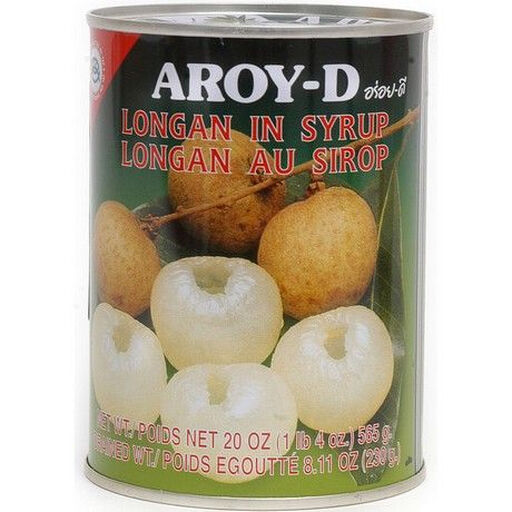 Image unavailable
Longans are worth considering if they suit the dessert you’re making. The stated pack size is 565 g; check the drained net weight to plan your portions.
 Image unavailable
Rambutans are worth considering for a dessert or fruit salad. The title states a pack size of 565 g; check the drained net weight before working out your portions.
Check the drained net weight rather than the total weight alone. The DGCCRF notes that drained net weight is one of the details required for food presented in a covering liquid. It’s the amount of fruit to use when planning your portions.
No. A product with this label may contain naturally occurring sugars. Carrefour explains this for the relevant ST MAMET fruit cocktail pots; also check the ‘of which sugars’ line per 100 g for the product you’re considering.
Follow the product-specific instructions on its packaging. The French Ministry of the Economy highlights the importance of following this guidance after opening. For example, the Joybuy product page for the 425 g ST MAMET fruit cocktail says to store it in a suitable container in the fridge for 3 to 4 days. This storage period does not apply to other products.
Check the ingredients list, nutritional information per 100 g and drained net weight. These details help you understand both what’s in the recipe and how much fruit you’ll be able to serve.