Hosts keeping an eye on added sugars
For a dessert or fruity topping, you want to avoid added sugar. The exact wording on the pack, the ingredients and the nutritional information matter more than the impression created by the product name.


If your priority is avoiding added sugars, look for the words ‘no added sugar’, then check the ingredients and the ‘of which sugars’ line: naturally occurring sugars are still included. For your evening, choose a fruit that suits the recipe and a pack size that matches the portions you plan to serve. ‘In light syrup’ does not necessarily mean ‘no added sugar’.
For a dessert or fruity topping, you want to avoid added sugar. The exact wording on the pack, the ingredients and the nutritional information matter more than the impression created by the product name.
You’re choosing between a tin to share and individual pots. The drained weight and number of portions will help you work out how much to put on the table.
Your recipe calls for pineapple, lychee, mango or a fruit cocktail. Choose the fruit, its cut and the liquid it comes in first, then check the sugars separately.
For a world food evening, start with your priority — added sugars, serving or recipe — then compare the relevant products by checking their labels. ‘No added sugar’ and ‘in light syrup’ describe different characteristics.
| What to consider | What to check | Who is it for? |
|---|---|---|
| Added sugars | The exact wording, the ingredients and the ‘of which sugars’ line per 100 g. | If I’m avoiding added sugar in a dessert, I also want to know how much sugar the fruit I serve contains. Around 45% of consumers rank this distinction as their top priority. |
| Serving size | The drained weight and the number of pots or portions to serve. | Whether I’m putting together individual desserts or preparing a dish to share, I need enough to suit my guests. Pack size would be the priority for around 33% of consumers. |
| Fruit and liquid | The variety, cut and liquid it comes in, if the recipe uses it. | When my recipe calls for a particular fruit, a fruit cocktail won’t necessarily be a suitable substitute, even if the pack size works for me. Around 22% of consumers would choose based on this culinary need first. |
Fruit and its juice can contain naturally occurring sugars. According to product listings published by Auchan, two St Mamet fruit cocktails labelled ‘no added sugar’ contain 12 g and 13 g of sugars per 100 g respectively.
Compare the ‘of which sugars’ line per 100 g on the products you’re interested in, rather than relying only on the wording on the front of the pack.
Auchan and Carrefour use these descriptions for different products in their ranges. The word ‘light’ alone doesn’t tell you what’s in the ingredients or how much sugar the product contains.
If you’re looking to avoid added sugar, check the exact wording and the ingredients list. Also check the liquid the fruit comes in if you plan to use it in your recipe.
A tin for sharing may leave you with some fruit after serving. Storage instructions after opening vary by product.
Work out how much you need based on the drained weight, and follow the storage instructions on the product you buy.
Carrefour’s range includes fruit cocktails and products with different claims, including ‘no added sugar’.
The products listed by Auchan include fruit cocktails, individual pots and products labelled ‘no added sugar’.
Auchan’s range includes pineapple chunks in juice, labelled ‘no added sugar’.
The range includes individual pots and tins, as well as several varieties of fruit.
These products are fruit in syrup for a dessert to share, individual servings or a recipe calling for a particular fruit. If avoiding added sugars is your main priority, check the ingredients: the products shown here contain sugar.
 Image unavailable
Worth considering if your dessert calls for rambutans rather than mixed fruit.
565 g tin. If you’re avoiding added sugars, bear in mind the sugar in the ingredients.
 Image unavailable
An option to consider for a dessert or fruit salad that calls for sliced mango.
425 g tin. Sugar is listed in the ingredients, so don’t mistake it for a no-added-sugar product.
 Image unavailable
This size may suit a fruit dessert to share.
850 g tin. Check the drained weight to work out how many portions it will serve. Sugar is listed in the ingredients.
 Image unavailable
The three separate pots are worth considering if you’d rather serve individual portions.
3 × 125 g. Sugar is listed in the ingredients, so this product isn’t suitable if you’re looking for fruit with no added sugar.
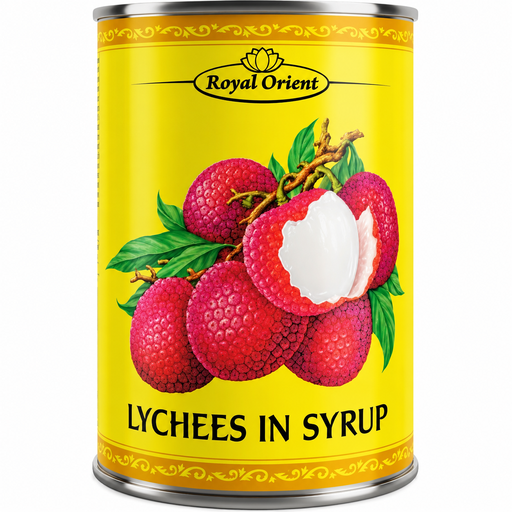 Image unavailable
Worth considering if your dessert calls for lychees rather than a fruit cocktail.
567 g tin. Sugar is listed in the ingredients; check the nutritional information on the product label.
No. The claim ‘no added sugar’ doesn’t, by itself, mean that a product contains no sugars or has a reduced sugar content. According to product listings published by Auchan, two St Mamet fruit cocktails carrying this claim contain 12 g and 13 g of sugars per 100 g. Compare the ‘of which sugars’ line for the exact product.
Individual pots work well if you want to portion everything before serving; a tin may be more convenient for mixing into a fruit salad or a dessert to share. Check the drained weight and work out how many portions you need.
Follow the instructions for the product you’ve bought and have a suitable container ready if they say to transfer the contents. For the ST MAMET 3 × 125 g fruit cocktail shown on Joybuy, the product listing says to refrigerate for 3 to 4 days after opening; this guidance doesn’t automatically apply to other products.