When comparing fruit in syrup as part of weight management, check the nutrition information per 100 g and how much you plan to serve. “No added sugars” does not mean “sugar-free”. If salt is also a factor in your choice, check the amount in the specific product; descriptions such as “light syrup” and “no added sugars” don’t tell you how much salt it contains.
Who might find these criteria useful?
People limiting added sugars
If you’re choosing between fruit cocktail in syrup and a no-added-sugars option, compare the ingredients as well as the sugars and energy per 100 g. The fruit and its covering liquid can contain sugars, even when the recipe is labelled “no added sugars”.
People who want to plan their portion
A fruit pot gives you a ready-to-serve portion, while a tin lets you divide the contents between several servings. Check the weight: fruit pots from different brands don’t all hold the same amount.
People keeping an eye on their salt intake
If you need to watch your salt intake, check the relevant line on the label of each product. The figure shown by Auchan for a St Mamet cocktail—less than 0.01 g per 100 g—doesn’t apply to other recipes.
Which criteria should you compare?
Start with the ingredients and nutrition information per 100 g, then consider how much you’ll serve. Check salt separately if it matters to your choice.
| Criteria |
What to check |
Who it matters to |
| Sugars and energy |
Compare the ingredients, energy and “of which sugars” figures per 100 g, then check them against the amount you plan to eat. |
I want to tell added sugars apart from the sugars already in the fruit or juice, without relying on the wording on the front of the pack. This could be a priority for around 50% of consumers. |
| Serving size |
Check the size of each pot or tin, and the drained weight if it’s given. |
For dessert or a snack, I’d rather know how much I’m going to serve than decide once the tin is open. Around 33% of consumers could put this convenience at the top of their list. |
| Salt |
Check the “salt” figure per 100 g for the product you’ve chosen; don’t infer it from the syrup description. |
When I’m carefully monitoring salt, I need a figure for the specific product I’m buying, regardless of its sugar content. This could be the main criterion for around 17% of consumers. |
Common misconceptions to avoid
-
Confusing “no added sugars” with “sugar-free”
The claim doesn’t remove the sugars naturally present in the fruit or its covering liquid. According to the product information published by Auchan, St Mamet peach, pear and pineapple fruit cocktail with no added sugars contains 12 g of sugars per 100 g.
Check the “of which sugars” line and relate it to the amount you plan to eat.
-
Inferring nutrition figures from the words “light syrup”
The syrup description alone isn’t enough to compare two recipes. Check the ingredients and nutrition information on the same basis, product by product.
Compare the figures per 100 g side by side, particularly for energy and sugars, before taking your serving size into account.
-
Using a sugar claim to judge the salt content
“No added sugars” doesn’t tell you how much salt a product contains. The figure of less than 0.01 g per 100 g shown by Auchan applies to one specific St Mamet product.
If you’re watching your salt intake, check the salt figure in the nutrition information for each product you’re considering.
Brands to know when comparing formats
Carrefour Classic'
Carrefour offers a classic fruit cocktail in syrup and a no-added-sugars version in individual pots.
- Carrefour’s published ingredient lists make it easy to distinguish the classic recipe, which contains water and sugar, from the no-added-sugars option, which contains grape juice from concentrate.
- Check the nutrition information and weight for the specific product: these two recipes don’t represent the entire range.
St Mamet
The brand offers, among other products, no-added-sugars fruit cocktails and fruit cocktails in syrup in a range of formats.
- According to Auchan, one no-added-sugars peach, pear and pineapple product contains 56 kcal, 12 g of sugars and less than 0.01 g of salt per 100 g.
- These figures apply to this product, not to the St Mamet fruit cocktails in syrup featured below.
ECO+
E.Leclerc offers, among other products, ECO+ fruit cocktail in light syrup in a tin.
- A tin can be compared with individual pots if you’re planning to serve several portions.
- Check the label for the recipe you’ve chosen to compare its ingredients and nutrition information with those of a product in juice.
Douceur du Verger
This brand, featured by E.Leclerc, includes fruit in light syrup in individual pots.
- E.Leclerc offers, among other products, peach, pear and cherry pots in a 4 × 70 g pack, with a set amount in each pot.
- Compare the weight and nutrition information for the exact recipe before comparing it with a tin.
Auchan
The Auchan range includes, among other products, fruit in light syrup in individual pots.
- Auchan’s category page features peach, pear and morello cherry pots in a 4 × 113 g pack.
- The weight of a pot alone doesn’t tell you how much sugar or salt it contains: check the information for the product you’ve chosen.
Fruit in syrup available on Joybuy
This selection on Joybuy includes fruit cocktails and fruit pieces in syrup, in tins of various sizes. To choose between them in the context of this article, compare the amount you’ll serve and the nutrition information for each recipe. Their inclusion here doesn’t mean they have no added sugars or reduced salt.
 Image unavailable
ST MAMET Fruit cocktail in syrup, 3 × 125 g
This pack of three tins may suit you if you’d like separate containers. Compare the cocktail’s nutrition information, and check the “salt” figure for the product you’ve chosen if that matters to you.
View on Joybuy
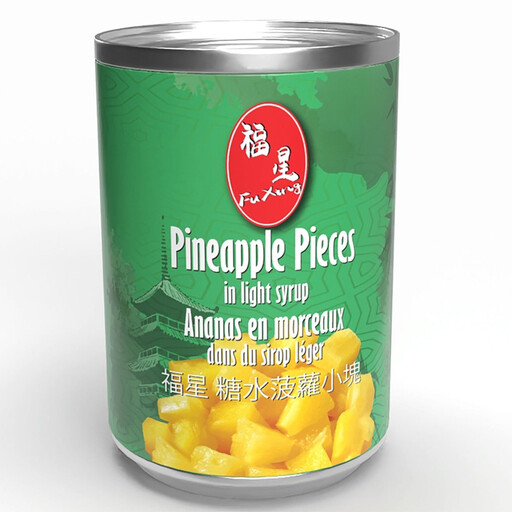 Image unavailable
FU XING Pineapple pieces in light syrup, 565 g, drained weight 260 g
This tin makes it easy to distinguish the total weight of 565 g from the drained weight of 260 g when deciding how much fruit to serve. To compare it with another syrup, check the ingredients and nutrition information per 100 g.
View on Joybuy
 Image unavailable
ST MAMET Fruit cocktail in syrup, 850 g
This 850 g tin is suitable if you want to serve out several portions, choosing the amount each time. Check the nutrition information for this recipe and its salt content if that’s a factor in your choice.
View on Joybuy
 Image unavailable
ST MAMET Fruit cocktail in syrup, 425 g
The 425 g size may suit you if you’d like to serve the contents of a tin over more than one sitting. Decide how much to serve and check the nutrition information for this product rather than inferring it from the tin size.
View on Joybuy
 Image unavailable
AROY-D Mango slices in syrup, 425 g
This 425 g tin is for anyone who’d prefer mango slices to a fruit cocktail. Compare the sugars, energy and salt per 100 g for the specific products you’re considering.
View on Joybuy
Frequently asked questions
Does “no added sugars” mean “sugar-free”?
No. A product with no added sugars can still contain sugars naturally present in the fruit or juice. According to the product information published by Auchan, one St Mamet fruit cocktail labelled this way contains 12 g of sugars per 100 g. Check the “of which sugars” line for the product you choose.
Should you look for fruit in syrup that’s “reduced in salt” to manage your weight?
A salt claim doesn’t replace comparing sugars, energy and serving size when making this decision. If you’re also watching your salt intake, use the figure on the label of the exact product rather than inferring it from the type of syrup.
How can you decide how much to serve from a large tin?
Decide how much you want before serving the fruit into a bowl, rather than eating straight from the tin. If you’d prefer an individual portion, compare the weights of the fruit pots: they vary by product.


