What should you look for?
First, work out how much fruit you need for your dessert, then choose between one large serving and individual portions. Finally, compare the ingredients of the products that suit your recipe.
| What to consider |
What to check before buying |
Who is it for? |
| Amount of fruit to share |
Compare the drained weight and the fruit in the mix, rather than looking at the tin’s total weight alone. |
For a fruit salad served to everyone at the table, I want to know how much fruit will actually go into the bowl. Around 40% of consumers would put the amount to share at the top of their list. |
| Ingredients and sugars |
Read the ingredients, then compare the ‘of which sugars’ figure per 100 g for the recipes you’re considering. |
If I’m choosing between a fruit cocktail in syrup and fruit in juice, the recipe matters more to me than the size of the container. Ingredients would be the main consideration for around 30% of consumers. |
| Serving and leftovers |
Compare the individual containers and check the storage instructions after opening for each product. |
When guests have dessert at different times, I’d rather open the portions as needed or be able to store any leftover fruit. Ease of serving would be the priority for around 30% of consumers. |
Joybuy products to consider
These products let you compare a large tin of fruit cocktail, a multipack of small tins and single-fruit options for a barbecue dessert. First choose fruit that suits your recipe, then check the drained weight of the product you pick so you can work out how much to serve.
 Image unavailable
St Mamet Fruit Cocktail in Syrup 850 g
Worth considering for a mixed-fruit dessert to share, rather than serving in individual portions.
850 g tin; check the drained weight on the label to work out how much to serve.
View on Joybuy
 Image unavailable
St Mamet Fruit Cocktail in Syrup 3 × 125 g
The three separate tins could be a good choice if you plan to serve the fruit at different times.
Pack of 3 × 125 g; check the drained weight before working out how much fruit you’ll need for everyone at the table.
View on Joybuy
 Image unavailable
St Mamet Williams Pear Halves in Light Syrup, 455 g Drained
Consider this for a dessert centred on Williams pears, rather than for a selection of different fruits.
The product name states 455 g drained; check the label on the tin you buy to confirm the amount.
View on Joybuy
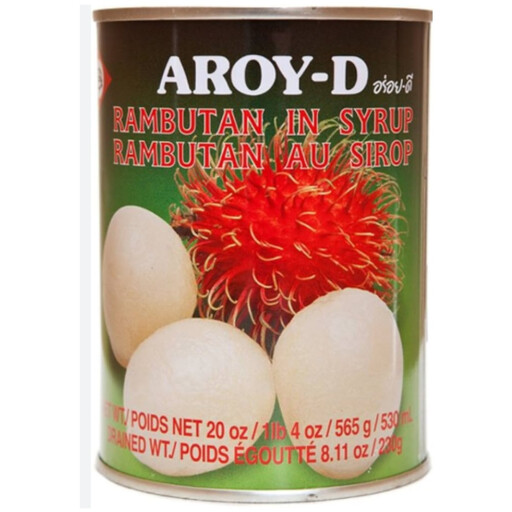 Image unavailable
AROY-D Rambutans in Syrup 565 g
This single-fruit option can be added to a fruit salad if rambutan suits your recipe.
565 g tin; check the drained weight to work out how much fruit to serve.
View on Joybuy
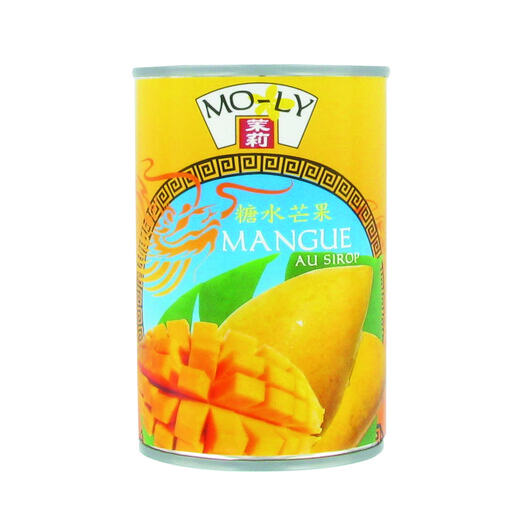 Image unavailable
MOLI Mango in Syrup 425 g
Worth considering for a mango dessert, rather than a cocktail made with several fruits.
425 g tin; check the drained weight, ingredients list and ‘of which sugars’ figure on the product label.
View on Joybuy
Frequently asked questions
Which weight should I compare when planning a dessert to share?
Compare the drained weight when the fruit is packed in liquid. Auchan’s product pages for the 825 g Del Monte and Pouce fruit cocktails each list 0.50 kg of drained fruit. The number of portions you get will then depend on your recipe and what other desserts you’re serving.
Can you keep fruit after opening the tin?
Yes, as long as you follow the storage instructions for the product you’ve bought. The Auchan product pages we checked recommend keeping the Del Monte products concerned in the fridge for three to four days in a covered, non-metallic container, and the Pouce fruit cocktail for two days. Check the label on your tin.
Does ‘no added sugars’ mean ‘sugar-free’?
No: fruit and juice can contain naturally occurring sugars. To compare two recipes, check their ingredients and the ‘of which sugars’ figure per 100 g rather than relying only on the wording on the front of the pack.
What should I check on a tin of fruit?
Check the ingredients, any listed allergens, the nutrition information and how much fruit you’ll be able to serve. For prepacked products sold in France and packed in liquid, the DGCCRF explains that the drained weight must be stated. Also check the product’s storage instructions.


