People keeping an eye on fat
You want to check the fat content of your dessert rather than relying on the term ‘low fat’ alone. The value per 100 g lets you check this before looking at the sugar content and serving size.


If you’re looking for a low-fat fruit in syrup for a Valentine’s Day dessert, check the fat content per 100 g first, then compare the recipes by their sugar content and serving size. The products with published information have low fat content, but ‘light syrup’ doesn’t mean ‘no added sugar’. Individual pots make serving easy, while a larger tin gives you more freedom to plate up your dessert.
You want to check the fat content of your dessert rather than relying on the term ‘low fat’ alone. The value per 100 g lets you check this before looking at the sugar content and serving size.
You’d prefer a recipe with no added sugar. Anses points out that ‘no added sugar’ doesn’t mean sugar-free, so check the ‘of which sugars’ line in the nutritional information too.
You’re deciding between fruit to arrange in dessert glasses or on plates, and individual pots that are ready to serve. Compare how much fruit you’ll need and, if you’re sharing a larger container, check the storage instructions once it’s opened.
For a dessert for two, check the fat content per 100 g first, then choose the recipe and serving size to suit what you plan to serve.
| Criteria | What to check | Who it matters to |
|---|---|---|
| Fat | Check the value per 100 g. Under European Union Regulation (EC) No 1924/2006, the claim ‘low fat’ requires a maximum of 3 g per 100 g for solid foods. | If I’m looking for low-fat fruit in syrup, I want to confirm this on the label before choosing a recipe; around 45% of consumers would prioritise it. |
| Sugars and ingredients | Compare ‘of which sugars’ per 100 g and the ingredients list. A syrup described as ‘light’ may still contain sugar; ‘no added sugar’ doesn’t mean sugar-free. | To avoid added sugar in my dessert, I need to distinguish the ingredients from the total amount of sugars; around 33% of consumers would put this first. |
| Serving size and fruit | Check the drained net weight, number of pots, fruit varieties and storage instructions once opened. | If I’m preparing two plates, I want to choose between arranging the fruit myself and serving separate portions, while planning for any leftovers; around 22% of consumers would prioritise serving size. |
These figures relate to different things. Among the products listed by Auchan, fruit with less than 0.5 g of fat per 100 g has varying sugar content, depending on the recipe.
After checking the fat content, compare the ‘of which sugars’ value per 100 g and the ingredients.
Anses explains that ingredients can contain naturally occurring sugars, even when no sugar has been added.
If this claim matters to you, check it against the ingredients list and the ‘of which sugars’ value.
The amount of fruit available and the storage instructions after opening vary between products.
Compare the drained net weight with the amount you’ll serve for two, then follow the storage advice on the packaging.
A tin and individual pots won’t necessarily contain the same amount of fruit. The DGCCRF says that nutritional values given per 100 g or 100 ml make comparisons easier.
Compare the values per 100 g first, then decide how much you’d like to serve.
The range includes a no-added-sugar orchard fruit cocktail in small pots, worth considering if you want to serve individual portions.
The products with published information include peach halves for arranging on a plate and pots of mixed fruit to serve individually.
A peach, pear and pineapple cocktail in juice with no added sugar may appeal if this recipe feature is a priority for you.
The listed fruit cocktail in light syrup comes in a larger size, making it suitable for a dessert you can arrange and serve.
This brand offers, among other things, pear halves in light syrup, which you can arrange on a plate rather than serve in individual pots.
This selection includes fruit in syrup to serve or arrange on a plate, as well as cherries to use as a topping. To choose a dessert for two, compare the recipe and the amount of fruit, not just the total weight of the container.
 Image unavailable
Mango slices are worth considering for a fruity dessert you can arrange on a plate. The container states 425 g; check the drained weight if the amount of mango you’ll serve matters to you.
 Image unavailable
A fruit cocktail to divide between two dessert glasses or plates. The container states 425 g; compare the drained weight and ingredients list before choosing the quantity and recipe.
 Image unavailable
This 850 g size may suit you if you’re planning several desserts or want to keep some for later. For a meal for two, check the drained weight and storage instructions after opening.
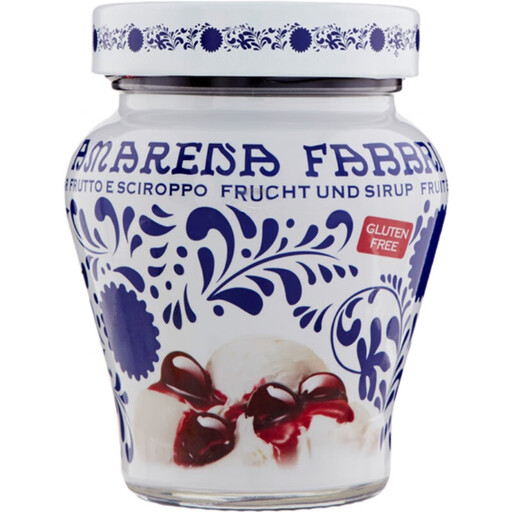 Image unavailable
Worth considering as a topping rather than a fruit cocktail to share. The jar states 230 g; check the drained weight and the ‘of which sugars’ line to help you decide how many cherries to use.
 Image unavailable
The pineapple pieces can be divided between two desserts. The 260 g drained weight tells you how much fruit is available to serve; check the ingredients and storage instructions after opening.
No. Anses points out that fruit and other ingredients can contain naturally occurring sugars. For example, the product information for St Mamet’s fruit cocktail in juice with no added sugar states that it contains 12 g of sugars per 100 g. Check the ‘of which sugars’ line to compare recipes.
For solid foods, European Union Regulation (EC) No 1924/2006 sets a maximum of 3 g of fat per 100 g for a ‘low fat’ claim. Check the value per 100 g on the label, then consider separately the sugars and serving size that matter for your dessert.
No. The ingredients lists for Auchan’s peach halves and pots of fruit in light syrup mention sugar. If you want to avoid this ingredient, don’t rely on the word ‘light’ alone: check the product description, ingredients and ‘of which sugars’ value.
Follow the instructions for the product you’ve bought, as containers and storage times after opening vary. Auchan’s product information for its peach halves says to transfer them to a suitable container, refrigerate and eat within two days; this guidance doesn’t apply to every tin.