Anyone making a dessert to share
For a tart, fruit compote or layered dessert for several guests, the shape of the fruit and its drained net weight matter more than the total weight of the tin.


For a tart or a dessert to share, choose the fruit shape you need and compare the drained net weights of larger tins. If you want ready-portioned servings, look for individual pots or smaller tins. Then check the ingredients, the sugars listed in the nutritional information and the instructions for after opening: ‘no added sugar’ does not mean ‘sugar-free’.
For a tart, fruit compote or layered dessert for several guests, the shape of the fruit and its drained net weight matter more than the total weight of the tin.
Individual pots or smaller tins make it easy to portion out dessert without necessarily opening a large container.
To compare fruit in standard syrup, light syrup and products labelled ‘no added sugar’, check the ingredients and the ‘of which sugars’ line rather than relying on the product description alone.
For a homemade dessert, start with what you’re making and how many portions you need. Then check the shape of the fruit, the drained quantity and the label on each product.
| What to compare | What to check | Who it matters to |
|---|---|---|
| Fruit for a recipe | The drained net weight and the shape of the fruit: halves for a tart or pieces for a fruit salad. | When I’m topping a dessert for several guests, I want to know how much fruit I’ll have after draining; around 40% of consumers prioritise getting a dish ready to share. |
| Individual servings | The number of pots or small tins, and how much each one contains. | When I’m serving dessert straight to the table, I prefer separate portions to opening a large tin; around 30% of consumers put ease of serving first. |
| Sugars and ingredients | The ingredients list, the exact wording on the packaging and the ‘of which sugars’ line per 100 g. | If I want to avoid added sugar, I need to distinguish that claim from the total sugars declared; around 30% of consumers make this their main consideration. |
The total weight includes the liquid, which isn’t part of the amount of fruit available to top a tart. Carrefour lists a drained net weight of 500 g for its Classic’ fruit cocktail, while Auchan lists 475 g drained for its 840 g tin of peach halves.
Plan your recipe around the drained net weight, and choose halves or pieces to suit the dessert you’re making.
For its St Mamet fruit cocktail carrying this claim, Carrefour explains that naturally occurring sugars may still be present.
Check the ingredients and the ‘of which sugars’ value for the product you’re considering before comparing it with another recipe.
Instructions vary: Auchan says to keep its peach halves in a suitable airtight container in the fridge for two days, while the St Mamet pears sold by Auchan should be kept in a suitable container for three to four days.
Plan how you’ll use any leftovers, and follow the temperature, container and storage time shown on the packaging you buy.
Opening a large container and not using the rest within the stated time can lead to food waste.
Individual pots make serving easier, but the quantity per portion and the shape of the fruit may not be right for a tart or a layered dessert that needs assembling.
For cooking, compare the usable quantity of fruit and how it’s cut; save individual formats for desserts served in separate portions.
Carrefour’s range includes fruit cocktails and fruit in syrup in tins.
E.Leclerc’s Marque Repère range includes individual fruits, fruit cocktails and pots in light syrup.
Auchan offers peach halves in light syrup, suitable for tarts, fruit compotes and layered desserts.
Depending on the product, St Mamet offers fruit cocktails and individual fruits in tins or pots.
The Baccara products sold by ALDI include a fruit cocktail and individual pots.
This selection includes fruit halves and pieces for baking, fruit salads or desserts to share. When choosing a format, distinguish the total weight shown on a tin from the drained net weight your recipe needs.
 Image unavailable
Pear halves are ideal for recipes where you want to arrange the fruit in halves. The weight in the product name is the drained weight; check the packaging to work out how much you’ll need for your dessert.
 Image unavailable
This pack of peach halves could be used to decorate a dessert or top a bake. The 230 g in the name is the stated drained weight; check the quantity on the packaging if your recipe calls for a precise weight.
 Image unavailable
This mix of fruit pieces can be used as the base for a fruit salad or a dessert to share. The 850 g refers to the stated pack size, not the drained weight of the fruit. Check the latter if it determines how many portions you can make.
 Image unavailable
The three small tins let you open the fruit cocktail over several occasions rather than all at once in a large container. Each tin is listed as 125 g; if your recipe needs a precise amount of fruit, check its drained net weight separately.
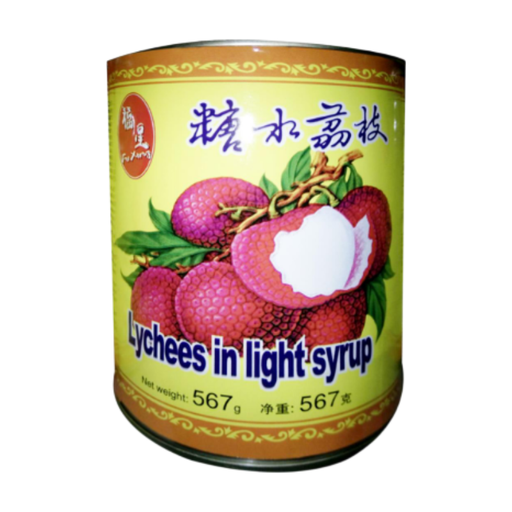 Image unavailable
This single-fruit product is worth considering if your dessert calls for lychees rather than a fruit cocktail. The stated pack size is 567 g; check the drained net weight before working out how much fruit you’ll need.
No. For the St Mamet fruit cocktail carrying this claim, Carrefour explains that naturally occurring sugars may still be present. Also check the ingredients and the ‘of which sugars’ line in the nutritional information.
Follow the storage time and conditions shown on the tin you buy. As product-specific examples, Auchan says to keep its peach halves in a suitable airtight container in the fridge for two days; the St Mamet pears sold by Auchan should be kept in a suitable container in the fridge for three to four days. The DGCCRF recommends following the manufacturer’s instructions after opening.
Follow the storage instructions on the packaging, and check that it’s undamaged and within its best-before date. The DGCCRF notes that going past the best-before date doesn’t necessarily mean a product is unfit to eat if the packaging is intact, but its flavour may have changed.
No. This description is no substitute for checking the nutritional information. Compare the ‘of which sugars’ line per 100 g, checking whether the figures apply to the drained product, then read the ingredients list for each product.