Parents preparing several lunchboxes
A large tin can provide fruit for several desserts prepared at home. Carrefour and Auchan ranges include tins of 800 to 850 g, for example; you’ll also need to plan what to do with any fruit left after opening.


If you’re preparing several portions at home, a large tin of fruit in syrup lets you divide the contents between lunchboxes, as long as you have suitable containers and follow the storage instructions once opened. A multipack of small tins means you only open what you need, while sealed pots save you having to portion out the fruit at home. Whichever format you choose, compare the drained weight, ingredients and sugar content per 100 g.
A large tin can provide fruit for several desserts prepared at home. Carrefour and Auchan ranges include tins of 800 to 850 g, for example; you’ll also need to plan what to do with any fruit left after opening.
A sealed pot saves you having to portion the fruit into containers before heading out. Carrefour, Auchan and E.Leclerc offer multipacks of pots in different sizes, so check the amount per portion, not just the number of pots.
If the type of syrup or the “no added sugar” claim matters to you, read the ingredients list and nutritional information for the exact product. These claims don’t replace checking the sugar content per 100 g.
First decide whether you’ll portion out the fruit at home or want each portion to stay sealed until lunchtime. Then check how much fruit you can use and the ingredients in each format you’re considering.
| What to consider | What to check | Best for |
|---|---|---|
| Amount to keep in stock | Drained weight and how much you need for the portions you’re planning. | If I’m preparing several desserts from one tin, I want to use its contents without opening multiple tins; around 40% of consumers prioritise having a larger amount in stock. |
| Portion to take out | Amount in each pot and whether each portion is sealed. | When dessert needs to go out without being portioned at home, I prefer a sealed portion; around 30% of consumers put convenience for taking it out first. |
| Ingredients and sugar | Ingredients list, syrup and sugar content per 100 g. | To choose between different recipes, I need to read what they contain rather than rely on the front of the pack; around 20% of consumers put this comparison first. |
| Leftovers after opening | Storage instructions on the packaging and how much your household can use. | If a large tin might be left open, I prefer a format whose contents I can use in line with the storage instructions; this is the main concern for around 10% of consumers. |
A sealed pot is designed as a portion to take out; with a large tin, you’ll need to portion the fruit before adding it to lunchboxes.
Choose a format based on when you’ll portion out the fruit, then check the drained weight to see how much you can use.
This claim alone doesn’t tell you how much sugar the product contains. Fruit and syrups vary between recipes.
Compare the ingredients list, sugar content per 100 g and the amount you plan to put in each portion.
Choosing a large tin also depends on how much you’ll be able to use after opening.
Read the instructions for the product you’re buying and have a suitable container ready if the packaging says to transfer and refrigerate any leftovers.
Carrefour offers large tins and portion-sized formats under this brand, including some products labelled “no added sugar”.
The Auchan range includes 820 g tins, 500 g tins and multipacks of pots.
E.Leclerc offers tins of 455 to 500 g and pots in 4 × 70 g multipacks in these ranges.
The Carrefour and Auchan ranges include St Mamet fruit in syrup in both large tins and smaller formats.
ALDI offers Baccara fruit pots, for example, which are a different format from large tins that need to be portioned out.
These products include a large tin to portion out at home and multipacks of tins for keeping in stock or opening a smaller amount at a time. Check that the type of fruit and the size of the multipack suit the portions you’re planning to prepare.
 Image unavailable
This large format is suited to portions prepared at home, rather than a tin you can put straight in your bag.
Fruit cocktail in syrup, in an 850 g tin. Check the drained weight and storage instructions once opened.
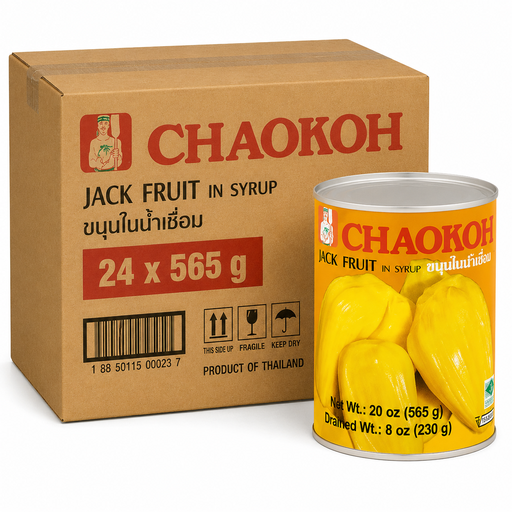 Image unavailable
This multipack is for anyone planning to use several tins regularly; check that the total quantity suits your household.
The fruit is jackfruit, not fruit cocktail, peaches or pears. Each tin is labelled 565 g; check its drained weight too.
 Image unavailable
Three separate tins let you open a smaller amount at a time when preparing portions.
This multipack of fruit cocktail in syrup contains 3 × 125 g, so there’s less in total than in a large tin. Check the drained weight of each tin.
A large tin works well if you portion out the fruit at home and can use any leftovers in line with the packaging instructions. If you want each portion to stay sealed until lunchtime, look at pots instead. A multipack of small tins lets you open your supply a little at a time.
Follow the instructions on the product you’ve bought. For a 425 g St Mamet fruit cocktail listed by Joybuy, the advice is to transfer the contents to a suitable container, refrigerate and eat within 3 to 4 days. Don’t assume the same timeframe applies to another tin without checking its packaging.
No, the two claims aren’t the same. Carrefour’s product page for a fruit cocktail labelled “no added sugar” lists grape juice from concentrate and 14 g of carbohydrates per 100 g, among other details. To compare products, check their ingredients and the “of which sugars” line in the nutritional information.
Not necessarily. A multipack of small tins lets you open a smaller amount at a time, but that doesn’t mean each tin contains the right portion for a lunchbox. Check how much fruit is in each tin and have a suitable container ready if you need to portion out its contents.