Someone with coeliac disease who needs clear labelling
For this dessert, you can’t rely on what you assume is in fruit in syrup. You’ll want to check that the exact product is labelled ‘gluten-free’ before serving it.


For a dinner for someone with coeliac disease, check that the exact product is labelled ‘gluten-free’ before choosing a size. In the European Union, Implementing Regulation (EU) No 828/2014 reserves this claim for foods containing no more than 20 mg/kg of gluten. Then choose a quantity to suit the number of portions you plan to serve: a tin may be enough for several people, while individual pots make serving easier and help avoid leftovers.
For this dessert, you can’t rely on what you assume is in fruit in syrup. You’ll want to check that the exact product is labelled ‘gluten-free’ before serving it.
You’re planning a dessert to share or to use over several meals, and want the right quantity of fruit. Check the drained weight and consider how much might be left over.
You’re serving one person or a small group and want an easy-to-portion quantity, rather than opening a large tin for a single serving.
First, check the gluten information for the product intended for someone with coeliac disease. Then choose a quantity that suits the meal, followed by a recipe you’ll enjoy.
| Criteria | What to check | Who is it for? |
|---|---|---|
| Gluten-free labelling | Check that the exact product is labelled ‘gluten-free’ on the packaging or official product page, and read any accompanying information. | If the dessert is for someone with coeliac disease, I need to confirm this claim rather than rely on the name of the aisle. Around 36% of consumers put this check first. |
| Quantity of fruit | Compare the drained weight with the amount needed for your planned portions. Don’t confuse the weight of the fruit with the weight of the syrup. | For a dinner shared with others, I want enough fruit for everyone without opening more than necessary; around 29% of consumers prioritise the usable quantity. |
| Leftovers after opening | Check the packaging and storage instructions once opened before choosing between a tin and individual pots. | If I’m serving just one person, I’d rather not have an opened tin left over with no plan for using it. This is the main concern for around 21% of consumers. |
| Type of recipe | Read the product name, ingredients and nutritional information if you’re choosing between fruit in syrup, fruit in juice and a no-added-sugar option. | I may want a particular recipe for my dessert, but I won’t confuse ‘no added sugar’ with ‘gluten-free’; around 14% of consumers choose the recipe type first. |
An ingredient list such as ‘fruit, water, sugar’ doesn’t, by itself, confirm that the product is labelled ‘gluten-free’ for someone with coeliac disease.
Check the label on the packaging or the official product page for the exact item before serving it.
These claims answer different questions: the first is about the recipe, while the second relates to gluten content.
If both matter to you, check each claim separately on the same product.
A tin containing several portions could leave you with unused fruit after dinner.
Plan how you’ll use the leftovers and read the storage instructions for after opening, or choose a portion-sized pack.
Carrefour sells fruit in syrup under its own-brand labels, including tins in a range of sizes.
This Marque Repère range from E.Leclerc includes fruit in syrup in tins and individual pots.
Auchan’s range of fruit in syrup includes tins and individual pots under these brands.
Aldi France sells BACCARA® individual pots of fruit in light syrup.
This jar of cherries in syrup could work well for a dessert where you choose the portion size yourself. If you’re serving dinner to someone with coeliac disease, check that the packaging you receive carries the ‘gluten-free’ claim shown on the Joybuy product page.
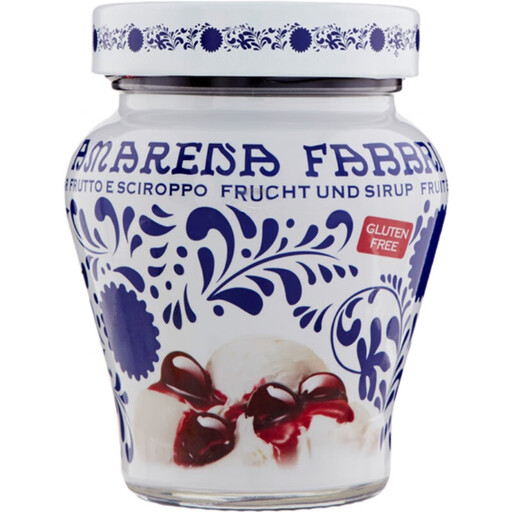 Image unavailable
For a cherry dessert, this jar lets you serve the amount you want. The Joybuy product page says ‘Gluten free’: check that the packaging you receive carries the same claim before serving it to someone with coeliac disease.
No. The category ‘fruit in syrup’ isn’t enough to confirm that a product is suitable for someone with coeliac disease. In the European Union, Implementing Regulation (EU) No 828/2014 permits the claim ‘gluten-free’ when a food sold to the final consumer contains no more than 20 mg/kg of gluten. Check the claim on the exact product.
No. A recipe that looks simple doesn’t replace checking for the ‘gluten-free’ claim. If you’re looking at a product page online, check the packaging of the item you receive before serving it too.
Choose a tin if you’ve planned several portions and know what you’ll do with any leftovers. Individual pots are more convenient for serving smaller amounts separately. Either way, check the gluten information separately if the dessert is for someone with coeliac disease.
No. The claim ‘no added sugar’ doesn’t, by itself, tell you anything about gluten content. Look separately for the ‘gluten-free’ claim on the exact product.