Parents preparing several lunch boxes
You portion the fruit at home into airtight containers. Before choosing a large tin, check the quantity of drained fruit and the storage instructions for any leftovers.


If you’re preparing several desserts at home, a large tin of fruit in syrup is a good option if you can divide the fruit between airtight food containers and use any leftovers according to the storage instructions after opening. For a lunch box that’s ready to go, with no need to decant, choose individual pots. Whichever you choose, compare the ingredients and the ‘of which sugars’ figure per 100 g; for a tin, check the drained weight too.
You portion the fruit at home into airtight containers. Before choosing a large tin, check the quantity of drained fruit and the storage instructions for any leftovers.
You want a dessert that can be taken along without draining or decanting in the morning. An individual pot is a more straightforward choice for this than a family-sized tin.
You compare the ingredients list, the information on each product and the ‘of which sugars’ figure per 100 g, rather than relying on the syrup description alone.
Choosing between a large tin and individual pots depends first on what you can prepare at home and how you’ll use any leftovers. Then compare the ingredients of each product, whatever the format.
Choose this if: you’re preparing several lunch boxes and have airtight food containers.
Bear in mind: you’ll need to drain and decant the fruit, then store any leftovers according to the tin’s label.
Choose these if: the dessert needs to be ready to take with you, without portioning in advance.
Check: the contents and ingredients of each pot. An individual format alone doesn’t tell you how much sugar it contains.
| What to consider | What to check | Who is this important for? |
|---|---|---|
| Taking it with you | An individual portion or fruit that needs decanting; a sealed container is needed for a tin. | If the dessert needs to go to secondary school without any morning preparation, I’d choose a ready-portioned option. This convenience would be a priority for around 42% of shoppers. |
| Sugar and ingredients | The ingredients list and ‘of which sugars’ figure per 100 g, comparing products intended for the same use. | I want to know what’s in the dessert, even when the label says ‘light syrup’ or ‘no added sugars’. Around 33% of shoppers would put checking the ingredients first. |
| Portions and leftovers | Net drained weight and storage instructions after opening. | When preparing several lunch boxes, I need to be able to use any leftover fruit within the time stated on the tin. This would be the top priority for around 25% of shoppers. |
The family-sized tins sold by Carrefour and Auchan aren’t individual portions that you can put straight into a lunch box.
Allow time to drain the fruit and use airtight food containers, or choose individual pots if you’d rather not decant it.
Portioning the fruit may mean you’ll need suitable small food containers.
The liquid is included in the total weight: Auchan’s 840 g tin of peaches contains 475 g of drained fruit.
When planning portions, look for the net drained weight of the product you’re considering and compare it with the number of lunch boxes you need to prepare.
This label doesn’t replace the nutritional information for the specific product. Likewise, ‘no added sugars’ doesn’t mean the fruit contains no sugar.
Compare the ingredients list and the ‘of which sugars’ figure per 100 g across similar products.
The shelf life of an unopened tin doesn’t automatically apply to leftovers. For its 340 g exotic fruit mix in light syrup, Auchan advises keeping it in a suitable airtight container in the fridge and eating it within two days.
Read the instructions for the product you’ve bought before dividing the fruit between several lunch boxes.
Carrefour stocks, among other products, an 850 g tin of St Mamet fruit cocktail in syrup, a size to portion at home.
This supermarket own brand features among the fruit-in-syrup options available in large tins and individual portions.
Auchan stocks, among other products, an 840 g tin of peaches in light syrup, with 475 g drained weight.
An E.Leclerc Marque Repère brand to consider when comparing tins of fruit in syrup with individual portions.
These products are fruit in syrup in a tin, jar or multipack, to portion out for a lunch box. The multipack of small units isn’t presented here as ready-to-go individual pots, so check the packaging before deciding how you’ll take it with you.
 Image unavailable
This size can be portioned at home for several lunch boxes, using airtight food containers.
850 g tin. Check the drained weight to plan your portions and follow the storage instructions after opening.
 Image unavailable
You can portion these pear halves at home if the quantity of fruit suits the portions you want to make.
Drained weight shown: 455 g. Use an airtight container to take a portion with you, and read the instructions for after opening.
 Image unavailable
The three units could be useful when preparing separate portions at home.
Pack size shown: 3 × 125 g. Check the packaging of each unit before deciding whether you’ll need another container for the lunch box.
 Image unavailable
This drained quantity makes it easy to check whether the product will provide enough portions for your needs.
Drained weight shown: 230 g. You’ll need an airtight container to take a portion from the tin with you.
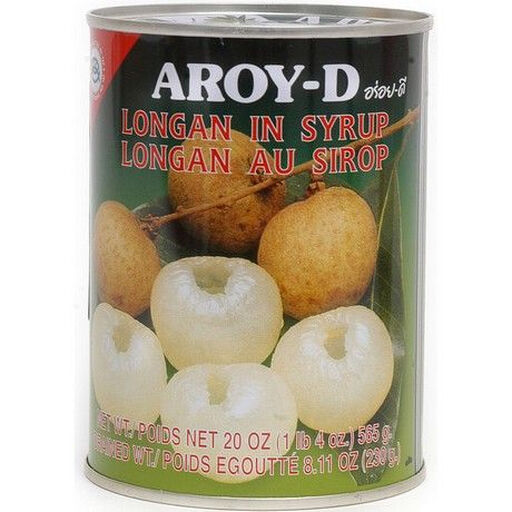 Image unavailable
This jar could be a good choice if you want to divide longans in syrup between several containers at home.
565 g jar. Check the drained weight and storage instructions on the packaging to plan your portions.
A large tin of fruit in syrup isn’t an individual portion that’s ready to take with you. For the family-sized formats sold by Carrefour and Auchan, portion the fruit at home into airtight food containers. If you’d rather skip this step, compare individual pots.
Follow the after-opening instructions for the product you’ve bought. For its 340 g exotic fruit mix in light syrup, Auchan advises putting leftovers in a suitable airtight container in the fridge and eating them within two days. Don’t apply this time limit to another tin.
No: fruit contains naturally occurring sugars. When comparing two desserts for the same purpose, check the ingredients and the ‘of which sugars’ figure per 100 g rather than relying on this claim alone.
Drained weight tells you how much fruit there is once the liquid has been removed. For example, Auchan’s 840 g tin of peaches shows a drained weight of 475 g. This is the figure that helps you plan how to divide the fruit between lunch boxes.