Shoppers who prioritise salt content
If salt content is your top priority, compare the value per 100 g across the products available through your chosen supermarket’s online service. The term ‘light syrup’ is no substitute for this comparison.


When choosing fruit in syrup for click and collect and prioritising salt content, compare the ‘salt’ value per 100 g for the products you’re considering. ‘Light syrup’ doesn’t tell you how much salt a product contains. Next, check the sugars, ingredients and drained net weight, as a low salt value alone won’t answer these other questions. Finally, check the details for the product you add to your basket, particularly if you plan to keep a large container after opening.
If salt content is your top priority, compare the value per 100 g across the products available through your chosen supermarket’s online service. The term ‘light syrup’ is no substitute for this comparison.
If you’re looking for a recipe with no added sugars, also check the ‘sugars’ value per 100 g. Fruit and juice can contain sugars even when the recipe is labelled ‘no added sugars’.
When deciding between snack pots and larger containers, check the amount of drained fruit, how many portions you expect to need and the storage instructions after opening.
Start with the salt value per 100 g, then check the sugars and the amount of fruit you’ll use separately. The DGCCRF states that nutrition information per 100 g or 100 ml makes it easier to compare prepacked foods.
| Criterion | What to check | Who it’s for |
|---|---|---|
| Salt content | Compare the ‘salt’ value per 100 g on the product pages for the options you’re considering, then check the label when your order arrives. | If my main aim is to limit salt, I want to compare recipes on a like-for-like basis. Around 36% of consumers make this their top priority. |
| Sugars and recipe | Check the ‘sugars’ value per 100 g, the ingredients and whether the product is labelled ‘no added sugars’. | I want to take added sugars into account without assuming that a recipe labelled ‘no added sugars’ contains no sugars at all. This is a priority for around 29% of consumers. |
| Format and quantity | Compare the number of snack pots and the drained net weight, rather than just the total weight of the container and its liquid. | Whether I’m serving individual desserts or several portions, I need to choose an amount of fruit that suits the occasion. Format comes first for around 21% of consumers. |
| Ingredients and storage | Check the fruit and covering liquid in the ingredients, then look at the product-specific storage instructions after opening. | If I plan to open a large container, I want to know what’s in it and how long I can keep it for. Around 14% of consumers prioritise these points. |
This description doesn’t tell you how much salt a product contains. Auchan’s product page for its exotic fruit mix in light syrup states that it contains less than 0.01 g of salt per 100 g, but this value applies to that product only.
Open the product page for each option you’re considering and compare its own ‘salt’ value before making your choice.
The St Mamet Plaisir de fruits peach, pear and pineapple product listed on Auchan is labelled ‘no added sugars’, but still contains 12 g of sugars per 100 g.
Check the recipe claim, ingredients and ‘sugars’ value per 100 g together.
The covering liquid is included in the product’s weight. To find out how much fruit you’ll actually have, the drained net weight is more useful than the size of the tin or jar alone.
Check this weight and choose a format that suits the portions you plan to serve.
Instructions vary from one product to another. Auchan’s product page for Martin’s International fruit cocktail says to keep it in the fridge in a sealed food container and consume it within three days.
Follow the instructions on the product you buy and choose an amount you can use within the stated time.
A container that’s too large for your needs may leave you with unused fruit.
Carrefour offers several fruit-in-syrup recipes under this brand, including snack pots with no added sugars.
Auchan offers fruit in light syrup in snack pots and larger containers.
St Mamet offers a peach, pear and pineapple recipe in grape juice made from concentrate, listed on Auchan as having no added sugars.
These longans and fruit cocktails in syrup come in different formats to consider when placing an order. To choose based on salt content, compare the nutrition information for each product. The weight in the product name isn’t a substitute for the drained net weight.
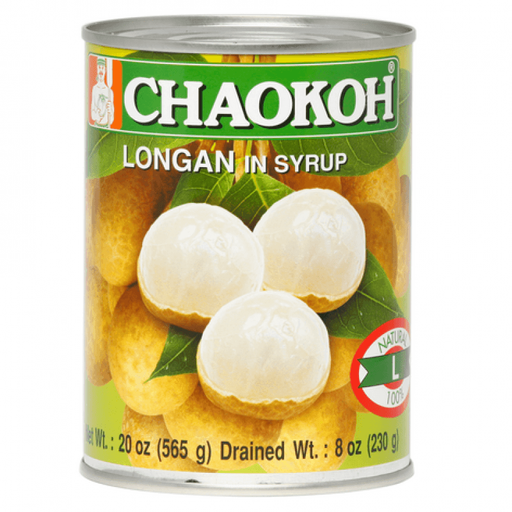 Image unavailable
A format to consider if you’re planning to serve several portions of longans in syrup. The tin is marked 565 g; check the drained net weight and the salt and sugars values on the product page and label.
 Image unavailable
The 850 g format may suit you if you’re planning to serve several portions. Check the drained net weight, nutrition information and the storage instructions for this cocktail after opening.
 Image unavailable
This 425 g tin gives you another format to choose from alongside the 850 g St Mamet cocktail. Compare the drained net weight and nutrition information for both before deciding which best suits your portions.
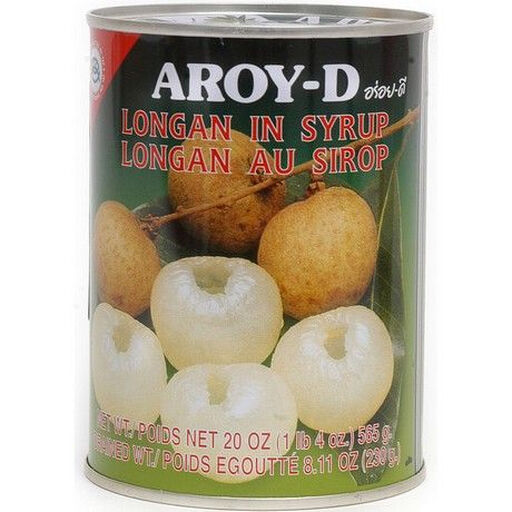 Image unavailable
This 565 g product is another option if you’re looking for longans in syrup. To compare it with the CHAOKOH tin, check the salt per 100 g, sugars and drained net weight on each label.
Compare the ‘salt’ value for both products on the same per-100 g basis. The DGCCRF explains that nutrition information per 100 g or 100 ml is there to make comparisons easier. Don’t rely only on the product name or the amount per portion.
No, this description alone doesn’t tell you how much salt a product contains. Auchan’s exotic fruit mix in light syrup is listed as containing less than 0.01 g of salt per 100 g, but you’ll need to check the value for each product you’re considering.
No. The St Mamet Plaisir de fruits peach, pear and pineapple product listed by Auchan contains 12 g of sugars per 100 g, despite being labelled ‘no added sugars’. If this matters to you, compare the ‘sugars’ value and the ingredients.
The drained net weight tells you how much fruit there is without the covering liquid, making it easier to compare formats intended for similar uses. The DGCCRF explains that this information must appear on the label when a food is presented in a covering liquid.
Follow the storage time and instructions on the container you’ve bought, as they vary between products. For example, Auchan’s product page for the Martin’s International fruit cocktail says to keep it in the fridge in a sealed food container and consume it within three days.