Households sharing a dessert
A tin served at the same meal can be a good choice if several people are eating the fruit or it’s going into a recipe for everyone. Carrefour and E.Leclerc catalogues, for example, include fruit cocktails and large tins.


If you’re serving dessert to several people at the same meal, choose a large tin with enough of the right fruit for your recipe. If everyone will have dessert at a different time, multipacks of individual cups are more convenient. Either way, check the ingredients, drained weight and storage instructions after opening before you order.
A tin served at the same meal can be a good choice if several people are eating the fruit or it’s going into a recipe for everyone. Carrefour and E.Leclerc catalogues, for example, include fruit cocktails and large tins.
Multipacks of cups make it easy to serve desserts or snacks at different times, without opening a large tin for the first portion.
If the recipe matters more to you than the pack size, compare the ingredients list, the sugars shown in the nutritional information and the exact wording on each product.
First decide whether the fruit will be shared straight away or served in individual portions. Then compare the recipes and the product-specific information for the item you plan to order.
| What matters | What to check | Who it’s for |
|---|---|---|
| Amount to share | Compare the pack weight, stated drained weight and the choice between one type of fruit and a fruit cocktail. | For a shared dessert, I want enough fruit for everyone without choosing a tin based on its name alone; around 33% of consumers would prioritise the amount available to share. |
| Individual portions | Check the number of cups and the weight of each one: Carrefour, Auchan and E.Leclerc catalogues, for example, include 4 × 70 g or 4 × 113 g formats. | If desserts are eaten at different times, I’d rather open one portion at a time; around 25% of consumers would prioritise having separate portions. |
| Ingredients | Read the ingredients list, nutritional information and the exact wording about added sugars. | When the recipe guides my choice, I want to know which ingredients and sugars are present rather than relying on the front of the pack; around 25% of consumers share this priority. |
| Ordering and storage | Check the collection or delivery arrangements, then read the storage instructions for your chosen product after opening. | I want to be able to use the rest of the tin in line with the instructions after it arrives; around 17% of consumers would put managing the order and the opened product first. |
A large tin and a multipack of cups don’t contain the same amount of fruit to serve. The formats available in Carrefour, Auchan and E.Leclerc catalogues vary considerably.
Compare the pack weight, stated drained weight and number of portions before making your choice.
Instructions for storage after opening vary by product. An Auchan product listing says to refrigerate the contents in a suitable airtight container and eat within two days, while a Joybuy listing for St Mamet says three to four days in a suitable container in the fridge.
Plan how you’ll use the remaining contents and follow the instructions on the product you receive.
Any opened contents you can’t use within the stated time may go to waste.
Fruit naturally contains sugars. A claim on the front of the pack doesn’t, on its own, tell you everything about the ingredients or nutritional values of the recipe.
Check the exact claim, ingredients list and nutritional information together for the product you choose.
The DGCCRF says that dents or other deformation, rust marks or bulging may indicate that a metal tin has deteriorated.
Check the tin when it arrives and don’t eat the contents if it shows any of these signs. Contact the seller to report the problem.
The Carrefour range includes tinned peaches in an 820 g tin, an 825 g fruit cocktail and products in individual cups.
The Auchan range includes individual cups and tinned fruit, including a mix of exotic fruit in light syrup.
E.Leclerc, for example, offers 500 g fruit cocktails in light syrup and Douceur du Verger cups in 4 × 70 g packs.
Carrefour and Auchan catalogues include St Mamet fruit cocktails in tins or smaller containers, depending on the product.
This selection includes a fruit cocktail to share, individual portions and tins of specific fruits. Choose based on how much you’re serving, which fruit you want and how you’ll use any opened container.
 Image unavailable
A tin to consider for dessert served to several people at the same meal. Check the drained weight if you’re comparing the amount of fruit with another format.
 Image unavailable
The three containers are ideal for desserts served separately. At 375 g in total, this pack isn’t suited to the same purpose as a large tin intended for sharing.
 Image unavailable
This format may suit you if you want a fruit cocktail in a smaller quantity than the 850 g tin. The Joybuy listing says to keep any leftovers in a suitable container in the fridge and eat within three to four days of opening.
 Image unavailable
Worth considering for a dessert where longan is the fruit of choice. The 565 g container contains a single type of fruit, not a cocktail; check the drained weight to compare the amount of fruit.
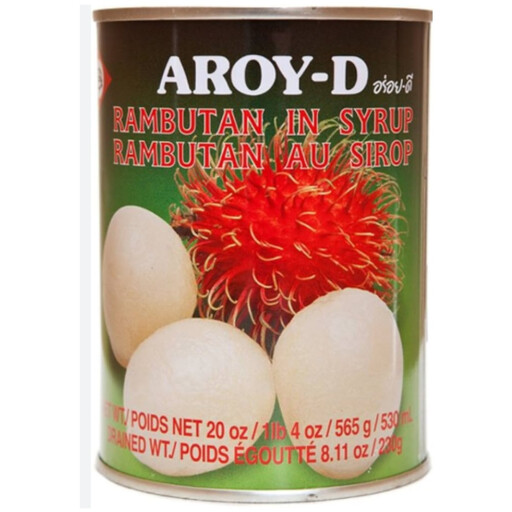 Image unavailable
This container is a good choice if you’re specifically looking for rambutans for a dessert, rather than a selection of different fruits. Check the label on the product you receive for ingredients, allergens and instructions after opening.
A large tin is better for a dessert served to everyone at once, while individual cups suit portions eaten separately. Also compare the stated drained weight and, if you’ve opened a tin, check the storage instructions for your chosen product.
Follow the instructions on the product you receive, as they vary by product. An Auchan listing says to refrigerate the contents in a suitable airtight container and eat within two days; a Joybuy St Mamet listing says three to four days in a suitable container in the fridge.
Compare the product name, ingredients, net quantity and nutritional information. If the fruit is in a covering liquid, also check the drained net weight. The DGCCRF states that this labelling information must be legible and that labels must be written at least in French.