People who are mainly watching their fat intake
You want to check the fat and saturated fat content of the product you’re thinking of buying, without confusing this priority with looking for reduced-salt options.


When choosing fruit in syrup as part of a low-fat diet, first compare the fat content of the specific product, then check the ingredients and sugars if those matter to you too. Salt is a separate consideration: a low figure on the label does not, by itself, demonstrate reduced salt, and ‘light syrup’ does not mean ‘no added sugar’.
You want to check the fat and saturated fat content of the product you’re thinking of buying, without confusing this priority with looking for reduced-salt options.
You’re choosing between light syrup and a ‘no added sugar’ recipe. The ingredients list and nutrition information can help you tell the difference without assuming either means ‘sugar-free’.
You also need to keep an eye on salt. Check its value in its own right: a fat content that suits you tells you nothing about the salt.
When choosing fruit in syrup as part of a low-fat diet, start by checking the fat content of the exact product. Then look at sugars, salt or pack size, depending on your other priorities, and make sure you’re comparing values on the same basis.
| What to compare | What to check | Who this matters to |
|---|---|---|
| Fat | Fat and saturated fat per 100 g, as well as the stated basis for the calculation. | I want to check the fat content of the exact product before choosing my dessert. Around 40% of consumers would make this their priority. |
| Sugars and liquid covering | Whether the ingredients include sugar or concentrated juice, followed by the sugars per 100 g. | Light syrup isn’t enough for me if my main aim is to avoid added sugar. Around 30% of consumers would make this distinction their priority. |
| Salt | Salt per 100 g and, if it appears on the packaging, the exact wording of any reduced-salt claim. | If I also need to watch my salt intake, low fat doesn’t meet that separate requirement. Around 20% of consumers would put checking salt first. |
| Pack size and storage | Drained net weight, number of portions and storage instructions after opening. | I rarely eat fruit in syrup and want a pack size I can use up after opening. Around 10% of consumers would put pack size first. |
The light-syrup fruit cocktails sold by Auchan and E.Leclerc contain sugar in their ingredients. Conversely, ‘no added sugar’ does not mean the product contains no sugar at all.
Read the ingredients list and the ‘sugars’ value per 100 g rather than relying on the word ‘light’ alone.
The salt content shown for a product is an absolute value. On its own, it doesn’t show that the product contains less salt than a comparison product.
Check the value per 100 g and the exact wording on the packaging. If you’ve been prescribed a personal limit, follow the advice of your healthcare professional.
E.Leclerc gives the nutrition information for Douceur du Verger fruit cocktail per 100 g of drained product. A figure calculated with the covering liquid may not provide the same basis for comparison.
Check whether the figures refer to the drained product or the product as sold, and look at the drained net weight.
The product page for Auchan’s 500 g fruit cocktail says to transfer the contents to a suitable airtight container after opening, refrigerate and consume within two days.
Choose a pack size that suits the portions you have planned, and follow the instructions for the specific product you buy.
Auchan offers, among other products, a four-fruit cocktail in light syrup in a 500 g tin.
This brand offers, among other products, a 250 g fruit cocktail in light syrup.
The range includes, among other products, a no-added-sugar cocktail in four pots of 70 g drained weight, and a fruit cocktail in syrup that contains sugar.
St Mamet offers, among other products, a fruit cocktail in individual portions labelled ‘no added sugar’.
These fruit-in-syrup options let you choose a fruit and pack size, then compare fat, sugars and salt using the nutrition information for each product. A salt value on the label isn’t enough to show that a product is ‘reduced salt’.
 Image unavailable
If you’re looking for pears in light syrup, compare the fat and sugars per 100 g with the other products you’re considering.
The stated weight is 455 g of drained fruit; the word ‘light’ is no substitute for checking the ingredients.
 Image unavailable
If you prefer peaches in a 230 g drained-weight pack, check the fat per 100 g before comparing the syrup.
To tell this recipe apart from a no-added-sugar product, check the ingredients and the ‘sugars’ value too.
 Image unavailable
If you’re planning several portions of pineapple, distinguish the total weight from the drained weight before comparing pack sizes.
For your dietary priorities, compare fat and sugars on the same per-100 g basis as the other products.
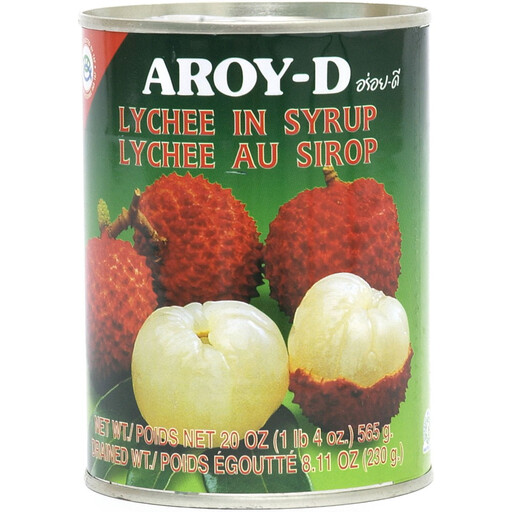 Image unavailable
If you’d prefer lychees to a fruit cocktail, compare the fat content of this product with other fruit in syrup.
Check sugars and salt separately; the stated pack size is 565 g.
 Image unavailable
If you choose sliced mango, start with the ‘fat’ value for this product rather than focusing only on the type of fruit.
The stated pack size is 425 g; also check the ingredients and the sugars and salt per 100 g.
No. Salt and fat are two separate pieces of information. For this purpose, compare the fat content of the exact product; any claim about salt does not tell you how much fat it contains.
No. Carrefour’s product page for the St Mamet fruit cocktail explains that naturally occurring sugars may still be present. When comparing two recipes, check their ingredients and sugars per 100 g as well.
No. This figure alone doesn’t demonstrate a reduction compared with another product. Check the exact wording on the packaging and compare values on the same basis. If you’re following a prescribed limit, refer to the advice of your healthcare professional.
Follow the instructions for the product you’ve bought. For its 500 g four-fruit cocktail in light syrup, Auchan advises transferring the contents to a suitable airtight container, keeping it in the fridge and consuming it within two days of opening.