If you’re living with diabetes and choosing fruit for a dessert to share, a large tin works well if you can decide how much to serve each person; individual pots make it easier to serve separate portions. In either case, compare the carbohydrate and sugar content per 100 g, then calculate the amount in your portion. ‘No added sugar’ does not mean sugar-free or carbohydrate-free.
Who is this choice for?
People who compare carbohydrates per portion
You check the carbohydrate and sugar content and the amount served, rather than relying on the ‘no added sugar’ claim alone. Assurance Maladie recommends considering nutritional information in relation to the amount you eat.
Households sharing a fruit dessert
You want to serve several people from the same tin while keeping track of how much each person has.
People who prefer individual portions
You prefer pots that are ready to serve, even if that means giving up the large tin in the middle of the table.
What should you look for first?
When choosing fruit in syrup to share, compare the nutritional information and the portion you’re planning to serve first, then choose a pack size that suits how you’ll serve it.
| What to consider | What to check | Who is it for? |
|---|
| Carbohydrates and sugars |
Check the carbohydrate and sugar content per 100 g, then work out how much is in the portion you’ll serve. Also check the ingredients and look for the ‘no added sugar’ claim. |
If I need to keep track of the carbohydrates in my dessert, the claim on the front of the pack isn’t enough. Around 50% of consumers would put checking this nutritional information at the top of their list of concerns. |
| Sharing and portions |
Check the net drained weight and plan how you’ll divide a large tin between everyone. |
When serving several people, I want a sharing size without losing sight of how much each person takes. This would be a priority for around 30% of consumers. |
| Convenient format |
Check whether the pack suits how you plan to serve it: a large tin or individual pots. |
If the dessert needs to be quick to portion out, I’m mainly looking for a pack that suits the meal. Around 20% of consumers would make convenience their main consideration. |
Common misconceptions to avoid
-
Confusing ‘no added sugar’ with ‘sugar-free’
According to Anses, having no added sugar doesn’t mean a product contains no sugar at all: the sugars naturally present in the fruit are still there.
Check the ingredients and the carbohydrate and sugar values, then take the amount you serve into account.
-
Assuming light syrup, juice and no added sugar mean the same thing
These descriptions refer to different products; on their own, they don’t let you compare the carbohydrate content of two products.
Compare the preserving liquid, ingredients and nutritional values per 100 g for each product.
-
Opening a large tin without planning how to serve it
A sharing size doesn’t determine how much each person takes. You’ll also need to store any leftovers according to the instructions on the product you buy.
Divide the dessert between bowls and read the storage instructions before opening the tin.
If you don’t finish the dessert with your meal, have a suitable container ready to store the leftovers.
Brands to consider
ST MAMET
The range includes fruit salads and sharing sizes. Auchan, for example, lists a 475 g net drained peach, pear and pineapple fruit salad with no added sugar.
- This product gives you a large-size option to compare that carries a ‘no added sugar’ claim.
- However, Auchan lists 13 g of carbohydrates, including 12 g of sugars, per 100 g, so you’ll still need to consider the portion size.
Carrefour Classic’
The Carrefour range includes fruit in syrup and individual pots with no added sugar.
- The orchard fruit cocktail with no added sugar comes in four 70 g net drained pots, ready to serve separately.
- Carrefour lists 14 g of carbohydrates per 100 g for this product; the pots aren’t a substitute for a large dessert to share.
Douceur du Verger
E.Leclerc lists a 500 g fruit cocktail in light syrup in this range.
- This pack can be divided between several people.
- ‘In light syrup’ doesn’t mean ‘no added sugar’, so compare the ingredients and nutritional information for the product you choose.
BACCARA®
ALDI offers BACCARA® fruit pots in light syrup, designed to be served individually.
- Individual pots save you from dividing up a large tin at dessert time.
- This format isn’t a direct match if you want a dessert to share from the middle of the table; you’ll still need to check the label to compare its contents.
Large tins of fruit in syrup on Joybuy
These tins of fruit in syrup can be served as a dessert to share. To choose between them, check the label for each product and decide how much you’ll serve: none of these product names carries a ‘no added sugar’ claim.
 Image unavailable
ST MAMET Williams pear halves in light syrup, 455 g drained
If you’re serving pears to several people, the drained weight gives you a useful guide to how much fruit there is to share.
Compare the carbohydrate and sugar content on the label with the portion you actually serve.
View on Joybuy
 Image unavailable
AROY-D mango slices in syrup, 425 g
This tin can be shared between several people who fancy mango for dessert.
If you’re comparing the amount of fruit you’ll serve, check the drained weight on the packaging; the total weight of the tin isn’t the same thing.
View on Joybuy
 Image unavailable
ST MAMET fruit cocktail in syrup, 850 g
This large tin is ideal for serving into several bowls, as long as you decide how much to serve each person.
To compare the amount of fruit rather than the total contents, check the drained weight on the packaging.
View on Joybuy
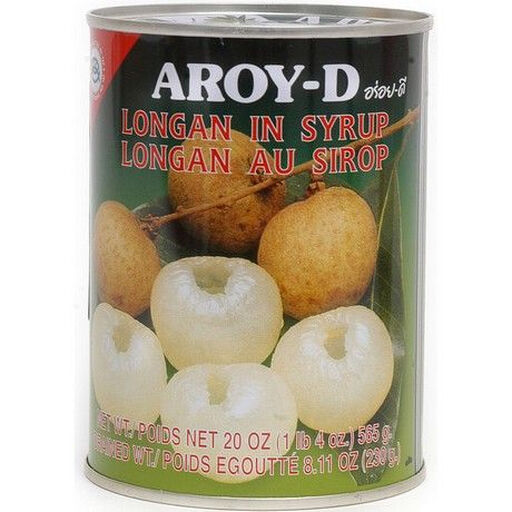 Image unavailable
Aroy-D longans in syrup, 565 g
This tin lets you serve longans to share rather than choosing individual pots.
Before comparing portions, check the drained weight and the nutritional information on the label of the product you buy.
View on Joybuy
 Image unavailable
AROY-D rambutans in syrup, 565 g
This tin works well for sharing if you divide the contents between everyone.
Before working out the amount in each portion, check the drained weight and the carbohydrate and sugar content per 100 g on the packaging.
View on Joybuy
Frequently asked questions
Does ‘no added sugar’ mean sugar-free?
No. Anses reminds shoppers that this claim doesn’t rule out sugars naturally present in the ingredients. To see the amount listed by the manufacturer, check the ‘of which sugars’ line in the nutrition table.
When should you choose individual pots rather than a large tin?
Individual pots are a good choice if you want portions that are already separated; a large tin is better suited to a dessert you’ll divide between several people. In either case, Assurance Maladie recommends considering nutritional information in relation to the amount actually eaten.
What should you check on the label when comparing two fruits in syrup?
Compare the ingredients and the carbohydrate and sugar content per 100 g, then consider how much you plan to serve. Also check whether the fruit is in juice, light syrup or a product labelled ‘no added sugar’: these terms aren’t interchangeable.
How long can you keep fruit in syrup after opening?
Follow the instructions for the product you buy, as storage times can vary. For the 850 g ST MAMET fruit cocktail in syrup featured on Joybuy, the advice is to keep leftovers in a suitable container in the fridge and eat them within 3 to 4 days.


