People who strictly avoid lactose
You need to be able to check the ingredients and allergen information for the exact variant before choosing it. Don’t assume that all fruit in syrup has the same ingredients.


For lactose-free shopping, only choose fruit in syrup after checking the ingredients and allergen information for the exact product you’re buying: the category name alone isn’t enough. Individual pots are handy for ready-to-serve portions, while a larger tin means you’ll need a plan for using the leftovers after opening. When comparing recipes, also check the “of which sugars” line per 100 g: “no added sugars” doesn’t mean “sugar-free”.
You need to be able to check the ingredients and allergen information for the exact variant before choosing it. Don’t assume that all fruit in syrup has the same ingredients.
Individual pots are ideal when you want a dessert or snack without having to store a large, opened container.
A larger tin can provide several portions or be used in different recipes, as long as you plan how to use and store the contents after opening.
When buying fruit in syrup as part of a lactose-free shop, first check the ingredients for the exact product, then choose the portion size and type of recipe that suit your needs.
| What to consider | What to check | Who is it for? |
|---|---|---|
| Ingredients and allergens | Read the ingredients list and check the allergens highlighted on the product you’re buying. In particular, look for any mention of milk or lactose. | If I need to avoid lactose completely, I can’t rely on the name “fruit in syrup” alone. For around 45% of consumers, this would be their main concern. |
| Portions and sugars | Compare the number of pots, their drained net weight and the “of which sugars” line per 100 g. | For an individual dessert, I prefer a ready-to-serve portion and want to be able to compare recipes. Around 33% of consumers would put this practical portion size at the heart of their choice. |
| Format and storage | Compare the drained net weight and storage instructions after opening with the portions you plan to serve. | If I’m preparing several desserts, a large tin appeals to me, but I need to be able to use the leftovers in time. This would be the main priority for around 22% of consumers. |
Recipes can vary even within the same brand. According to the French Directorate General for Competition Policy, Consumer Affairs and Fraud Control, allergens in pre-packed foods must be emphasised in the ingredients list.
Check the ingredients list and allergen information for the exact variant you’re buying, rather than relying on the name of the fruit or another recipe in the range.
The product information for St Mamet’s no-added-sugars fruit cocktail states that the fruit contains naturally occurring sugars.
To compare two products, check the “of which sugars” line in their nutritional information per 100 g.
How long an opened product will keep, and the conditions for storing it, depend on the specific product. You can’t tell from the tin size alone.
Choose an amount that suits the desserts you have planned, and follow the packaging instructions for storing any leftovers.
An opened tin that isn’t used within the stated time can lead to food waste.
For a product stored in liquid, the weight of the tin and syrup won’t necessarily tell you how much fruit you’ll get.
Check the drained net weight and compare it with the number of portions you plan to make.
The range includes a four-pot orchard fruit cocktail, marketed as having no added sugars.
St Mamet offers no-added-sugars fruit cocktail pots, as well as fruit in syrup in tins.
The range includes a tropical fruit mix in light syrup, designed to provide several portions.
This Marque Repère range, sold by E.Leclerc, includes a variety of fruits and formats, including individual pots and tins.
The brand is available at Aldi, including a fruit cocktail in light syrup.
These tins of fruit in syrup can be used to make desserts or provide several portions. They’re no substitute for checking the ingredients and allergens on each pack. Also choose a format that you’ll be able to use up after opening.
 Image unavailable
Williams pear halves to consider for a dessert served in several portions.
Drained weight shown in the product name: 455 g. Check the ingredients, allergens and storage instructions after opening on the packaging you buy.
 Image unavailable
Peach halves to consider for a dessert or fruit salad.
Drained weight shown in the product name: 230 g. Check the ingredients and storage instructions on the tin you actually buy.
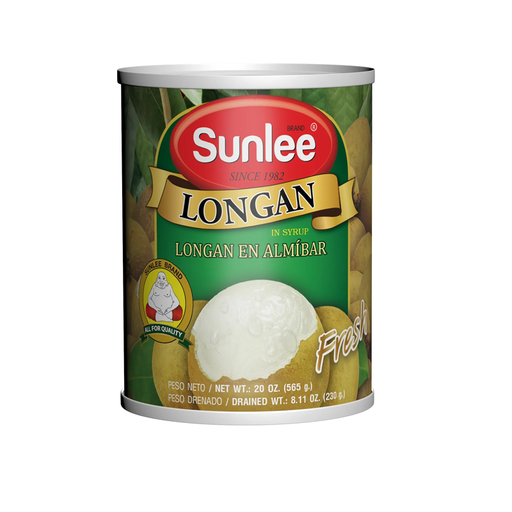 Image unavailable
A format to consider if you’re planning to use longans in several dessert portions.
The tin is listed as 565 g. Check the packaging for the ingredients, allergens and how long it will keep after opening.
 Image unavailable
Mango slices to consider for making a dessert or fruit salad.
The tin is listed as 425 g. To plan your fruit portions, also check the drained net weight on the packaging and follow the storage instructions after opening.
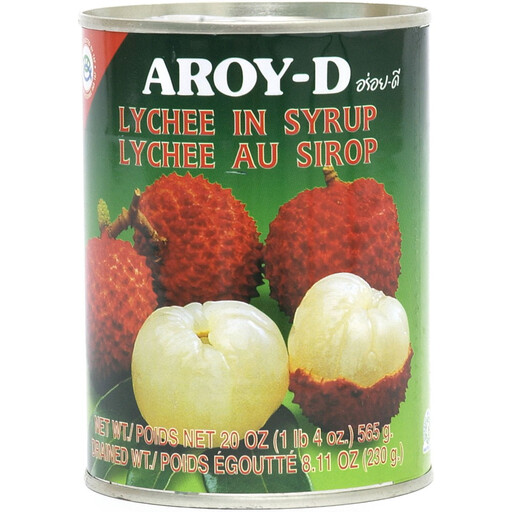 Image unavailable
A format to consider for desserts or fruit salads served in several portions.
The tin is listed as 565 g. Check the label for the ingredients, the basis for the nutritional values and the storage instructions after opening.
No. Check the ingredients and allergen information for the exact product before buying. The ingredients in one fruit-in-syrup recipe don’t guarantee those of other variants or later formulations.
No. Fruit can contain naturally occurring sugars. Carrefour’s product information for St Mamet’s no-added-sugars fruit cocktail makes this clear. To compare recipes, check their “of which sugars” line per 100 g.
Follow the time limit and storage instructions on the tin you buy, as these vary from product to product. Auchan’s product information for one tropical fruit mix says to refrigerate it in a suitable container and use it within two days. This timeframe doesn’t apply to all tins.
Read the ingredients list and allergen information for the product you choose. In France, the Directorate General for Competition Policy, Consumer Affairs and Fraud Control states that allergens in pre-packed foods must be emphasised.