For a dessert to share
If you’re making a tart or a layered dessert, the shape of the fruit and the quantity both matter. Auchan, for example, recommends its peach halves for tarts, layered desserts and fruit compotes.


For a tart or a dessert to share, choose fruit halves if their shape matters, or a fruit cocktail if you want to serve a mixture. Individual pots are better for serving separate portions. In all cases, check the drained weight, ingredients list and storage instructions after opening rather than assuming that ‘in juice’, ‘in light syrup’ and ‘no added sugar’ mean the same thing.
If you’re making a tart or a layered dessert, the shape of the fruit and the quantity both matter. Auchan, for example, recommends its peach halves for tarts, layered desserts and fruit compotes.
A fruit cocktail lets you serve a mixture in a bowl or individual glasses. Individual pots make portioning easier when you don’t want to open a large tin.
If you’re looking for a specific claim, such as ‘no added sugar’, check the ingredients and nutritional information for the product you’ve chosen too. Before opening a large pack, check how to store any leftovers.
Start with the dessert you’re planning, then choose the cut and pack size. Next, check the quantity of drained fruit and the ingredients for the product you’re interested in.
| What to consider | What to check | Who is this for? |
|---|---|---|
| Shape and quantity | The way the fruit is cut and the net drained weight in relation to your recipe. | For a tart or layered dessert to share, I want fruit pieces that look right and enough fruit for the dish. Around 33% of consumers make this their top priority. |
| Serving and leftovers | The number of individual pots or, for a large tin, the storage instructions after opening. | When I need to serve dessert quickly in portions, I’d rather open just the amount I need than work out how to store a large tin. This comes first for around 25% of consumers. |
| Family-size pack | The usable drained quantity for the number of guests and the format you’ve chosen. | If several people are sharing dessert, I look for a pack with enough fruit for the recipe, without having to use several small containers. Around 25% of consumers prioritise this match. |
| Liquid and ingredients | The exact claim, ingredients list and nutritional information for the product. | I want to tell the difference between fruit in juice or light syrup and a product labelled ‘no added sugar’, without assuming what’s in it from the product name alone. This is the top priority for around 17% of consumers. |
‘No added sugar’, ‘in juice’ and ‘in light syrup’ describe different things. None of these claims, on its own, tells you everything about the ingredients or nutritional information.
Read the ingredients list and nutritional information for the specific product you plan to serve.
An opened tin needs different care from one that’s still sealed. For its 840 g peach halves, Auchan advises transferring the contents to an airtight container, refrigerating them and eating them within two days. Check the instructions for other products.
Choose a pack size to suit your dessert and the number of guests, then follow the instructions on the packaging.
A best-before date doesn’t remove the need to check the condition of the tin. The DGCCRF highlights dents, rust and bulging as possible signs of deterioration.
Set aside any tin showing these signs and don’t eat its contents if you’re unsure.
Carrefour offers peach halves and fruit cocktails in individual pots under this brand.
E.Leclerc lists this brand in its fruit-in-syrup range, including a fruit cocktail in light syrup.
Auchan offers peach halves in light syrup, including in an 840 g pack.
ALDI France offers BACCARA® fruit cocktails in light syrup.
Carrefour and Auchan offer ST MAMET fruit in syrup and fruit cocktails, including some products with no added sugar.
These products offer several ways to finish your dessert: peach halves for baking, fruit cocktails to share or serve in small tins, and fruit in syrup for toppings. To choose between them, consider the shape of the fruit, the pack size and the instructions on each product’s packaging.
 Image unavailable
Consider these when fruit halves suit the look of your dessert or baking. The pack contains 230 g of drained fruit, so check that this is enough for your recipe. After opening, transfer the contents to a suitable container, refrigerate and eat within 3 to 4 days, as instructed for this product.
 Image unavailable
This fruit cocktail is a good choice if you’d rather serve a mixture of fruit than arrange peach halves on a tart. The 850 g refers to the pack size: check the drained weight to work out how much fruit you’ll have. After opening, refrigerate the contents and follow the instruction to eat within 3 to 4 days, as stated for this product.
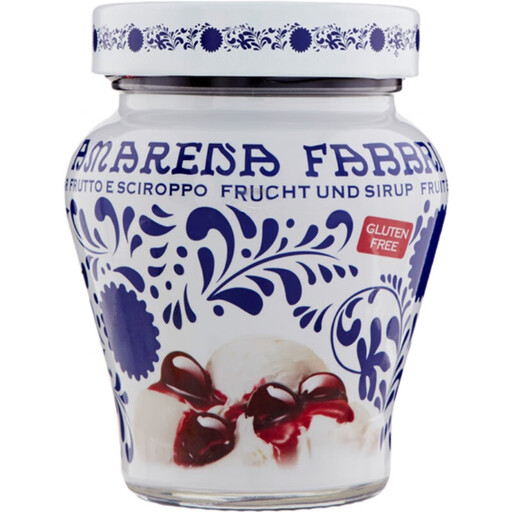 Image unavailable
These cherries are worth considering as a topping for a dessert or drink, rather than as a fruit cocktail to serve in large portions. The jar contains 230 g; check the drained weight and the storage instructions after opening on the packaging.
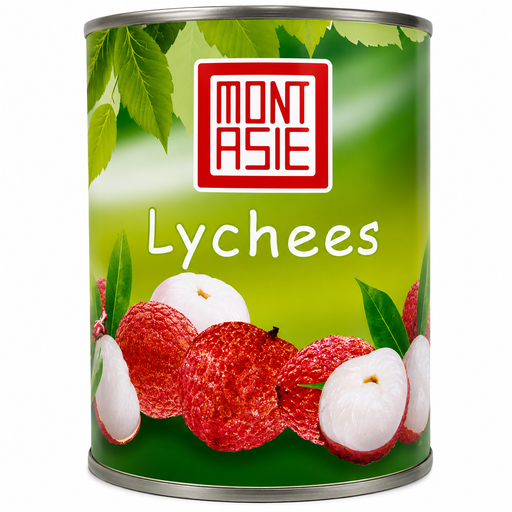 Image unavailable
An option if you’d like to serve lychees or add them to a dessert. The pack is 567 g; check the drained weight to find out how much fruit you can use, as well as how long it can be kept after opening.
 Image unavailable
The three separate tins let you open the fruit cocktail as you need it. To work out how much fruit each tin contains, check the drained weight. Also check the label for storage instructions before opening.
Choose peach halves if you want to arrange larger, evenly shaped pieces. Auchan, for example, recommends its peach halves for tarts and layered desserts. A fruit cocktail is better when your dessert calls for a mixture, such as in individual glasses or a bowl.
Follow the instructions for the product you’ve bought, as storage times can vary. For its 840 g peach halves, Auchan advises transferring the contents to an airtight container, keeping them in the fridge and eating them within two days. This timeframe doesn’t automatically apply to other products.
First compare the product name and net quantity. If you’re preparing a dessert, also check the stated drained weight. The DGCCRF notes that prepacked food labels include information such as the ingredients list and nutrition declaration. Check these to compare the ingredients and nutritional information.
A tin can still be used after its best-before date, but check its condition and how it has been stored. The Ministry of the Economy describes this date as indicative; the DGCCRF warns that a dented, rusty or bulging tin may have deteriorated. Don’t eat the contents if you’re unsure.