What should you look for?
First decide whether you’d like to arrange the fruit yourself or serve a dessert with no preparation. Then compare the labels and formats that suit your choice.
| What to consider |
What to check |
Who is this for? |
| Presentation |
The way the fruit is cut and its drained weight, depending on whether you’re preparing plates, dessert glasses or a tart. |
I want to arrange evenly sized pieces in two desserts rather than divide up a mix of cubes; presentation would be the top priority for around 44% of consumers. |
| Ingredients and sugars |
The ingredients list and the “of which sugars” figure per 100 g for each product. |
If the ingredients guide my choice, I’d rather check the nutritional information than assume anything from the word “light”; this would be the top priority for around 33% of consumers. |
| Serving and leftovers |
The packaging, how much you’ll need to open and the storage instructions after opening. |
For two portions that I can serve without chopping, I’m looking for a format that won’t leave me with a large open tin; convenient serving would come first for around 23% of consumers. |
Fruit in syrup available on Joybuy
This selection includes fruit halves to arrange in a dessert, cocktails for quicker serving and lychees to add to a dessert presentation. The stated pack size and weight don’t always match the drained weight, so check the packaging before planning your portions.
 Image unavailable
St Mamet, peach halves in light syrup, 230 g drained weight
The peach halves are a good choice if you want to arrange fruit in two desserts. Check the drained weight and storage instructions after opening on the packaging you receive.
View on Joybuy
 Image unavailable
St Mamet, Williams pear halves in light syrup, 455 g drained weight
Arrange the pear halves in dessert glasses or use them in a tart. The 455 g drained weight may leave you with leftovers if you’re serving two, so follow the storage instructions after opening.
View on Joybuy
 Image unavailable
St Mamet, fruit cocktail in syrup, 3 × 125 g
This mix is ideal for dessert glasses when you want to serve fruit without chopping. The three 125 g tins mean you only need to open as much as you need; check the drained weight per tin when planning portions.
View on Joybuy
 Image unavailable
St Mamet, fruit cocktail in syrup, 850 g
This mix is ideal if you’re preparing several portions or a dessert to share, without needing to cut up the fruit. If you’re serving two, plan how you’ll use the rest and check the drained weight on the label.
View on Joybuy
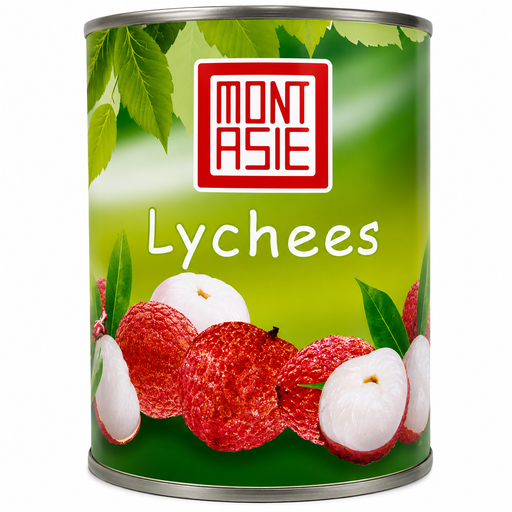 Image unavailable
Mont Asie, lychees in syrup, 567 g
Lychees add a distinctive fruit to arrange in a bowl or on a dessert. The stated weight is 567 g; check the drained weight and storage instructions after opening on the packaging.
View on Joybuy
Frequently asked questions
Does the word “luxury” help you choose fruit in syrup?
No: it doesn’t tell you how the fruit will look when arranged or what’s in the product. For a beautifully presented dessert, compare the fruit, how it’s cut, the drained weight and the ingredients. The DGCCRF notes that prepacked foods carry, among other details, an ingredients list and nutritional information.
Fruit halves or individual pots for a dessert for two?
Choose pear or peach halves if you want to arrange the pieces on two plates or in dessert glasses. Individual pots are better for serving straight away, with fewer leftovers to deal with.
How do you compare the sugar content of two fruits in syrup?
Check the “of which sugars” figure per 100 g and the ingredients list on both products. The words “light syrup” alone don’t tell you whether one product contains less sugar than the other.
Can you keep fruit in syrup after opening?
Yes, as long as you follow the instructions for the product you’ve bought. The Joybuy pages for the relevant St Mamet products state that they can be kept in the fridge for 3 to 4 days after opening. Don’t automatically apply this storage period to another tinned product.
What does the best-before date mean on a tin of fruit?
The best-before date relates to how long the product retains its quality. According to the DGCCRF, a product may still be safe to eat after this date if its packaging is intact, although its taste and texture may change. Check the exact date marking and the condition of the tin. If a product has a use-by date, it must not be eaten after that date.


