Organisers keeping an eye on added sugars
If avoiding added sugars matters for your dessert, read the ingredients list and check the ‘of which sugars’ figure per 100 g. ‘No added sugars’ does not mean that the product contains no sugars at all.


When choosing fruit in syrup to serve at a festival, check the fat per 100 g, then distinguish between the sugars in the product and the sugars added to the recipe. Individual pots are a good choice when you need to hand out sealed portions quickly. With a large container, you’ll need to plan how to serve it and work out portions using the net drained weight.
If avoiding added sugars matters for your dessert, read the ingredients list and check the ‘of which sugars’ figure per 100 g. ‘No added sugars’ does not mean that the product contains no sugars at all.
If you’re handing out desserts without portioning them on site, sealed individual pots save you having to serve fruit from a large tin.
If you’re serving several guests from one container, use the net drained weight to work out how much fruit you’ll have to portion, then make sure you can manage serving it and dealing with any leftovers.
For a festival, start with the ingredients and nutrition information, then choose the packaging to suit how the fruit will be served.
| What to check | Check this | Who this matters to |
|---|---|---|
| Added sugars | Read the ingredients and compare the ‘of which sugars’ figure per 100 g across similar products. | If I want to avoid a recipe containing sugar or glucose-fructose syrup, the claim on the front of the pack isn’t enough. Around 36% of consumers put avoiding added sugars first. |
| Fat | Compare the fat per 100 g. Under European Union Regulation (EC) No 1924/2006, a ‘low fat’ claim on a solid food requires a maximum of 3 g per 100 g. | When low fat is my priority, I want to confirm it in the nutrition information rather than assume it because the product is called ‘fruit’. This check comes before other criteria for around 29% of consumers. |
| Individual portions | Check how many pots there are, the amount in each pot and the storage instructions for the product you choose. | If I want to hand out sealed desserts quickly, I’d rather not portion the fruit at the stall. Ease of serving is the priority for around 21% of consumers. |
| Amount to serve | Check the net drained weight and work out the fruit portions. Don’t count the covering liquid as fruit to be served. | If I’m preparing a buffet, I need to know how much fruit I can actually put into each portion. Around 14% of consumers put this usable quantity first. |
The product listing for St Mamet peaches in syrup on Carrefour France includes glucose-fructose syrup and sugar in the ingredients. A no added sugars version may have a different recipe.
If avoiding added sugars is essential, check the ingredients for the specific product before choosing.
The St Mamet no added sugars fruit cocktail listed by Auchan France contains 13 g of sugars per 100 g. Naturally occurring sugars are still shown in the nutrition information.
Compare the ‘of which sugars’ figure per 100 g and the portion size, even when the pack says ‘no added sugars’.
In a tin containing covering liquid, the total weight is not the same as the amount of fruit. The DGCCRF states that the net drained weight must be shown for this type of product.
Use the drained weight to work out portions and how many containers you’ll need for the buffet.
The brand offers fruit in syrup and no added sugars recipes, including individual pots and containers for sharing.
Carrefour France lists no added sugars peaches in four pots, each with a net drained weight of 70 g.
The range listed by Auchan France includes fruit in light syrup pots, as well as fruit in juice and no added sugars options from various brands.
Aldi France lists Baccara fruit in light syrup pots in a 280 g pack.
This fruit in syrup sold on Joybuy comes in containers to portion out at a buffet, rather than individual pots. If avoiding added sugars is a priority, check the ingredients before choosing a product.
 Image unavailable
For a buffet where the fruit can be portioned when it’s served.
The 455 g is the stated drained weight. The listed ingredients include sugar, so this product isn’t suitable if avoiding added sugars is essential.
 Image unavailable
This large container is suited to a buffet where you can plan how to serve portions.
The 850 g is the stated pack size, not a drained weight to use when working out portions. The listed ingredients include sugar.
 Image unavailable
This size can be portioned for a buffet where food is served on site.
To work out how much fruit you can serve, check the net drained weight on the pack. The listed ingredients include sugar.
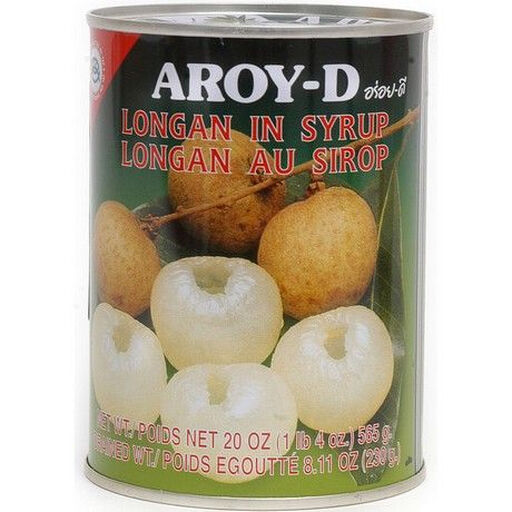 Image unavailable
These longans in syrup can be served in portions at a buffet.
The listed ingredients include sugar. Before choosing based on fat content or the number of portions, check the nutrition information and net drained weight on the pack.
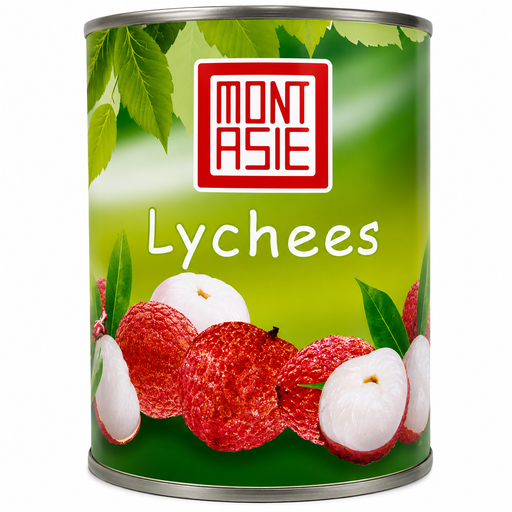 Image unavailable
These tinned lychees are suited to being served in portions rather than handed out in individual containers.
The listed ingredients include sugar. Check the net drained weight to plan portions, and follow the storage instructions on the pack after opening.
No. The fruit and juices used may contain naturally occurring sugars. To check the sugar content of the product you choose, compare the ‘of which sugars’ figure per 100 g.
Under European Union Regulation (EC) No 1924/2006, a ‘low fat’ claim on a solid food requires a maximum of 3 g of fat per 100 g. Check the per-100 g figure for the specific product before using this as a deciding factor.
Use the net drained weight to estimate the amount of fruit, rather than the weight of the container and its covering liquid. Also check the ingredients and storage instructions for the product you’ll be serving.
Individual pots are better when you need to hand out sealed portions quickly. A large tin can work well for a buffet served by a team, as long as you plan how to portion it and follow the storage instructions after opening.