Those keeping an eye on added sugars
For a fruity Easter dessert, you may want to distinguish a recipe with no added sugars from fruit in syrup containing sugar. The ingredients list and the sugars per 100 g tell you more than the fat content alone.


When choosing fruit in syrup for an Easter dessert, don’t focus on fat content alone: ST MAMET products featured by Carrefour already range from 0 to 0.5 g per 100 g, despite having different recipes. If you want to avoid added sugars, check the relevant claim, the ingredients and the sugars per 100 g. Then choose the fruit, pack size and drained weight to suit your dessert.
For a fruity Easter dessert, you may want to distinguish a recipe with no added sugars from fruit in syrup containing sugar. The ingredients list and the sugars per 100 g tell you more than the fat content alone.
For a tart or fruit salad, choose the shape of the pieces and work out how much fruit you need using the drained weight, rather than the total weight of the tin.
If each guest is getting their own dish, compare the number of pots, their drained weight and the ingredients before choosing a pack size.
If added sugars are a priority, start with the recipe. Then check how much fruit you get and which pack size will suit your Easter dessert. Compare nutritional values on the same basis, per 100 g: according to the DGCCRF, this makes it easier to compare products.
| Criterion | What to check | Who it’s for |
|---|---|---|
| Sugars and fat | Sugars and fat per 100 g, as well as the “no added sugars” claim and the ingredients. | I want to avoid adding sugar to my dessert, without confusing this with choosing a low-fat product. Around 42% of consumers are said to prioritise this need. |
| Dessert to share | The type of fruit pieces and the drained net weight, which shows how much fruit you get without the liquid. | For a tart or several dessert dishes, I need enough usable fruit, not just a large tin. Around 33% of consumers are said to prioritise this. |
| Individual portions | The number of pots and the drained weight per pot. | If I’m serving each guest individually, pre-portioned pots make serving easier, even if they may not suit a dessert made to share. Around 25% of consumers are said to prefer this format. |
ST MAMET peach halves featured by Carrefour contain 0 g of fat per 100 g, but their ingredients include water and sugar. A low fat figure therefore doesn’t tell you how much sugar a product contains.
To compare two recipes, check the “fat” and “sugars” figures per 100 g separately, then read the ingredients list.
A tin of fruit in syrup also contains the preserving liquid. For a tart or individual dessert dishes, the total weight isn’t the same as the amount of drained fruit.
Check the drained net weight on the label before deciding how many containers to buy.
Spotting a product online doesn’t guarantee it will be available at the shop where you do your Easter food shopping.
Check availability when putting your basket together, and read the label of the product you actually choose.
Among the products featured by Carrefour, the brand offers classic fruit in syrup and fruit cocktails labelled “no added sugars”.
A fruit cocktail labelled “no added sugars” and featured by Carrefour comes in four pots, each containing 70 g of drained fruit.
This selection includes fruit halves for a tart or individual dessert dishes, fruit pieces for a salad, and a larger-format cocktail for a dessert to share. If avoiding added sugars is a priority, check the ingredients: the products featured here contain sugar.
 Image unavailable
Pear halves to consider for topping a tart or making a dessert to share. The pack contains 455 g of drained fruit, and the ingredients list includes sugar.
 Image unavailable
Peach halves for a tart or individual dessert dishes where the shape of the fruit matters. The pack contains 230 g drained weight. The recipe contains sugar, so it isn’t suitable if you’re looking for fruit with no added sugars.
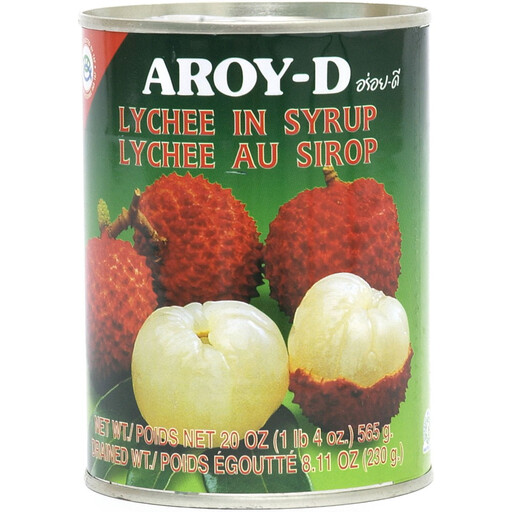 Image unavailable
Lychees to consider for individual dessert dishes or a fruit salad. The 565 g refers to the pack size: check the drained weight to work out how much fruit to serve. The ingredients include sugar.
 Image unavailable
Mango slices to consider for topping a dessert or adding to a fruit salad. The pack size is 425 g; check the drained weight to work out portions, and note that the ingredients include sugar.
 Image unavailable
An 850 g tin of fruit cocktail to consider for a fruit salad or several individual dessert dishes. Check the drained weight before planning portions; the ingredients list includes sugar.
No. A fruit cocktail carrying this claim may contain sugars that occur naturally in the fruit or juices. To compare products, check the sugars per 100 g and the ingredients list.
Compare their fat content per 100 g on the same basis. ST MAMET products featured by Carrefour contain 0 or 0.5 g per 100 g, but this figure doesn’t tell you whether their recipe contains added sugar.
Use the drained net weight to estimate how much fruit you’ll have once the liquid has been removed. As the French Ministry for the Economy points out, this information appears on the packaging of foods sold in liquid.
Follow the instructions for the product you buy. For a 425 g ST MAMET cocktail featured on Joybuy, the product information says to transfer it to a suitable container and keep it in the fridge for 3 to 4 days after opening. Check the instructions on your own tin before storing any leftovers.