For serving individual portions
If everyone is having dessert separately, individual pots save you opening a large tin and dealing with leftovers. However, check how much fruit each pot contains and how many portions you need.


For a dessert to serve straight after a weeknight dinner, choose individual pots if everyone is having their own portion. Opt for a tin if you want to prepare several servings and can store any leftovers according to the product instructions. For a more polished presentation, your choice of fruit and serving dish matters more than the word “luxury”. Also compare the drained net weight, ingredients and sugars per 100 g: “in juice”, “no added sugars” and “in light syrup” do not describe the same recipe.
If everyone is having dessert separately, individual pots save you opening a large tin and dealing with leftovers. However, check how much fruit each pot contains and how many portions you need.
You can divide a tin of fruit between several bowls or add it to a dessert that’s already prepared. The drained net weight helps you work out how much fruit you’ll have; check the storage instructions after opening if you won’t be serving it all.
If ingredients are important to you, check the ingredients list and sugars per 100 g for each product. “In juice”, “no added sugars” and “in light syrup” are not a substitute for this information.
First, decide how many portions you’ll serve and whether you want to keep any leftovers. Then compare the amount of drained fruit and the recipe, rather than relying on the packaging alone.
| What to consider | What to check | Who is it for? |
|---|---|---|
| Quick serving | Number of pots and amount per portion. | If everyone wants dessert without having to divide up the fruit or keep an opened tin, individual portions fit the bill; around 40% of consumers would prioritise quick serving. |
| Dessert to share | Drained net weight, fruit in the mix and storage instructions after opening. | To fill several bowls and choose how to present them, you’ll need enough usable fruit; around 30% of consumers would prioritise sharing. |
| Ingredients and sugars | Ingredients, covering liquid and sugars per 100 g. | If the recipe matters more than serving quickly, the claims on the front of the pack aren’t enough to distinguish between products; around 30% of consumers would prioritise this comparison. |
The total weight includes the covering liquid, so it doesn’t tell you how much fruit you can divide between your guests.
The DGCCRF specifies that the drained net weight must appear on the label of products packed in a covering liquid.
Individual pots make serving easier, but if the pack is too small, you’ll need to provide extra portions.
Check the number of pots and how much each contains before choosing between individual portions and a tin to share.
Attractive packaging doesn’t tell you about the ingredients, sugars or amount of drained fruit.
For serving dessert, choose the fruit and format that suit the bowls you have in mind. To compare products, check their labels.
The best-before date applies to the product before opening and doesn’t replace the storage instructions for any leftovers.
Follow the instructions for the specific product, including advice on the container, refrigeration and how soon to eat it after opening.
Carrefour’s range includes a tin of four-fruit cocktail in light syrup, with 250 g drained weight.
E.Leclerc’s Marque Repère range includes tins and individual pots of various fruits in syrup.
Auchan’s range includes individual pots of peaches or pineapple, as well as fruit mixes.
Auchan stocks Del Monte fruit cocktails in light syrup, as well as other fruit products.
ALDI stocks a Baccara fruit cocktail in light syrup, as well as individual pots of fruit.
This Joybuy selection includes tinned fruit to serve in bowls or add to a dessert that’s already prepared. The fruit and formats vary, so choose according to how much you want to serve, then check the label before planning to keep any leftovers.
 Image unavailable
Williams pear halves to arrange in bowls for a dessert to share.
The product name states 455 g of drained fruit; check the amount on the tin and the storage instructions if you won’t be serving it all.
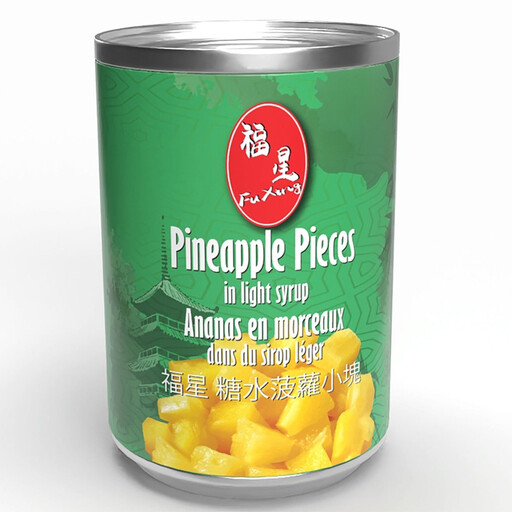 Image unavailable
Pineapple pieces to divide between several desserts, depending on how much you’d like to serve per person.
The tin states 565 g total weight and 260 g drained weight: use the latter to work out how much fruit you’ll have to serve.
 Image unavailable
The three small tins let you open the fruit mix as you need it for different desserts, rather than all at once.
The pack contains three 125 g tins; check the drained net weight on the packaging to work out how much fruit is in each tin.
 Image unavailable
Arrange the mango slices in a bowl to add a different fruit to your after-dinner dessert.
The tin states 425 g total weight; check its drained net weight to work out how much mango you’ll have to serve.
 Image unavailable
Serve the peach halves as they are in bowls or add them to a dessert that’s already prepared.
The product name states 230 g drained weight; use this amount to work out how many portions you’ll get.
No. These claims don’t necessarily describe the same ingredients. To choose between two products, compare their ingredients lists and sugars per 100 g rather than judging the recipe by the claim on the front of the pack alone.
Check the drained net weight to find out how much fruit there is without the covering liquid. The DGCCRF specifies that this must appear on the label when a product is packed in liquid; it’s more useful than the total weight alone when dividing up the fruit.
Follow the time limit and storage instructions for the product you’ve opened. For example, Auchan’s listing for the Del Monte cocktail says to refrigerate any leftovers in a covered, non-metallic container and eat them within 3 to 4 days. This guidance doesn’t automatically apply to other tins.
The DGCCRF states that a best-before date can pass if the packaging is intact, although the taste may change. This applies to the product before opening: check that the tin is undamaged, then follow the storage instructions.
Drain the amount you need and divide the fruit between glasses or bowls. A fruit mix or clearly visible slices can change the look of your dessert, but that doesn’t prove the product is better quality or has a different recipe.