People keeping an eye on salt
You want to compare the salt content of specific canned products rather than infer it from the words ‘light syrup’. Check the ‘salt’ figure per 100 g for the product you plan to serve.


For an Asian-themed evening, choose the fruit and its packing liquid to suit your planned dessert, then pick a pack size that works for the number of guests. If salt content matters to you, compare the amount per 100 g for each product: ‘light syrup’ does not guarantee a lower salt content, and ‘no added sugars’ does not mean sugar-free.
You want to compare the salt content of specific canned products rather than infer it from the words ‘light syrup’. Check the ‘salt’ figure per 100 g for the product you plan to serve.
You’re looking for fruit packed in juice or a recipe with no added sugars for dessert. The recipe description and the ‘of which sugars’ figure answer two different questions, so check both.
You’re deciding between a large pack to share and individual portions. Drained weight helps you estimate how much fruit you’ll have to serve; storage instructions after opening also matter if you’re likely to have leftovers.
When planning your dessert, start by distinguishing the fruit from its packing liquid. Then compare the nutritional information and the amount of fruit you’ll be able to serve from the pack sizes you’re considering.
| What to check | Look for | Who is it for? |
|---|---|---|
| Salt content | Compare the ‘salt’ figure per 100 g for the specific products, without treating ‘light syrup’ as an indication of salt content. | If salt is my main concern, I want to compare canned products on a like-for-like basis before choosing; around 42% of consumers would prioritise this check. |
| Packing liquid and sugars | Distinguish between syrup, light syrup, juice and ‘no added sugars’, then check the ‘of which sugars’ figure per 100 g. | For my dessert, I’d rather choose a recipe with its added sugars in mind, without assuming it contains no sugars; this would be the priority for around 33% of consumers. |
| Pack size and leftovers | Check the drained weight and storage instructions after opening before choosing between a large pack and individual portions. | I want to serve enough fruit for my guests without opening a pack when I’ll only use a small amount; around 25% of consumers would put pack size and leftovers first. |
This term describes the packing liquid. On its own, it doesn’t tell you how much salt the canned fruit contains.
If salt is a factor in your decision, compare the relevant figure per 100 g for the products you’re considering.
Fruit and its juice can contain sugars even when no sugars have been added to the recipe. The St Mamet fruit salad in juice, described by Auchan as having ‘no added sugars’, contains 12 g of sugars per 100 g.
If this matters for your dessert, read both the recipe description and the ‘of which sugars’ figure.
Some of a can’s weight comes from the liquid. So two packs with a similar total weight won’t necessarily provide the same amount of fruit to serve.
Compare the drained weight of the products you’re considering and allow for the amount you’ll need for your guests.
Storage instructions after opening vary by product. The product information for Auchan’s 340 g exotic fruit mix recommends storing it in an airtight container in the fridge for two days; the information for St Mamet’s 850 g pears recommends three to four days in a suitable container.
Choose a pack size you can use, and follow the instructions on the product once opened.
Carrefour’s range includes fruit in syrup and products described as having no added sugars.
Auchan’s range includes mangoes, lychees and an exotic fruit mix in light syrup.
This Marque Repère range is available at E.Leclerc and includes several fruits in syrup, fruit cocktails and individual portions.
St Mamet products featured by Auchan include a fruit salad in juice with no added sugars and pears in syrup.
Aldi France offers a Baccara fruit cocktail in a 500 g pack.
These lychees and rambutans in syrup could make a great addition to an Asian-themed evening dessert. Their packs show the total weight; if the amount of fruit you can serve or the salt content will determine your choice, also compare the drained weight and nutritional declaration for each product.
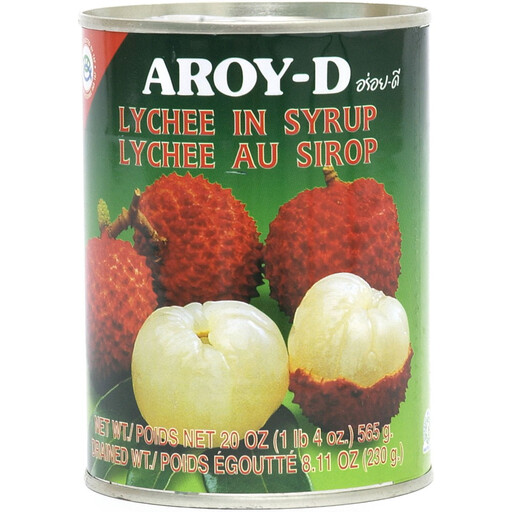 Image unavailable
Lychees in syrup to consider for a dessert to share. The pack states a total weight of 565 g; check the drained weight to estimate how much fruit you’ll have to serve, and compare the salt per 100 g if that’s a priority for you.
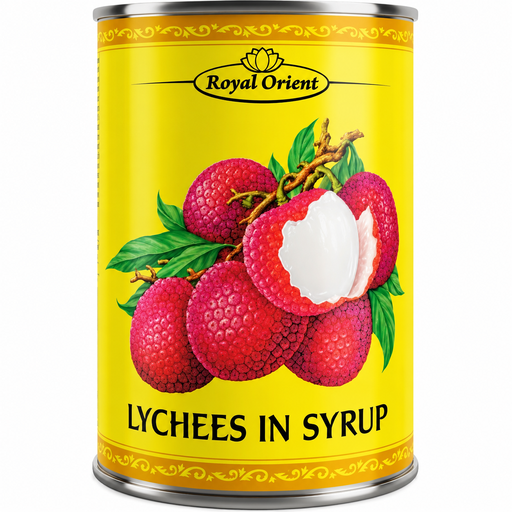 Image unavailable
Another pack of lychees in syrup for your dessert. The 567 g refers to the total weight shown in the product name: check the drained weight and the storage instructions after opening, based on how much you plan to serve.
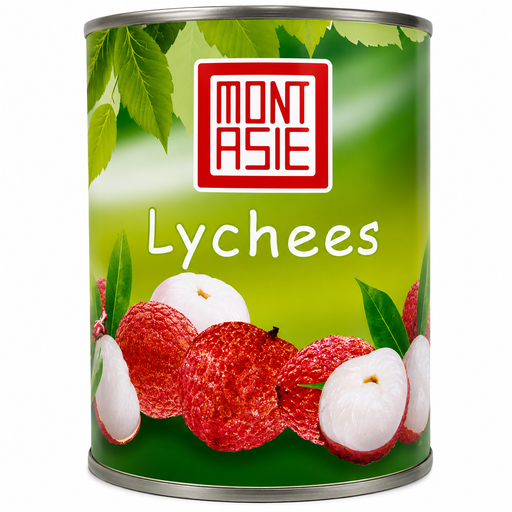 Image unavailable
These lychees in syrup are an option for dessert or a fruit-based dish. To compare this 567 g can with another product, check the amount of drained fruit as well as the ‘salt’ and ‘of which sugars’ figures per 100 g.
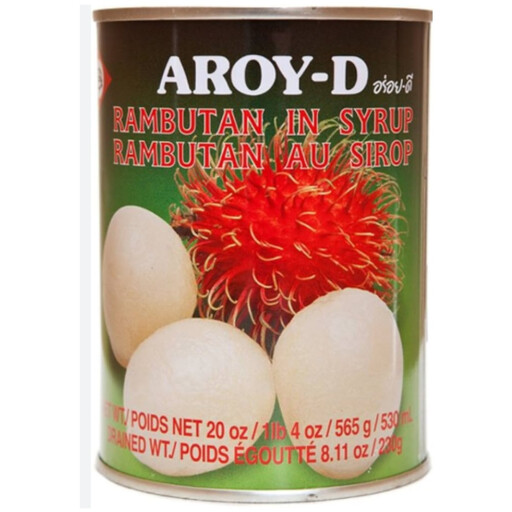 Image unavailable
Rambutans in syrup offer an alternative to lychees for dessert. The stated total weight is 565 g; check the drained weight to plan your servings, and read the product’s salt figure if it matters to your decision.
No. This wording doesn’t mean that the fruit or its juice contains no sugars. The St Mamet fruit salad in juice with no added sugars, featured by Auchan, contains 12 g of sugars per 100 g; check the ‘of which sugars’ figure for the product you’re interested in.
Compare the ‘salt’ figures per 100 g on the nutritional declarations for the specific products. A figure given for one fruit mix doesn’t mean that all fruit in syrup has the same salt content.
It helps you compare how much fruit you’ll have once the packing liquid has been drained. When preparing a dessert to share, use this figure rather than relying on the pack’s total weight alone.
Follow the instructions for the product you’ve opened. Auchan recommends keeping its 340 g exotic fruit mix in an airtight container in the fridge for two days, while the product information for St Mamet’s 850 g pears recommends three to four days in the fridge in a suitable container.
Read the product name, ingredients list, nutritional information and stated quantity. The DGCCRF lists these among the labelling information required for pre-packed food. For your dessert, pay particular attention to the packing liquid, sugars, salt and drained weight.