Hosts keeping an eye on added sugars
If you prefer fruit in juice or a product labelled ‘no added sugars’, check the ‘of which sugars’ line too. Anses points out that this claim does not rule out sugars that occur naturally in the ingredients.


To choose low-fat fruit in syrup for New Year’s Eve, first compare the fat content per 100 g for the exact product. Then check whether the fruit is in syrup or juice, or carries the claim ‘no added sugars’. As the French Agency for Food, Environmental and Occupational Health & Safety (Anses) points out, this does not mean ‘sugar-free’. Finally, choose a format to suit how you plan to serve it: individual pots or a tin to share between guests.
If you prefer fruit in juice or a product labelled ‘no added sugars’, check the ‘of which sugars’ line too. Anses points out that this claim does not rule out sugars that occur naturally in the ingredients.
Compare the nutritional values per 100 g rather than judging fat content by the name of the dessert alone. St Mamet products featured by Auchan and Carrefour respectively contain less than 0.5 g and 0.5 g of fat per 100 g; check the value for the product you choose.
For a buffet or desserts that are already portioned out, individual pots save you having to divide up a large tin when serving. Still, compare their contents and the number of portions with the amount of fruit you need.
First choose the ingredients that suit your priorities, then check you have the right amount of fruit for your recipe or number of guests.
| Criterion | What to check | Who it matters to |
|---|---|---|
| Added sugars | The exact claim, the ingredients and the ‘of which sugars’ line per 100 g. | For my New Year’s Eve dessert, I mainly want to avoid added sugar, without assuming fruit in juice contains no sugar at all. Around 42% of consumers would make this their top priority. |
| Fat | The fat content per 100 g on the packaging of the product you choose. | If I’m mainly looking for a low-fat dessert, I need a value stated on the product rather than an impression based on the fruit. This would be the priority for around 17% of consumers. |
| Format and serving | The drained net weight, number of pots and portions needed. | To serve a buffet without having to divide up a large tin at the last minute, I choose a format suited to the number of guests. Around 25% of consumers would prioritise this. |
| Fruit and recipe | The fruit included, the liquid it is packed in and the quantity of drained fruit. | If I’m making dessert glasses or a topping, I first choose the fruit and liquid that will work for my recipe. Around 16% of consumers would put this need first. |
Fruit and fruit juices can contain naturally occurring sugars. A St Mamet fruit salad featured by Auchan contains 12 g of sugars per 100 g despite carrying the claim ‘no added sugars’.
Check the claim, ingredients and ‘of which sugars’ line together for the product you plan to serve.
A low fat value tells you nothing about the sugars or the ingredients in the liquid the fruit is packed in.
Compare both lines in the nutritional information per 100 g, then read the ingredients list.
For a recipe or individual portions, the amount of fruit available matters more than the size of the container alone.
Check the drained net weight if it is listed, and work out how many portions you can make.
A fruit salad featured by Auchan carries the claim ‘no added sugars’, while the Joybuy listing for St Mamet fruit cocktail in syrup, 425 g, lists sugar among the ingredients.
Check the product name and ingredients list for the exact product, even if you already know the brand.
The brand offers fruit salads and individual pots, among other products, with recipes in juice or syrup depending on the product.
This Marque Repère range is featured by E.Leclerc, with different fruits, pack sizes and liquids.
The range featured by Auchan includes individual pots and various fruits in juice or light syrup.
The category featured by Auchan includes products such as pineapple and peaches in juice, as well as apricots in light syrup.
These tins of fruit can be used in different desserts to share or as toppings for New Year’s Eve. If you’re looking for low-fat options or want to avoid added sugars, compare the nutritional information and ingredients for each product before you choose.
 Image unavailable
Williams pear halves to consider for a dessert to share or as a topping. Check the drained weight on the packaging and read the ingredients if you want to avoid added sugars.
 Image unavailable
A fruit cocktail to share between guests or add to a dessert. The Joybuy listing for this product includes sugar among the ingredients, so don’t confuse it with a fruit salad labelled ‘no added sugars’.
 Image unavailable
Slices to consider if mango is the fruit you have in mind for your dessert. Check the drained net weight to estimate how much fruit you’ll have, along with the ingredients and nutritional values if these matter to you.
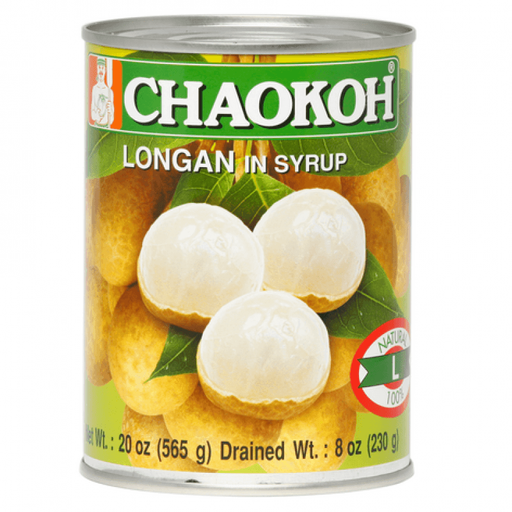 Image unavailable
Worth considering for a dessert where longans are the star ingredient. Check the drained net weight before planning your portions, and read the ingredients and nutritional values too.
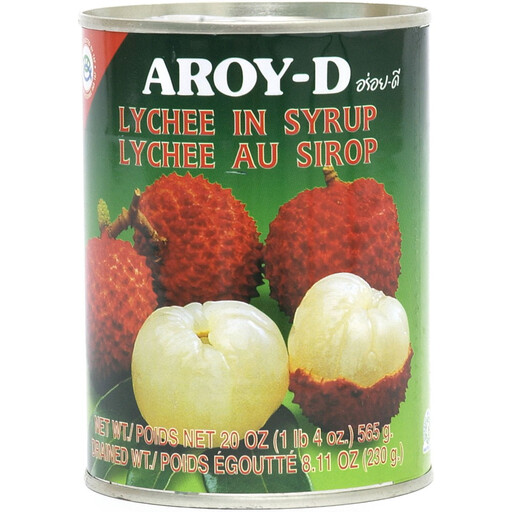 Image unavailable
Lychees to consider for a fruit salad or dessert to share. Compare the drained net weight with the amount you need, and check the ingredients and nutritional values separately.
No. Anses explains that ingredients can contain naturally occurring sugars. For example, a St Mamet fruit salad featured by Auchan and labelled ‘no added sugars’ contains 12 g of sugars per 100 g.
Compare the ‘fat’ line per 100 g for the product you’re buying. The claim ‘no added sugars’ addresses a different question; check the ‘of which sugars’ line and the ingredients to assess the product’s composition too.
Individual pots are a good choice if you want to serve portions separately, while a tin can be used in a recipe or shared between several plates. Check the number of pots or the drained net weight, depending on how you plan to serve the fruit.
Follow the instructions on the packaging of the product you’ve bought. For its 850 g Williams pears in syrup, a Joybuy listing advises transferring the fruit to a suitable container and storing it in the fridge for 3 to 4 days after opening. Don’t assume the same storage time applies to other products.