To choose low-fat fruit in syrup to enjoy around a bike ride, first check the fat content, then compare the recipe, carbohydrates and sugars in the portion you’ll actually eat. A fruit pot or tin could work as a snack before or after your ride, or during a planned break. During a long, intense ride, however, it won’t automatically replace suitable fuelling for your carbohydrate needs and hydration.
Who are these criteria useful for?
Cyclists keeping an eye on added sugars
If you’re looking for a fruity, low-fat snack, the words ‘no added sugars’ don’t tell you how much sugar it contains. Anses points out that ingredients can contain naturally occurring sugars too, so check the ingredients list and the ‘of which sugars’ line as well.
Cyclists planning a snack before or after a ride
A ready-to-eat portion can be easier to plan as a snack or for a break than something to eat while riding. Choose the format according to when you plan to eat it and how much fruit you’d like.
Cyclists planning an endurance ride
If you’re thinking of eating this fruit during a ride, compare the carbohydrates in your portion with your fuelling plan and plan your drinks separately. Nutrition information per 100 g doesn’t tell you on its own how much you’ll actually eat.
What should you check before buying?
Start by distinguishing fat from sugars, then decide when you’ll eat the fruit and which format suits you.
| Criteria |
What to check |
Who it’s for |
| Fat and sugars |
Check the fat, carbohydrates and ‘of which sugars’ per 100 g, as well as the ingredients. ‘No added sugars’ doesn’t mean ‘sugar-free’. |
I want a low-fat snack without mistaking this for a low-sugar option. Around 44% of consumers would put this distinction at the top of their list of criteria. |
| When you’ll eat it |
Compare the carbohydrates in the portion you’re planning to eat and check what quantity the nutrition information refers to. For a long ride, plan your hydration too. |
Before or after cycling, I’m looking for a snack I can plan ahead; during a ride, I need to factor it into my fuelling. Timing would be the top priority for around 33% of consumers. |
| Format and portion |
Compare pots and tins according to the portion you want; for fruit packed in liquid, check the drained net weight. |
I need a portion that’s easy to take with me or, alternatively, a container I can divide between several snacks. Around 23% of consumers would make format their top criterion. |
Common pitfalls to avoid
-
Assuming ‘no added sugars’ means ‘sugar-free’
Anses distinguishes between having no added sugars and having no sugars in the product. For example, a St Mamet product listed by Auchan contains 12 g of sugars per 100 g, despite being labelled ‘no added sugars’.
Check the ingredients and the ‘carbohydrates’ and ‘of which sugars’ lines, then check what your portion contains.
-
Choosing based on fat content alone
A low fat content tells you nothing about the sugars or carbohydrates that are useful to compare around a ride. In the European Union, Regulation (EC) No 1924/2006 sets the threshold for a ‘low fat’ claim on solid food at 3 g of fat per 100 g.
Once you’ve checked this value for the exact product, compare the recipe and nutrition information based on the portion you plan to eat.
-
Relying on a fruit pot as your only ride fuel
An individual pot makes it easy to plan a portion, but that doesn’t mean it provides the carbohydrates you need for an entire ride. A review published in Ned Tijdschr Geneeskd refers to 30 to 60 g of carbohydrates per hour for 1 to 2.5 hours of intense exercise.
Check the carbohydrates in your portion, take the planned duration and intensity into account, and practise your fuelling plan in training. Don’t forget your drinks.
-
Comparing tins by weight without checking the drained fruit
The total weight of a product packed in liquid doesn’t represent the fruit alone. The DGCCRF states that the drained net weight must be shown on the label in this case.
Compare this weight when choosing your portions, and check whether the nutrition information applies to the drained product before calculating how many carbohydrates you’ll consume.
Brands to compare
St Mamet
The range includes fruit in syrup and recipes with no added sugars listed by Auchan.
- Two products described by Auchan contain less than 0.5 g of fat and 12 or 13 g of carbohydrates per 100 g, depending on the recipe.
- These figures don’t apply to the entire range. Check the fruit, ingredients and sugars for the product you choose.
Del Monte
The range featured by Auchan includes this brand’s fruit in juice and light syrup.
- These recipes let you compare different product descriptions and ingredients lists.
- To compare nutritional content, check the nutrition information for the specific product and format you’re considering.
Auchan
The retailer’s own brand offers fruit pots and tins in the range described by Auchan.
- The different containers let you choose the format to suit your preferred portion.
- Compare the recipe, sugars and drained net weight of the specific product. Don’t assume its contents based on the format alone.
Baccara
Aldi France lists Baccara pots of fruit in light syrup.
- The pot format may suit you if you want separate portions.
- ‘Light syrup’ alone doesn’t tell you the fat, carbohydrate or sugar content. Check the label on the pot you choose.
Fruit in syrup to consider on Joybuy
These tins of fruit in syrup are best suited to a portioned snack before or after a ride, or to enjoy during a planned break. To compare them, check the recipe and how much fruit you’ll eat.
 Image unavailable
St Mamet Williams pear halves in light syrup, 455 g drained
Worth considering if you’d like to portion out pears for a snack off the bike.
Drained weight shown: 455 g. Check the ingredients and the basis for the nutrition information on the label before calculating the carbohydrates in your portion.
View on Joybuy
 Image unavailable
St Mamet peach halves in light syrup, 230 g drained
Worth considering if you prefer peaches that you can portion out to suit your planned snack.
Drained weight shown: 230 g. Check the ingredients and what quantity the nutrition information refers to when estimating the carbohydrates in the amount you eat.
View on Joybuy
 Image unavailable
St Mamet fruit cocktail in syrup, 425 g
Worth considering if you’d like to make up a snack with a mix of fruit.
425 g tin. Check the drained net weight and the nutrition information on the packaging to see how much fruit your portion contains.
View on Joybuy
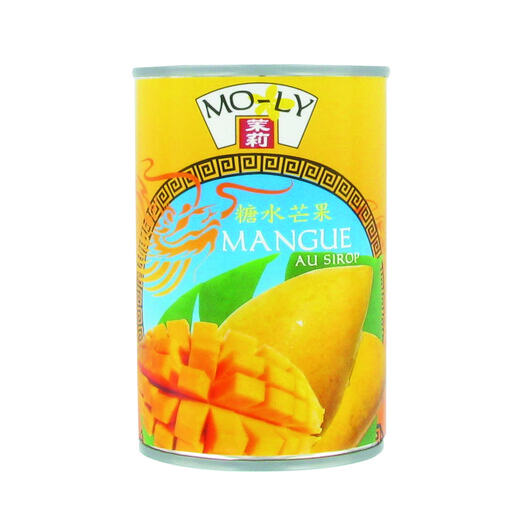 Image unavailable
MOLI mango in syrup, 425 g
Worth considering if you’re looking for mango to portion out as a snack off the bike.
425 g tin. Check the drained weight, ingredients and carbohydrates for the amount you plan to eat.
View on Joybuy
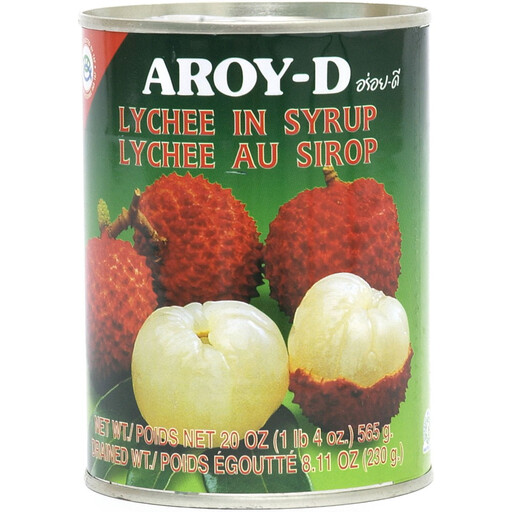 Image unavailable
Aroy-D lychees in syrup, 565 g
Worth considering if you’d like to portion out lychees for a snack or dessert.
565 g tin. Check the drained net weight and the carbohydrate and sugar values before including a portion in your plans around your ride.
View on Joybuy
Frequently asked questions
Does ‘no added sugars’ mean ‘sugar-free’?
No. Anses points out that a product with no added sugars may still contain sugars naturally present in its ingredients. For the product you choose, check the ingredients, carbohydrates and the ‘of which sugars’ line.
How can I tell if a product is low in fat?
For solid food, European Regulation (EC) No 1924/2006 sets the threshold for a ‘low fat’ claim at no more than 3 g of fat per 100 g. Check the declared value for the exact recipe and variant, and don’t assume this tells you how much sugar it contains.
Can I take fruit in syrup on a long bike ride?
You could have a portion during a break if the format works for you, but it won’t automatically cover all your fuelling needs. A review published in Ned Tijdschr Geneeskd refers to 30 to 60 g of carbohydrates per hour for 1 to 2.5 hours of intense exercise. Compare this guide with the carbohydrates in your planned portion, and plan your hydration too.
Why check the drained net weight of a tin?
It helps you distinguish the amount of fruit from the weight that includes the packing liquid. The DGCCRF states that it must be shown on the label when food is packed in this type of liquid. Also check what quantity the nutrition information refers to before calculating the nutritional content of your portion.


