Anyone serving crêpes to a group
If the fruit is a shared topping, one large tin saves you opening several smaller ones. Carrefour and Auchan, for example, stock peaches, pears and fruit cocktail in 800–850 g tins.


If you’re serving crêpes to a group, start by working out how much fruit you’ll need. An 800–850 g tin gives you one container to open, while smaller tins or individual cups let you open portions as you go. Then check the drained fruit weight, if provided, along with the packing liquid and the ingredient list for the product you’ve chosen.
If the fruit is a shared topping, one large tin saves you opening several smaller ones. Carrefour and Auchan, for example, stock peaches, pears and fruit cocktail in 800–850 g tins.
For a few crêpes or a choice of toppings, individual cups and multipacks of small portions let you control how much you open. These formats feature in ranges from Carrefour, E.Leclerc and Auchan.
If your crêpe already has a sweet topping, compare options in juice, light syrup or labelled ‘no added sugar’. The ingredient list and nutritional information for the specific product are what matter most.
First decide whether fruit will be the main topping or one of several options. Then choose the pack size and ingredients to suit the crêpes you’re planning to serve.
| What to consider | What to check | Who is it for? |
|---|---|---|
| Quantity for a group | The tin size and, if stated, the drained net weight; the shape of the fruit for your planned topping. | I’m making crêpes for several people and the fruit will be a shared topping; around 44% of consumers prioritise quantity. |
| Liquid and ingredients | Whether it’s labelled ‘in juice’, ‘in light syrup’ or ‘no added sugar’, followed by the ingredient list and nutritional information for the product. | I’m already adding a sweet topping and want to choose the packing liquid accordingly; around 33% of consumers prioritise ingredients. |
| Portions and variety | The number of units, their weight and storage instructions after opening. | When everyone wants a different topping, I prefer to open the fruit as needed; around 23% of consumers prioritise portions and variety. |
The stated weight of a container doesn’t necessarily tell you how much fruit you’ll have once the liquid has been drained. This matters if you need enough fruit to top every crêpe.
Compare like with like, and check the drained net weight if it’s shown on the packaging.
The fruit and other ingredients vary from product to product. The 850 g St Mamet cocktail featured by Carrefour contains peaches, pears, pineapple, grapes, water and sugar, among other ingredients; this doesn’t describe the other varieties.
Read the ingredient list on the cocktail you’re actually choosing, particularly if you’re looking for fruit in juice or a no-added-sugar option.
Storage instructions after opening depend on the product. For example, the Joybuy listing for the 425 g St Mamet cocktail says to keep it in a suitable container in the fridge for 3 to 4 days.
Before choosing a large tin, plan how you’ll use any leftover fruit and follow the instructions on the packaging.
The Carrefour Classic' range includes peach halves in an 820 g tin, pears in an 800 g tin and an 825 g fruit cocktail.
This Marque Repère range from E.Leclerc includes peaches, pears, apricots, fruit cocktails and individual cups.
The Auchan range includes pears and apricots in 820 g tins, as well as fruit cocktails and individual portions.
St Mamet offers fruit cocktails, peaches and pears in a range of sizes, including an 850 g fruit cocktail featured by Carrefour.
Auchan’s range includes Del Monte pineapple in juice and fruit cocktails, including an 825 g cocktail in light syrup.
Aldi stocks a Baccara five-fruit cocktail in light syrup in a 330 g tin.
These options include a large tin for sharing, multipacks of small tins and tinned fruit to suit the topping you’re planning to serve with your crêpes.
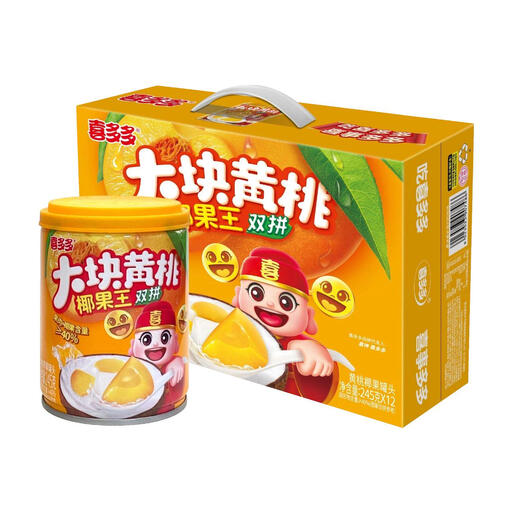 Image unavailable
The pack of 12 tins lets you open them one at a time as you prepare crêpes.
The product name lists yellow peach chunks and nata de coco; check the drained fruit weight if it affects how many portions you want to serve.
 Image unavailable
This 850 g tin is a good option for a fruit topping to share.
If you need to estimate how much fruit will be left once the syrup is drained, check the drained net weight on the tin. Remember to plan how you’ll use any leftovers after opening.
 Image unavailable
The three small tins mean you can open just part of the pack if only a few crêpes are having a fruit topping.
Each tin is 125 g; check the drained weight if you’re comparing this pack with a large tin.
 Image unavailable
Pear halves are a good choice if you’d like to cut the fruit yourself for your crêpes.
The 455 g weight refers to the drained fruit, not the total weight of the tin.
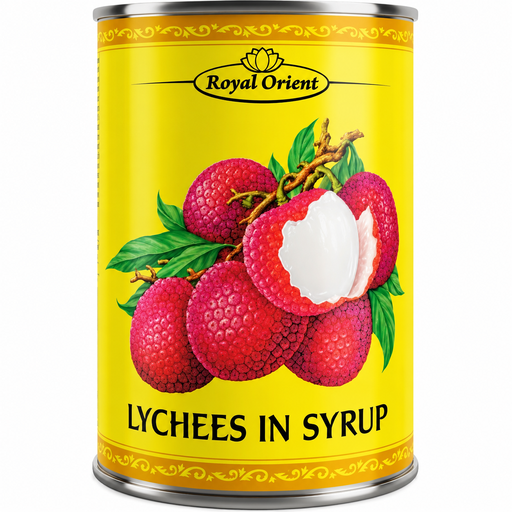 Image unavailable
These lychees offer another fruit option if you’re planning to serve a choice of crêpe toppings.
The tin weighs 567 g. To compare the amount of fruit with another product, check the drained weight on the packaging, and refer to the label for nutritional information.
First decide whether fruit will be the main topping or one of several options. Depending on the product, Carrefour, Auchan and E.Leclerc offer tins in different sizes and individual portions. Compare the stated weight and, if shown on the packaging, the drained net weight.
Choose according to the ingredients you want for the whole crêpe, then check the label on the specific product. These descriptions refer to different products, so they don’t replace the ingredient list or nutritional information.
Follow the instructions for the tin you’ve opened. The Joybuy listing for the 425 g St Mamet cocktail says to keep it in a suitable container in the fridge for 3 to 4 days after opening; don’t automatically apply this guidance to other products.
First check whether the packaging shows a use-by date (DLC) or a best-before date (DDM). France’s Directorate-General for Competition, Consumer Affairs and Fraud Control distinguishes between the two: a use-by date must not be exceeded, while a product past its best-before date may still be eaten if the packaging is intact, although it may have lost some of its flavour. Don’t use a damaged tin, and follow the manufacturer’s instructions.