For a Christmas dessert, check the fat content first, then choose fruit in syrup based on the sugars, variety and quantity you need to serve. ‘No added sugars’ does not mean ‘sugar-free’, as Anses points out; ‘light syrup’ does not guarantee that no sugar has been added either.
Who are these options for?
Those keeping an eye on added sugars
If you want to serve fruit with no sugar added during preparation, look for this wording on the product you choose. Anses points out that fruit and juices can still contain naturally occurring sugars, so check the nutritional information too.
Those keeping an eye on fat
If this is your main priority, check the value per 100 g on each pack. The figures published by E.Leclerc for Douceur du Verger peaches and by Auchan for a St Mamet mix are low, but they don’t cover every product or the accompaniments served with the dessert.
Those entertaining at Christmas
Whether you’re topping a dessert or serving fruit to several guests, start by choosing the cut you want, then estimate how much you’ll need using the drained net weight. A small pot and a large tin aren’t suited to the same serving needs.
What should you look for?
The choice between fruit with no added sugars, fruit in light syrup and fruit preserved in juice depends mainly on your recipe and what you want to check on the label. The preserving liquid alone doesn’t tell you the total sugar content.
Fruit with no added sugars
Choose this if: you want to avoid added sugar in fruit served on its own or mixed into a dessert.
Bear in mind: fruit and juices can contain naturally occurring sugars, according to Anses.
Fruit in light syrup
Choose this if: you’re looking for fruit halves or pieces to top a dessert for sharing.
Bear in mind: light syrup can contain added sugar, as is the case with the Douceur du Verger peaches described by E.Leclerc.
Fruit preserved in juice
Consider this if: you’re looking for fruit preserved in juice with no added sugar, provided you check the ingredients of the product you choose.
Bear in mind: juice also contains naturally occurring sugars; compare the ‘of which sugars’ line on the same basis.
| Criteria |
What to check |
Who is it for? |
| Added sugars |
The ‘no added sugars’ claim, the ingredients and the ‘of which sugars’ line per 100 g. |
If I want to avoid added sugar, I need to distinguish this claim from the total sugar content. Around 34% of consumers would put this distinction at the top of their list of criteria. |
| Fat |
The value per 100 g and the basis stated: as sold or drained. |
For a dessert where fat content is my main concern, I want to be able to check the value for the product I’ll be serving. This would be the main criterion for around 33% of consumers. |
| Variety and pack size |
The form of the fruit, the pack size and the drained net weight. |
If I’m topping a cake or serving several guests, I need the right cut and enough fruit once drained. Around 33% of consumers would prioritise this serving requirement. |
Common misconceptions to avoid
-
Assuming ‘low in fat’ means ‘low in sugars’
These figures describe two different things. According to E.Leclerc, Douceur du Verger peaches in light syrup contain 0.1 g of fat and 13.2 g of sugars per 100 g of drained product.
Compare both lines in the nutritional information and check whether they refer to the drained product.
-
Reading ‘no added sugars’ as ‘sugar-free’
Anses explains that ingredients, including fruit and juices, can contain naturally occurring sugars even when no sugar has been added.
Use the claim to identify products with no added sugar, then check the ‘of which sugars’ line to see the total amount shown.
-
Estimating portions from the tin’s total weight alone
The total weight includes the preserving liquid. For a fruit salad, charlotte or individual dessert glasses, the amount you can use depends on the drained net weight.
Check this weight and choose the cut to suit your recipe before deciding how many packs to buy.
-
Comparing sugars using conflicting product information
The Carrefour product listing for Carrefour Classic' tropical fruit cocktail combines a ‘no added sugars’ claim with an added sugars figure that doesn’t match it.
For this product, check the pack label before relying on this information to compare products.
Brands to consider
These brands offer examples of different recipes and presentations of fruit in syrup. Compare individual products rather than assuming a product’s characteristics from its brand name alone.
St Mamet
Fruit cocktails available in individual pots and sharing packs, among other formats.
- Auchan lists a peach, pear and pineapple product with no added sugars, containing 12 g of sugars per 100 g.
- The ‘no added sugars’ claim doesn’t mean you can skip checking the sugars and ingredients for the product you choose.
Carrefour Classic'
A range that includes fruit in syrup and fruit cocktails described as having no added sugars.
- The range of varieties and pack sizes lets you choose fruit to suit the recipe you have in mind.
- For the tropical fruit cocktail, check the sugar information on the pack: the details on Carrefour’s product listing don’t match.
Douceur du Verger
An E.Leclerc range that includes tinned fruit in light syrup, worth considering for a dessert to share.
- According to E.Leclerc, the peach halves contain 0.1 g of fat per 100 g drained.
- These peaches also contain 13.2 g of sugars per 100 g drained, and their ingredients list includes sugar.
Baccara
A light-syrup cocktail of five fruits listed by Aldi France.
- The 330 g tin of mixed fruit offers another option to consider for dessert.
- Check the ingredients, drained net weight and availability of this product before planning your portions.
Fruit in syrup for your Christmas dessert
These Joybuy products include fruit halves, pieces and a fruit cocktail to enjoy on their own or use in a Christmas dessert. When choosing an amount to share, distinguish the tin’s total weight from the drained net weight, where stated.
 Image unavailable
St Mamet Williams pear halves in light syrup, 455 g drained
The pear halves can be arranged on a cake or served as dessert. The stated weight is 455 g of drained fruit; check the ingredients if you want to avoid added sugar.
View on Joybuy
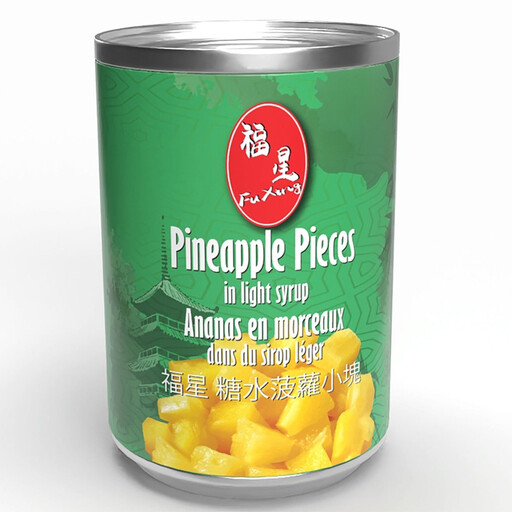 Image unavailable
FU XING pineapple pieces in light syrup, 565 g, including 260 g drained
The pieces are ideal for a fruit salad or as a dessert topping. The tin weighs 565 g and contains 260 g of drained fruit; the syrup contains sugar.
View on Joybuy
 Image unavailable
St Mamet fruit cocktail in syrup, 850 g
The tinned fruit cocktail can be used as the basis for a fruit salad to serve several guests. Check the drained net weight on the pack before planning portions, and check the ingredients too if you’re avoiding added sugar.
View on Joybuy
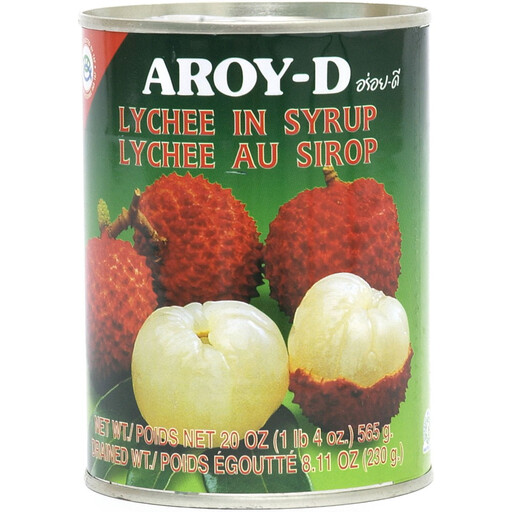 Image unavailable
Aroy-D lychees in syrup, 565 g
Lychees add another variety to a fruit salad or dessert. Check the drained net weight before calculating portions, and read the ingredients if added sugar is a consideration for you.
View on Joybuy
 Image unavailable
AROY-D mango slices in syrup, 425 g
The slices can be arranged in individual dessert glasses or added to a dessert. To work out how much mango to serve, check the drained net weight; the syrup contains sugar.
View on Joybuy
Frequently asked questions
Is fruit in syrup always low in fat?
Don’t assume so: check the product you’ve chosen. E.Leclerc states that its Douceur du Verger peaches contain 0.1 g of fat per 100 g drained, while Auchan states that a St Mamet mix with no added sugars contains less than 0.5 g per 100 g. These figures alone don’t tell you the sugar content.
Does ‘no added sugars’ mean ‘sugar-free’?
No. Anses points out that fruit and other ingredients can contain naturally occurring sugars even when no sugar has been added. To compare two products, check the ‘of which sugars’ line on the same 100 g basis.
What size pack should I choose for a Christmas dessert to share?
Choose according to the number of portions and the shape of fruit your recipe needs. A tin may be suitable for topping a charlotte or making a fruit salad, while individual pots make it easier to serve separate portions. In either case, check the drained net weight to estimate how much fruit you’ll have.
How should you store fruit in syrup after opening?
Follow the instructions on the pack you’ve opened. For leftovers that need refrigerating, Anses notes that cold temperatures slow the growth of micro-organisms and puts the coldest part of the fridge between 0 °C and +4 °C. If the opened tin isn’t suitable for proper storage, transfer the fruit to a clean, sealable food container.


