People making desserts for a stall
For tarts, fruit trifles or a sharing fruit salad, a tin containing several portions may be a good choice. Check the drained net weight to see how much fruit you can use in your recipe.


To make several desserts for a Christmas market, choose a tin with enough drained fruit for your recipes. For individual servings, fruit pots are more convenient. If ingredients are your priority, compare the ingredients and sugars per 100 g, even when a product is labelled ‘no added sugar’. Also plan how you’ll use any leftover fruit, following the storage instructions after opening.
For tarts, fruit trifles or a sharing fruit salad, a tin containing several portions may be a good choice. Check the drained net weight to see how much fruit you can use in your recipe.
Fruit pots let you prepare separate portions without opening a large tin at serving time. Check the number of pots and the amount of fruit in each portion.
If you’re looking for a no-added-sugar recipe or want to compare different packing liquids, read the ingredients list and check the ‘sugars’ line in the nutrition information per 100 g.
For a Christmas market, start by working out how many desserts you need to make and how you’ll serve them. Then compare the amount of usable fruit, the ingredients and the storage instructions for your chosen pack.
| Criterion | What to check | Who it matters to |
|---|---|---|
| Amount for your recipes | Compare the drained net weight and the shape of the fruit with the quantities your desserts call for. | If I’m making tarts or a fruit salad for several people, I want enough usable pieces without having to open lots of tins. Around 31% of consumers would make this their top priority. |
| Separate portions | Check the number of pots and the drained net weight of each one; several small tins are not the same as ready-to-serve fruit pots. | When serving needs to be quick, I’d rather be able to hand out portions that are already separated. This convenience would be a priority for around 23% of consumers. |
| Ingredients and sugars | Read the ingredients and compare the ‘sugars’ per 100 g for products in the same category. | If I want to avoid adding sugar to my desserts, I also need to know what’s in the packing liquid. Around 23% of consumers would put ingredients first. |
| Stock and leftovers | Check the packaging is in good condition, the best-before date and the instructions for storing the product after opening. | If I’m stocking up before the event, I want to use what I’ve bought without leaving opened fruit beyond the recommended time. Managing supplies would be the main concern for around 23% of consumers. |
This claim doesn’t mean the product contains no sugars at all: fruit and some juices can contain sugars. Manger Bouger points out that a claim doesn’t tell you everything you need to know about a product’s nutritional information.
Compare the ingredients and the ‘sugars’ per 100 g on the products you’re considering.
According to the DGCCRF, dents, rust or a bulging tin can be signs that the contents have deteriorated.
Put aside any tin showing these signs and don’t eat the contents if you’re in any doubt.
Once a tin has been opened, its original date is no longer enough to guide storage. Follow the manufacturer’s instructions for the product you’ve bought.
Plan recipes or portions so you can use the fruit within the time stated on the packaging. Otherwise, choose a quantity that’s closer to what you need.
Fruit left in a large opened tin may go to waste if it isn’t used in time.
Carrefour’s range includes pears, peaches and fruit cocktails, as well as different pack formats, including fruit pots.
E.Leclerc sells several types of fruit in syrup under these names, including peaches, pears and fruit cocktails in a range of formats.
Auchan’s range includes fruit pots, single-fruit products and fruit cocktails, with products from both Auchan and Pouce.
Aldi’s range includes BACCARA® fruit pots and a fruit cocktail in light syrup.
These fruits in syrup are available in tins for making desserts or fruit salads. The pack of small tins lets you open one at a time, but it isn’t a substitute for individual, ready-to-serve fruit pots.
 Image unavailable
A tin to consider for a fruit salad or several desserts. The stated pack size is 850 g; check the drained net weight to work out how much fruit you can use.
According to the product description, refrigerate after opening and use within 3 to 4 days.
 Image unavailable
These pear halves are a good fit for recipes that call for fruit in this shape, including baking. The stated drained weight is 455 g; check the pack you buy to confirm.
According to the product description, transfer the fruit to a suitable container after opening and refrigerate for 3 to 4 days.
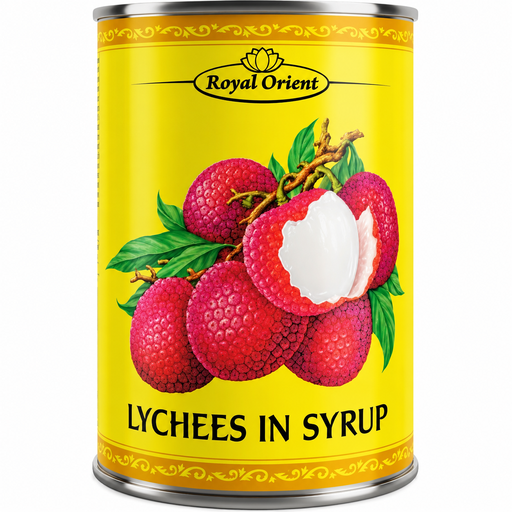 Image unavailable
For a lychee dessert or fruit salad, this tin weighs 567 g. Check the drained net weight to work out how much fruit to add.
Follow the pack instructions for storage after opening.
 Image unavailable
This pack lets you open one small tin at a time to make desserts on different occasions. It contains three 125 g tins, not three ready-to-serve fruit pots. Check the drained net weight if your recipe calls for a specific amount of fruit.
According to the product description, refrigerate each opened tin and use its contents within 3 to 4 days.
 Image unavailable
Mango slices are a good option for a dessert or fruit salad when you’d prefer mango to a fruit cocktail. The tin weighs 425 g; check the drained net weight to adjust your recipe.
According to the product description, transfer the slices to a suitable container, refrigerate after opening and use within two days.
According to the DGCCRF, going past the best-before date doesn’t automatically make a tin unsafe to eat, as long as the packaging is undamaged. Discard any tin that’s bulging, rusty or dented; the quality of the fruit may also change over time.
Follow the storage temperature and use-by period after opening stated by the manufacturer on the pack you’ve bought. As the French Ministry of the Economy points out, the date on an unopened tin doesn’t replace these instructions once it’s been opened.
No. Fruit or juice may contain sugars even when no sugar has been added. To compare two products, check their ingredients and the ‘sugars’ listed in the nutritional information per 100 g.
First compare their drained net weight to see how much fruit they contain, then look at the shape of the pieces, the ingredients and the sugars per 100 g. Two tins with the same total weight won’t necessarily suit the same recipe.