Anyone avoiding added sugar
If you fancy a fruity dessert in front of the screen, the words “no added sugar” can help guide your choice. You should also check “of which sugars” per 100 g: the sugars in the fruit and juice are still there.


For a night in front of the telly, choose fruit in syrup by checking the sugars listed per 100 g and how much you plan to serve, rather than relying on the phrase “reduced salt” alone. A no added sugar option suits you if you want to avoid added sugar, but it still contains sugars. Individual portions mean you don’t have to open a large tin, while a sharing-size pack means you’ll need to plan how to store any leftovers. If salt is important to you, compare the amount per 100 g on the packaging of the options you’re considering.
If you fancy a fruity dessert in front of the screen, the words “no added sugar” can help guide your choice. You should also check “of which sugars” per 100 g: the sugars in the fruit and juice are still there.
A single-serve pot lets you dish up a portion without opening a large tin. Check the drained net weight of each portion and what to do if you don’t finish it.
A large tin can provide fruit for several people. Compare the drained weight of the fruit and make sure you can store and use any leftovers according to the product instructions.
When serving fruit in syrup during a night in front of the telly, check the recipe and format separately: “light syrup” doesn’t mean “no added sugar”, and a tin’s total weight includes the liquid it’s packed in.
| What to look for | What to check | Who is it for? |
|---|---|---|
| Added sugars | The exact wording “no added sugar”, the ingredients and “of which sugars” per 100 g. | I want to avoid added sugar in my dessert, without assuming that the fruit contains no sugars. This would be the top priority for around 50% of consumers. |
| Individual portions | The number of portions and the drained net weight of each one. | When I’m dining alone, I’d rather open just the amount I need than a large tin. Around 30% of consumers would prioritise individual portions. |
| Sharing size | The drained net weight and storage instructions after opening. | When there are several of us in front of the screen, I want enough fruit to serve everyone and a way to deal with any leftovers. Around 20% of consumers would prioritise a sharing-size pack. |
If salt is important to you, add the amount per 100 g to your checks. The Auchan and St Mamet product information cited here shows that salt levels vary by recipe, so searching for “reduced salt” alone won’t help you choose a specific product.
Auchan’s Sun cups with peach and pineapple list water and sugar among the ingredients and contain 14 g of sugars per 100 g. So “light syrup” on its own doesn’t tell you whether sugar has been added.
If you want to avoid added sugar, look for the words “no added sugar”, then check the ingredients and the “of which sugars” line.
Salt levels vary by product: the available product information lists less than 0.01 g per 100 g for one St Mamet product and 0.03 g per 100 g for Auchan’s Sun cups. These figures don’t amount to a “reduced salt” claim.
Compare the “salt” line per 100 g on the products you’re interested in, and don’t attribute a claim to a product unless it appears on its label.
A large tin may suit several people, but any leftovers must be stored according to the product instructions. The product information for St Mamet’s 850 g fruit cocktail says to keep it in the fridge for three to four days after opening.
Before choosing a size, check the instructions on the packaging and plan when you’ll serve any remaining portions.
If you can’t finish the product within the stated time, some of the fruit may go to waste.
These brands offer recipes or formats that may suit your needs. The details below apply to the named products, not to their entire ranges.
Fruit cocktails, including sharing-size packs and a no added sugar recipe.
Fruit in individual pots or larger packs, with a variety of recipes.
Fruit pots in light syrup and sharing-size packs.
Cocktails, fruit halves and individual pots, in single-serve and sharing sizes at E.Leclerc.
Fruit cocktails and pots in light syrup sold by Aldi.
These options include fruit in syrup in tins or individual portions. When choosing between them, consider the stated fruit weight, the nutrition information for each recipe and how much you plan to serve.
 Image unavailable
This size can be served to several people if you can store any leftovers. Joybuy’s product information lists 12 g of sugars and less than 0.01 g of salt per 100 g; once opened, keep it in the fridge for three to four days. Check the drained net weight to find out how much fruit you’re getting.
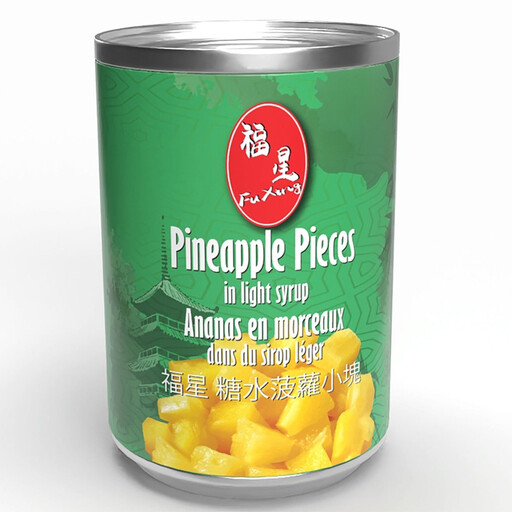 Image unavailable
If you’re planning to serve pineapple pieces, the drained weight helps you see how much fruit you’re getting, separately from the syrup. Compare the sugars and salt per 100 g on the label: “light syrup” doesn’t mean “no added sugar”.
 Image unavailable
These pear halves can be shared between several people, and the stated weight is for the drained fruit. If you don’t finish the tin, follow its storage instructions after opening and check the sugars and salt for this recipe.
 Image unavailable
The drained weight of 230 g helps you decide how many peaches to serve. Check the ingredients and the sugars and salt for this specific product: the words “light syrup” don’t answer those questions on their own.
 Image unavailable
The pack of three 125 g containers lets you open the fruit separately for dessert. If you’re choosing based on salt content, check the amount per 100 g on the packaging of this product.
No. The sugars naturally present in the fruit and its juice are still counted. For example, the product information for St Mamet Plaisir de fruits with no added sugar lists 12 g of sugars per 100 g. Check the “of which sugars” line as well as the claim on the front of the pack.
That phrase alone isn’t enough to identify a product that meets your salt criteria. Compare the “salt” line per 100 g for the options you’re considering and check for a “reduced salt” claim on the relevant product’s label. Don’t infer one from a low figure on the pack.
Check the drained net weight to estimate how much fruit you’ll get, then look at the number of containers if you want to open them separately. The total weight of a tin of fruit in syrup also includes the liquid it’s packed in.
Follow the instructions for the product you’ve bought, as they vary. The product information for St Mamet’s 850 g fruit cocktail says to keep it in the fridge for three to four days after opening. Also check the guidance on which container to use for storage.