Anyone keeping an eye on declared salt content
You want to compare the salt content of tinned fruit without assuming that ‘light syrup’ tells you anything about it.


If salt is your main priority, compare the ‘salt’ value per 100 g on each tin of fruit in syrup, then choose a pack size that suits the portions you plan to use. ‘Light syrup’ and ‘no added sugar’ don’t prove that the salt content is lower. A larger pack could also lead to waste if you can’t finish it after opening.
You want to compare the salt content of tinned fruit without assuming that ‘light syrup’ tells you anything about it.
You’re deciding between smaller and larger packs, and want to consider the amount of drained fruit as well as how long it will keep after opening.
You check the liquid the fruit is packed in, the ingredients and the declared sugar content, especially when a product is labelled ‘no added sugar’.
When choosing fruit in syrup as part of a budget-friendly shop, start with what matters most to you: the declared salt content, how much you’ll use or the recipe’s ingredients.
| Criterion | What to check | Who is it for? |
|---|---|---|
| Declared salt content | The ‘salt’ value per 100 g for the specific product; and whether it carries a salt claim, if you’re looking for one. | I want to compare tins by their salt content, rather than rely on the word ‘light’. This would be the top priority for around 42% of shoppers. |
| Pack size and amount you’ll use | The net drained weight and how many portions you plan to use before the stated use-by period after opening. | If I buy a large tin, I want to use the fruit before it has to be thrown away. Getting the pack size right would come first for around 33% of shoppers. |
| Recipe and sugars | The ingredients list and the ‘of which sugars’ value per 100 g, using the same basis for comparison. | I want to tell syrup apart from a recipe made with juice and understand what ‘no added sugar’ means. Around 25% of shoppers would prioritise checking the recipe. |
The wording describes the syrup, not a proven reduction in salt. As CLCV explains, ‘reduced salt’ is a comparative claim.
If salt is guiding your choice, check the value per 100 g for the specific product and look separately for any claim on the packaging.
Sugars found in fruit or juice are still included in the nutritional information. Auchan’s product listing for St Mamet Plaisir de fruits peach, pear and pineapple with no added sugar states 12 g of sugars per 100 g.
Check the ingredients and the ‘of which sugars’ value before comparing two recipes.
Once opened, storage instructions and how long the contents keep in the fridge vary from one product to another.
Plan how many portions you’ll use and follow the storage instructions on the product you buy.
A tin also contains the liquid the fruit is packed in, so the net weight and net drained weight are not the same.
When the drained weight is stated, use it to judge how much fruit you’ll get, especially when comparing different pack sizes.
Carrefour’s fruit-in-syrup range includes a variety of fruit and pack sizes.
Carrefour’s range under this brand includes peach halves and a fruit cocktail.
E.Leclerc’s range includes fruit cocktails, pineapple, peaches, pears and apricots in light syrup.
This E.Leclerc Marque Repère range offers fruit in tins and snack pots, including a 500 g fruit cocktail in light syrup.
Auchan’s range includes an 825 g tin of four-fruit cocktail in light syrup.
The brand offers fruit cocktails in syrup, as well as a peach, pear and pineapple recipe with no added sugar.
These tins offer a range of fruit and pack sizes. To choose between them without wasting food, compare the nutritional information for each product with the amount of fruit you plan to use.
 Image unavailable
The 850 g pack is a good option if you’re planning several portions and can follow the storage instructions after opening.
Joybuy’s product listing states ‘salt < 0.01 g’ and 12 g of sugars per 100 g. This salt value doesn’t prove a ‘reduced salt’ claim.
 Image unavailable
The 425 g pack is worth considering if you’re planning fewer portions than you would from an 850 g tin.
Joybuy’s product listing states ‘salt < 0.01 g’ and advises keeping the opened product in the fridge in a suitable container and using it within 3 to 4 days. The salt value doesn’t prove a reduction in salt.
 Image unavailable
These pear halves are worth considering if you need pieces of pear for several portions or a recipe.
The title states 455 g of drained fruit. If salt is your main priority, compare the ‘salt’ value for this product with the other tins you’re considering.
 Image unavailable
These peach halves could suit a dessert for which you need 230 g of drained fruit.
‘Light syrup’ describes the recipe, not its salt content. If salt is influencing your choice, check the ‘salt’ value in the nutritional table.
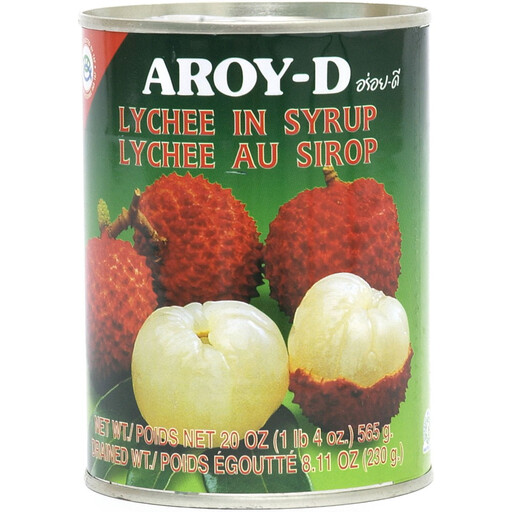 Image unavailable
These lychees are worth considering if you want to serve this fruit rather than a fruit cocktail or fruit halves.
The stated pack size is 565 g. Check the drained weight to see how many lychees you’ll get, and compare the ‘salt’ value if you’re considering several tins.
No. ‘Light syrup’ is not a claim that the salt content has been reduced. To compare two fruit-in-syrup products for salt, check their ‘salt’ value per 100 g on the same basis.
It’s a comparative claim, not a guarantee that the absolute amount of salt is low. CLCV explains that it’s assessed against a similar product, so check the declared salt content of the product you’re buying too.
No. The recipe may still contain sugars from fruit or juice. For example, Auchan’s product listing for St Mamet Plaisir de fruits peach, pear and pineapple with no added sugar states 12 g of sugars per 100 g.
Follow the instructions on the tin you’ve bought, as storage times vary by product. Joybuy’s listing for the St Mamet 425 g fruit cocktail says to keep it in a suitable container in the fridge for 3 to 4 days.
It tells you how much fruit there is once the liquid it’s packed in has been removed, which is different from the total weight of the tin. Check it when choosing a pack size to suit the number of portions you’re preparing.