For mornings when a ready-made portion is handy
If you don’t want to cut or portion fruit before heading out, individual pots give you a set serving. However, compare their drained weight and sugar content with those of other formats.


For a quick breakfast, an individual pot is a handy way to serve a portion without any preparation. A large tin is better if you plan to use it several times and can follow the storage instructions once opened. If added sugars are a factor in your choice, distinguish recipes made with juice or labelled ‘no added sugars’ from those containing sugar, then compare the sugars listed per 100 g. When it comes to salt, check the value for the exact product rather than relying on the category name.
If you don’t want to cut or portion fruit before heading out, individual pots give you a set serving. However, compare their drained weight and sugar content with those of other formats.
A recipe made with juice or labelled ‘no added sugars’ is different from one that lists sugar among its ingredients. This claim doesn’t mean ‘sugar-free’: fruit and concentrated juices can contribute to the sugars listed.
A large tin may suit you if you plan to divide it between several breakfasts or use it in a recipe. Check the amount of fruit shown as the drained net weight, as well as the storage instructions once opened.
When choosing fruit in syrup for breakfast, start by checking the recipe and the portion you’ll actually use, then compare the nutritional information for the exact product.
| What to check | Look for | Who is it for? |
|---|---|---|
| Ingredients and salt | Compare the ‘of which sugars’ and ‘salt’ figures per 100 g, along with the ingredients list and the exact wording on the pack. | If I want to distinguish added sugars from sugars already present in the product, I need to read the recipe rather than rely on the name ‘fruit in syrup’ alone. Around 50% of consumers would make checking the ingredients a priority. |
| Ready-to-serve portion | Check the number of pots and the drained net weight of each one. | On a busy morning, I’d rather open a pre-portioned serving than store an opened tin. Around 30% of consumers would prioritise this convenience. |
| A format you can use more than once | Compare the drained net weight and read the storage instructions for after opening. | If several people will be having some, or I’m planning to use it in a recipe, I can choose a large tin without leaving the rest unused. Around 20% of consumers would prioritise a format suited to several uses. |
The St Mamet Plaisir de fruits peach, pear and pineapple product listed by Auchan is labelled ‘no added sugars’, yet contains 12 g of sugars per 100 g. The claim alone doesn’t tell you how much sugar the product contains.
Read the ingredients, then check the ‘of which sugars’ figure per 100 g for the product you’re thinking of buying.
The salt figure for one recipe doesn’t apply to other recipes from the same brand or to the whole category. Auchan lists less than 0.01 g of salt per 100 g for its St Mamet Plaisir de fruits peach, pear and pineapple product. This figure applies to that specific product only.
Compare the ‘salt’ figure per 100 g on the exact products, rather than guessing their salt content from the product name.
The range includes fruit in juice or syrup, including tinned fruit cocktails and individual pots.
Carrefour’s range includes a ‘no added sugars’ Cocktail Verger in four 70 g pots, each with 70 g drained net weight.
Auchan’s range includes individual pots and fruit in light syrup in a variety of formats.
E.Leclerc’s listings include Eco+ tins and Douceur du Verger individual pots of fruit in light syrup.
Aldi’s range includes a Baccara five-fruit cocktail in light syrup, Baccara individual pots and Martin's pears in syrup.
These two tins are options if you’re choosing a fruit mix or pineapple in syrup for several servings. If you’re looking for an individual pot or a recipe with no added sugars, check these details on the product you’re considering rather than assuming they apply to this selection.
 Image unavailable
The 850 g format may suit you if you’re planning several servings. Compare the drained net weight, sugars and salt on the exact product listing, then follow its storage instructions once opened.
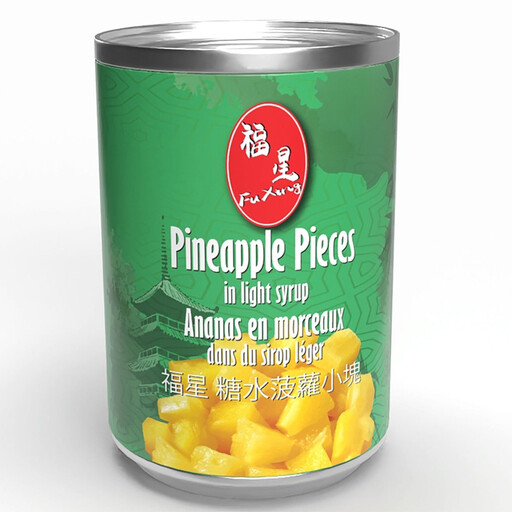 Image unavailable
This tin can be divided between several servings. It weighs 565 g in total and contains 260 g of drained fruit. To compare it with another recipe, also check the ingredients and nutritional information per 100 g.
No. Auchan’s listing for St Mamet Plaisir de fruits peach, pear and pineapple is labelled ‘no added sugars’, yet contains 12 g of sugars per 100 g. To compare two recipes, check the ‘of which sugars’ figure and ingredients list for each one.
Compare the ‘salt’ figure per 100 g for the products you’re interested in, without assuming that fruit in syrup is ‘reduced salt’. Auchan’s listing for St Mamet Plaisir de fruits peach, pear and pineapple gives less than 0.01 g per 100 g, but this figure doesn’t apply to other recipes.
It’s best suited to you if you plan to use the rest in line with the storage instructions after opening. To work out how much fruit you’ll serve, distinguish the total weight from the drained net weight when the fruit is packed in liquid.
Follow the storage temperature and duration shown on the product packaging. Storage advice after opening varies by product, so check it before choosing a large format for several breakfasts.