People baking several batches
If you’re baking several trays of biscuits or cooking for a group, a multipack of tins could work well for you. Just check the amount of drained fruit in each tin and plan how you’ll use each one once it’s opened.


If you’re baking several batches of biscuits, choose the number and size of tins based on how much fruit you’ll actually use. For a one-off recipe, small tins or individual pots can help keep leftovers to a minimum. Compare the drained net weight, the shape of the fruit and the liquid it comes in, especially if your dough already contains sugar.
If you’re baking several trays of biscuits or cooking for a group, a multipack of tins could work well for you. Just check the amount of drained fruit in each tin and plan how you’ll use each one once it’s opened.
For a recipe that calls for only a little fruit, a small tin, a multipack of small tins or individual pots lets you open just the amount you need. The size of each unit matters more than the total pack weight.
If your dough already contains sugar, check whether the fruit comes in juice or light syrup. Also read the ingredients list and the ‘sugars’ figure in the nutritional information: ‘no added sugar’ doesn’t mean the product contains no sugar.
Start with how much fruit your biscuits need, then choose the size of each unit. Next, check the liquid the fruit comes in and the shape of the pieces to make sure they suit your recipe.
| What to consider | What to check | What matters to shoppers |
|---|---|---|
| Quantity for several batches | The number of tins and the drained net weight of each, rather than just the total pack weight. | If I’m baking several trays of biscuits, I want enough fruit without having to open all the tins at once. Around 29% of shoppers prioritise this. |
| Sweetness and moisture in the dough | The liquid the fruit comes in, the ingredients and the sugars per 100 g; drain the fruit according to the recipe. | When my dough is already sweet, I want to account for the fruit and its liquid before changing the recipe. Around 36% of shoppers put this first. |
| Leftovers after opening | How much each unit contains and the storage instructions once opened. | For a one-off bake, I’d rather open a small amount than have to store the rest of a large tin. Around 21% of shoppers prioritise avoiding leftovers. |
| Fruit shape and ingredients | Slices or a fruit mix, as well as the ingredients list if your recipe calls for a particular fruit. | If my biscuits need evenly sized pieces or a particular fruit flavour, I want to choose the shape and ingredients before buying. Around 14% of shoppers prioritise this. |
Some of the weight comes from the liquid the fruit is packed in. A large multipack could also leave you with fruit to use soon after opening a tin.
Work out how much drained fruit you need per batch, then compare the drained net weight and the number of units.
If you’re baking batches some time apart, plan how you’ll use the rest of an opened tin.
Fruit and its juice can contain naturally occurring sugars, even when no sugar has been added.
Check the ingredients and the sugars per 100 g before adjusting the sugar in your dough.
A fruit mix may contain other fruits as well as water and sugar. It won’t necessarily give you the same result as a recipe made for pineapple slices in juice.
Check the ingredients and the shape of the fruit, then drain it as needed for your recipe.
The formats offered online can vary depending on the shop or collection option.
Before planning several batches, check that the exact format is available and find another tin size that would work for the recipe.
Carrefour offers pineapple slices in juice in a 567 g tin and a multipack of 3 × 225 g tins.
Auchan offers pineapple slices in juice in a multipack of 3 × 227 g tins, as well as a tropical fruit mix in light syrup.
One Del Monte product of pineapple slices in juice comes in a multipack of 3 × 220 g tins and is labelled ‘no added sugar’.
E.Leclerc’s range includes pineapple slices in juice in a 340 g tin and pineapple pots in light syrup, 4 × 70 g.
ALDI France stocks pineapple slices in juice in a 340 g tin under the ALL SEASONS brand.
This range includes three sizes of fruit cocktail in syrup and pineapple slices. To choose between them, start with the fruit your biscuit recipe calls for and how much you’ll need to drain.
 Image unavailable
This pack of three small tins is handy if you only want to open one for a recipe. Check the drained net weight of each tin against the amount of fruit your recipe calls for.
 Image unavailable
This 850 g tin could suit several recipes made close together, if a fruit cocktail works for your baking. Compare the drained net weight with what you need, and plan how you’ll use the rest once opened.
 Image unavailable
The 425 g tin is another size to consider for a recipe with mixed fruit. Check how much fruit you’ll have after draining before comparing it with the amount your biscuits need.
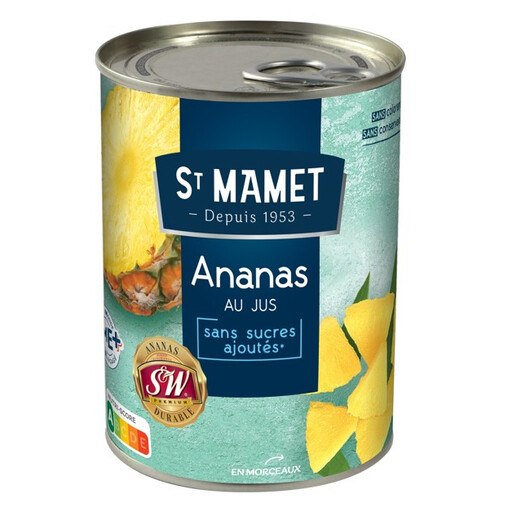 Image unavailable
These slices are worth considering if your recipe calls for pineapple rather than a fruit mix. Before choosing this 3/4-size format, check the number of tins, the drained net weight and the liquid the fruit comes in.
Look mainly at the drained net weight: it tells you how much fruit is left once the liquid it comes in has been drained away. The French Directorate-General for Competition, Consumer Affairs and Fraud Control states that this information must appear on foods sold in a packing liquid.
No. This label doesn’t mean the fruit and its juice contain no sugar. For the Del Monte product in juice with this label, check the ‘sugars’ figure per 100 g and adjust your recipe to get the result you want.
Follow the instructions for the product you’ve bought, as storage times can vary. Auchan says its pineapple in juice in a multipack of 3 × 227 g tins should be kept in the fridge for two days in a suitable airtight container; a St Mamet product page for its pineapple slices says three to four days in a suitable container in the fridge.