Hosts keeping an eye on fat content
You want to compare the stated fat content without assuming that a ‘no added sugar’ recipe meets the same criteria.


To choose fruit in syrup based on fat content, compare the ‘fat’ line on the same nutritional basis. ‘No added sugar’ answers a different question. For a birthday, choose between a large sharing tin and individual pots depending on how you plan to serve it, taking the drained net weight and any potential leftovers into account.
You want to compare the stated fat content without assuming that a ‘no added sugar’ recipe meets the same criteria.
You prefer individual pots that are ready to serve, so you can hand out dessert with less handling during the party.
You’re looking for a sharing tin and checking the drained net weight to work out how much fruit you’ll have to serve.
Start by comparing nutritional values on the same basis, then choose the pack format to suit how you’ll serve it and how much fruit you’ll need.
| Criteria | What to check | Who is it for? |
|---|---|---|
| Fat | Compare the ‘fat’ line per 100 g. If only a per-portion value is shown, convert it to the same basis. | I want to choose based on fat content, rather than relying on the recipe name. Around 40% of consumers are said to prioritise this criterion. |
| Added sugars | Check the ingredients and the ‘of which sugars’ line: ‘no added sugar’ does not mean ‘sugar-free’. | If I want to avoid added sugars, I need to treat this preference separately from my search for lower-fat options; around 30% of consumers are said to prioritise it. |
| How it’s served | Check the number and size of the individual pots, or the drained net weight of the sharing tin. | If I want to serve dessert quickly, I prefer portions that are already separated; around 20% of consumers are said to put ease of serving first. |
| Amount to serve | Compare the drained net weight with the amount you expect your guests to need, and check the storage instructions after opening. | If there are several desserts on offer, I want to avoid opening too much fruit and having leftovers; around 10% of consumers are said to put getting the quantity right ahead of other criteria. |
The claim refers to added sugars, not the ‘fat’ line. Fruit can also contain naturally occurring sugars.
Check ‘fat’ and ‘of which sugars’ separately in the nutritional information for the product you choose.
A value given for 120 g cannot be compared directly with one given for 100 g.
Use the same basis when comparing products. The DGCCRF states that nutritional information is given per 100 g or 100 ml to make comparisons easier.
For fruit in syrup, the total weight includes the liquid covering the fruit, so it doesn’t represent the amount of fruit you’ll be serving.
Check the drained net weight on each pack. The DGCCRF explains that this information applies to food sold in a liquid covering.
A sharing pack may leave you with fruit after the party, and storage instructions vary between products.
Open only the amount you need and follow the pack’s instructions for storage after opening.
The brand offers fruit in sharing tins as well as individual pots.
Carrefour’s range includes fruit in syrup in individual and sharing formats, including no-added-sugar recipes.
Auchan’s range includes fruit in syrup from AUCHAN, ST MAMET and DEL MONTE.
E.Leclerc’s range includes ECO+ fruit cocktail, peaches, pears and apricots in light syrup.
ALDI offers BACCARA® pots of fruit in light syrup in a 280 g format.
These packs of fruit in syrup can be served on their own or added to a sharing dessert. To compare the recipes, check the nutritional information and the amount of fruit stated on each pack.
 Image unavailable
For a sharing dessert, the 455 g drained weight tells you how much pear you’ll get, excluding the syrup.
If both factors matter to you, check the fat and sugar content on the pack.
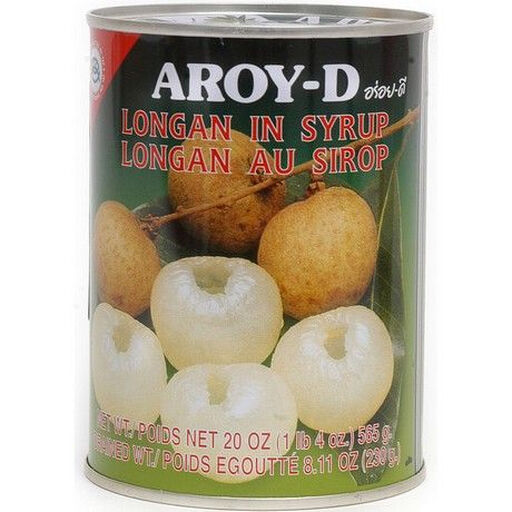 Image unavailable
If you’d like to add longans to a fruity dessert, this pack contains 565 g.
Check the drained net weight to work out how much fruit to serve, and look at the fat and sugar content on the label.
 Image unavailable
To offer a different fruit at dessert, this pack of rambutans in syrup contains 565 g.
Compare the sugar and fat content on the label, and check the drained net weight before planning portions.
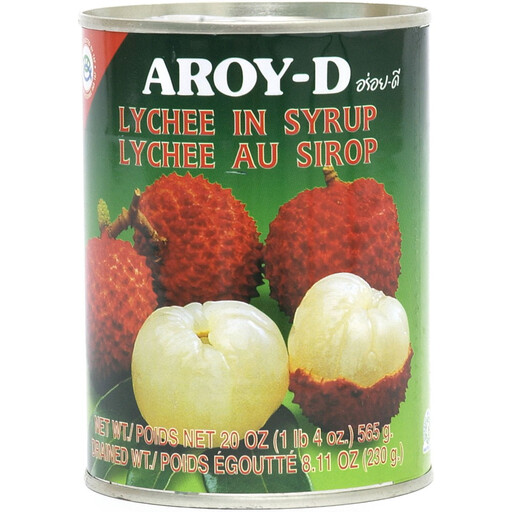 Image unavailable
If you’re putting together a dessert with lychees, this pack in syrup contains 565 g.
Check the drained net weight, nutritional values and storage instructions for after opening on the pack.
 Image unavailable
This 850 g fruit cocktail in syrup is a handy choice for a sharing dessert.
Check the drained net weight to plan portions, and look at the fat and sugar content and storage instructions for after opening on the pack.
No. The two claims relate to different characteristics. Check the ‘fat’ line for the product you choose. ‘No added sugar’ doesn’t mean the fruit contains no sugar at all, either.
Choose individual pots if you want to serve portions that are already separated, or a large tin if you’d rather divide the fruit between several desserts. Compare the number of pots and the drained net weight to plan how much to serve. The DGCCRF explains that drained net weight is stated for food sold in a liquid covering.
Follow the storage time and instructions on the pack you’ve bought, as they vary between products. The Joybuy France listing for the 425 g ST MAMET fruit cocktail says to keep it in a suitable container in the fridge for 3 to 4 days after opening.
Neither ‘light syrup’ nor ‘in juice’ tells you the fat content on its own. Compare the nutritional information for the specific products on the same basis, then choose the recipe and format that suit the dessert you’re planning.